Types of Gummy Candies: Commercial Formats, Base Ingredients, and Sourcing Options
A commercial gummy line is defined by specific manufacturing variables: physical shape, base gelling agent, surface finish, alongside compliance and certification standards.
Developing a new gummy SKU involves more than selecting a flavor. The choice of gelling agent affects the required drying time. The surface treatment influences the required packaging barrier. Additionally, specific dietary claims and target market regulations inform the cleaning validations and changeover procedures required on the production line. The sections below break down the standard types of gummy candies available in commercial production and detail the technical and supply chain factors associated with each format.
Categorization by Commercial Shape and Structure
The physical shape and internal structure of a gummy largely determine the molding process, the depositing equipment setup, and the required tooling.
Standard Solid Shapes
Solid, single-texture pieces are among the most common formats of commercial gummy production. The shape complexity determines the mold design.
- Gummy Bears: A traditional format in the confectionery sector. Production lines typically maintain dedicated starch or silicone molds for this shape. Because tooling for gummy bears is standard, initiating a production run for this shape generally requires no new mold development time.
- Gummy Worms: Segmented shapes that offer a distinct visual and textural profile. While they can be produced in a single color and flavor, this extended shape is highly suitable for dual-color or dual-flavor pouring. When running dual-color formats for gummy worms, the production line uses divided hoppers to deposit two different syrups into the same mold cavity simultaneously.
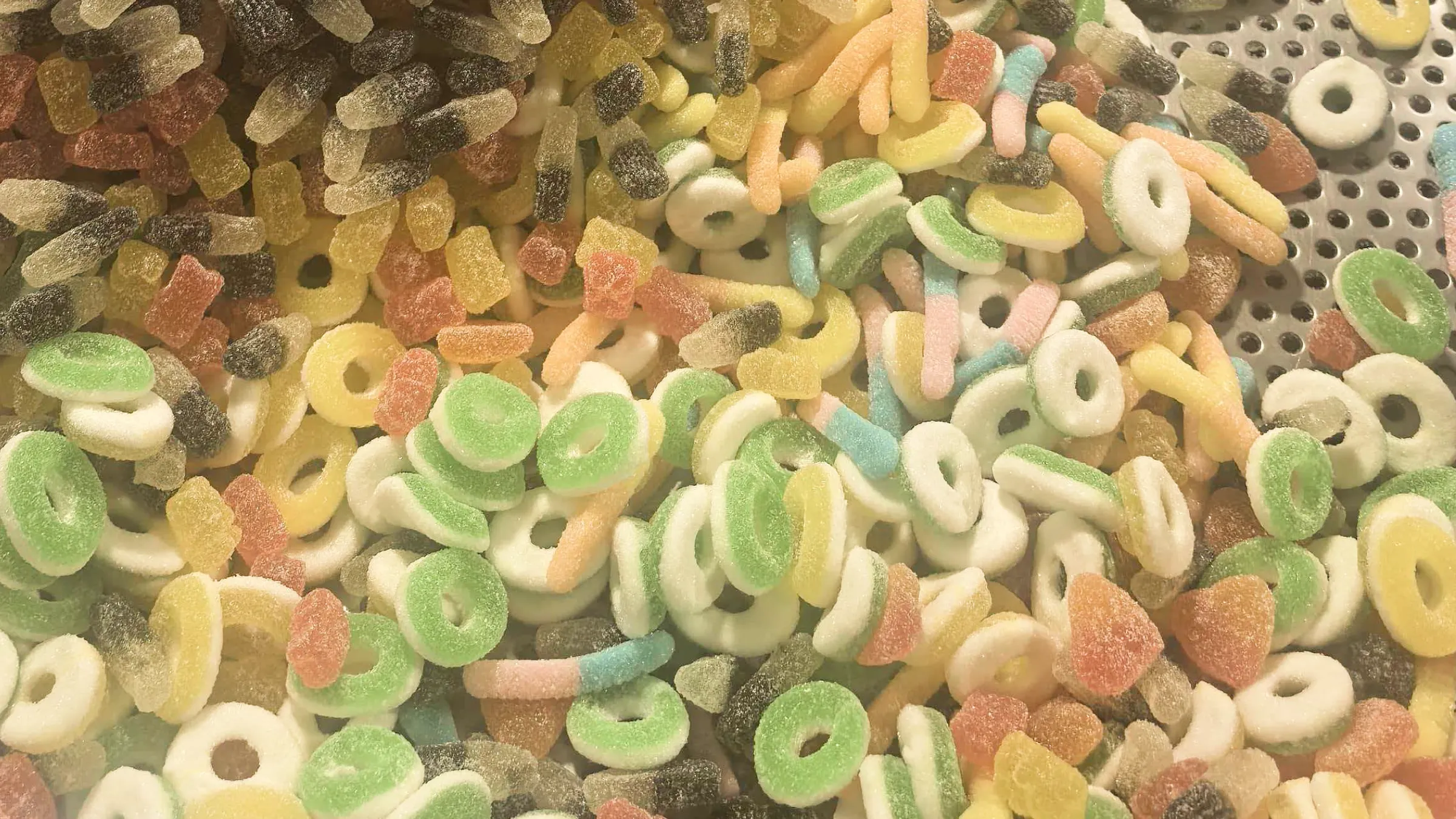
- Gummy Rings: Often utilized for sour or sugar-sanded products. The center hole of gummy rings requires specific depositing nozzle configurations to ensure clean syrup cutoff without trailing.
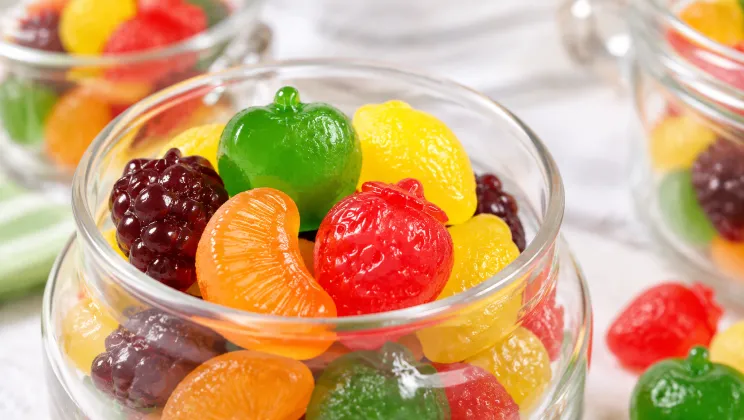
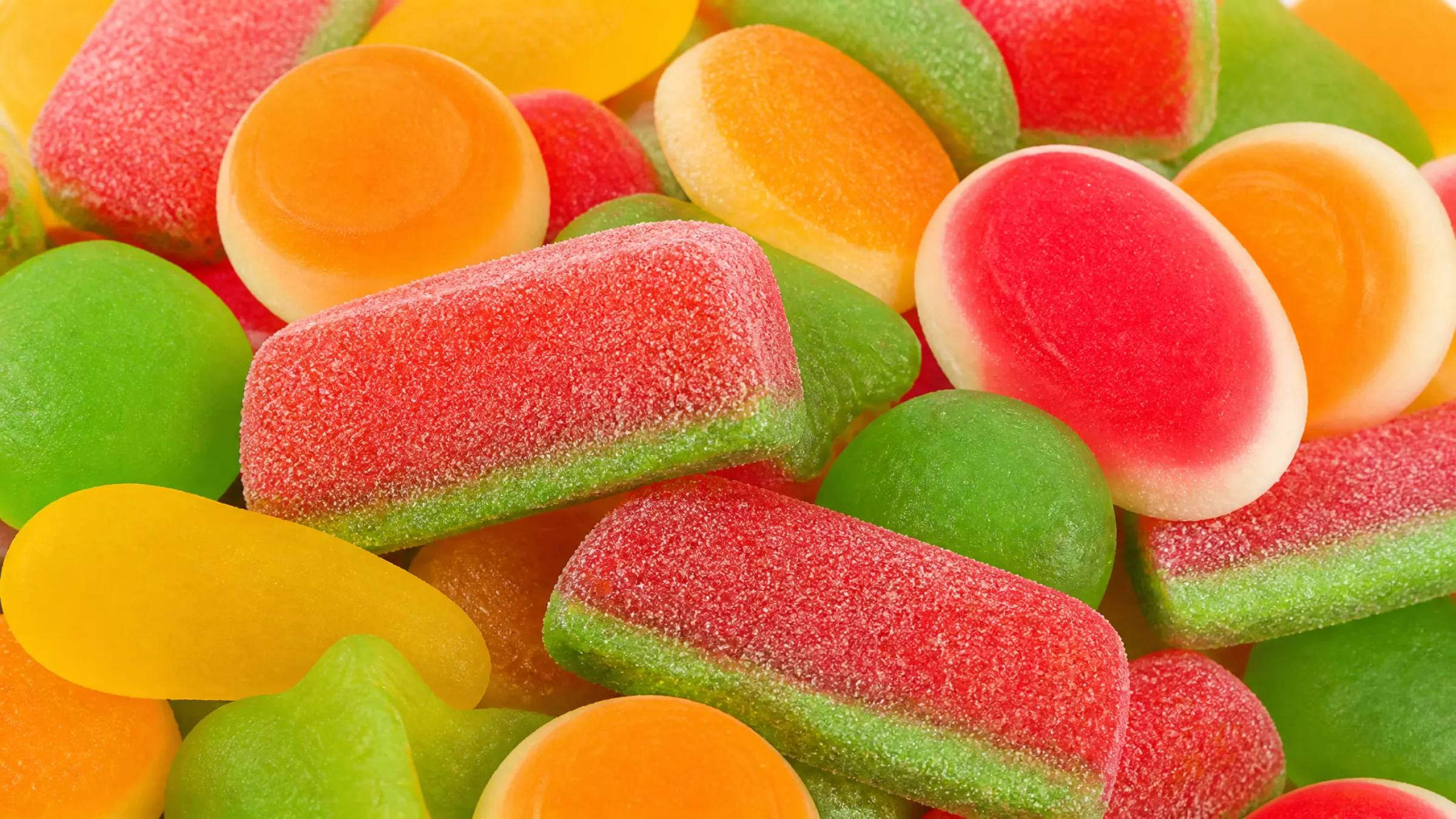
- Fruit Shapes: Includes peaches, strawberries, and assorted fruits. These often utilize dual-color depositing to visually separate the "fruit" from the "leaf" or "rind" when producing fruit gummies.
Advanced Formats and Structures
Beyond simple shapes, advanced depositing equipment allows for complex internal structures.
- Center-Filled Gummies: These feature a solid gummy exterior with a liquid or semi-liquid pectin or syrup center. Production requires concentric nozzles that pump the shell and the filling simultaneously. The formulation of the center must be balanced with the exterior to prevent moisture migration over the shelf life.
- Aerated (Foam) Gummies: The syrup is whipped with air before depositing, creating an opaque, marshmallow-like texture. Gelatin naturally stabilizes foam, making it the traditional base for aerated layers.
- Belts and Ropes: Manufactured through a continuous extrusion process rather than traditional depositing into molds. The cooked mass is extruded into flat sheets or long ropes, cooled, sanded with sugar, and then cut to specific lengths. They present a different texture profile and require a dedicated extrusion line to produce gummy belts.
Custom Shapes and Tooling
Brand owners frequently request custom IP shapes or logos. Plant-based and gelatin gelling agents can be deposited into custom molds. This process involves 3D modeling and the manufacturing of new tooling. Buyers should factor in the tooling cost and the development timeline, which typically adds several weeks to the initial project schedule.
Categorization by Base Ingredient
The gelling agent determines the texture, bite, and thermal properties of the final product. Transitioning from one base to another requires a complete formulation adjustment.
Gelatin-Based Systems
Gelatin provides a classic elastic chew and stabilizes aerated products effectively. It serves as a traditional base for many established retail lines. The firmness and elasticity are adjusted by selecting gelatin with a specific Bloom grade. Higher Bloom values yield a firmer, more bouncy texture. Gelatin forms a thermoreversible gel, meaning it melts when exposed to heat and resets when cooled. Prolonged exposure to high temperatures can soften the gel and alter the product shape, which informs packaging and shipping decisions for gelatin gummies.
Pectin-Based Systems
Pectin is a plant polysaccharide extracted from citrus peel or apple pomace, a sourcing standard formally recognized under FDA regulations. It delivers a firmer, shorter bite that breaks cleanly rather than stretching. It acts as a primary option for plant-based formulations. Pectin sets through a precise balance of sugar concentration (Brix) and acidity (pH), rather than solely relying on temperature drops. It is often noted for holding its structure in warmer conditions, making it a common choice for specific regional markets. The actual thermal stability depends on the specific pectin type, the sugar-acid system, and the moisture content.
Carrageenan, Agar, and Starch
Other plant-based hydrocolloids offer specific texture profiles. Carrageenan is engineered to provide an elastic, springy chew that more closely mimics gelatin than standard pectin. Agar sets to a notably firm, brittle structure, often seen in traditional Asian jelly formats. Modified starch provides a dense, chewy texture. Commercial formulations sometimes blend systems—such as pectin with starch—to balance the bite, optimize processability, and achieve specific structural stability for large-scale production.
Dietary and Market Specifications
Dietary claims require formulation control, raw material sourcing verification, and production process management.
Vegan and Plant-Based
A vegan gummy is formulated exclusively with plant-based gelling agents and contains no animal-derived ingredients. A labeled vegan claim requires verifying the entire formula. This includes ensuring that red colors are derived from plant extracts rather than carmine (insect-derived) and that glazing agents utilize plant waxes like carnauba rather than shellac. Production requires managing cross-contact risks on shared equipment according to the target market's standards for vegan gummies.
Halal Compliance
Halal gummy production requires strict supply chain traceability to ensure all ingredients meet Islamic dietary laws. The gelling agent is typically a plant-based hydrocolloid or a certified bovine gelatin. Compliance extends beyond the base ingredients to include processing aids and flavorings, which must be free from alcohol solvents and non-compliant animal derivatives. For facilities producing Halal batches on shared equipment, documented cleaning validations are implemented to prevent cross-contact. Buyers should verify that the factory's Halal certification scope covers their specific target markets when sourcing halal gummies.
Kosher Certification
Kosher manufacturing operates under distinct dietary laws and requires review by recognized rabbinical authorities. Gummy formulas seeking a Kosher pareve (neutral) designation often utilize pectin, agar, or certified fish gelatin to avoid meat and dairy complications. The certification process audits the origin of every minor additive, including demolding oils and acidulants. Transitioning a shared production line to a Kosher run generally involves specific, supervised cleaning procedures. Matching the product specification with the facility’s authorized Kosher certifying agency is a primary step in project development.
Sugar-Free Formulations
Sugar-free gummies utilize alternative bulk sweeteners such as maltitol, isomalt, or erythritol. These sugar alcohols behave differently than standard sucrose and glucose syrups during cooking and curing. Sugar-free recipes often require highly precise moisture control during the drying stage to prevent crystallization and maintain stability. The specification and the packaging barrier should be matched to the specific formula for sugar-free gummies.
Surface Finishes and Packaging Interactions
The exterior treatment of a gummy serves multiple functional and sensory purposes. While it fundamentally prevents pieces from fusing together in the bag, the chosen finish is heavily utilized to deliver an immediate flavor impact (such as an initial burst of sweetness or sharp acidity), alter the mouthfeel, and provide visual differentiation. Consequently, the surface treatment directly influences the specific packaging barrier required.
Oiled Finish
The gummies are coated with a thin layer of food-grade mineral oil, vegetable oil, or wax (like carnauba). This provides a glossy visual appeal and acts as a mild moisture barrier. Oiled products are the standard format for preserving clarity and are widely used in wholesale bulk packaging.
Sanded Finish (Sugar or Acid)
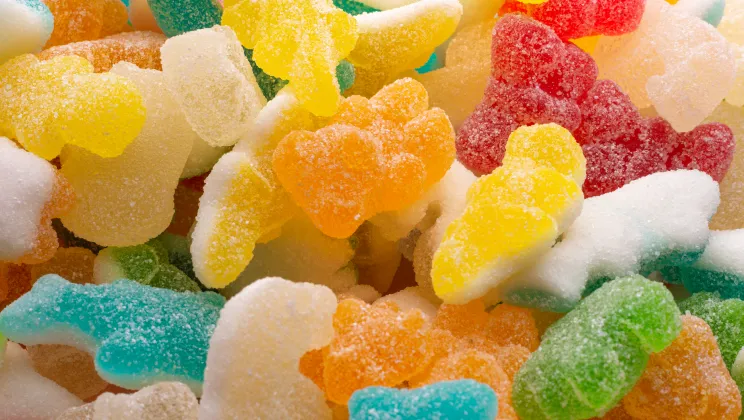
The gummies are tumbled in granulated sugar, or a blend of sugar and organic acids (such as citric or malic acid) for sour products. This method provides an immediate flavor delivery and a distinct textured bite. However, the acids used in sour sanding are hygroscopic, meaning they actively attract moisture from the surrounding air. A sanded product generally requires a packaging film with a stronger moisture barrier (lower Water Vapor Transmission Rate, WVTR) to prevent the surface from sweating.
Nonpareils and Specialty Coatings
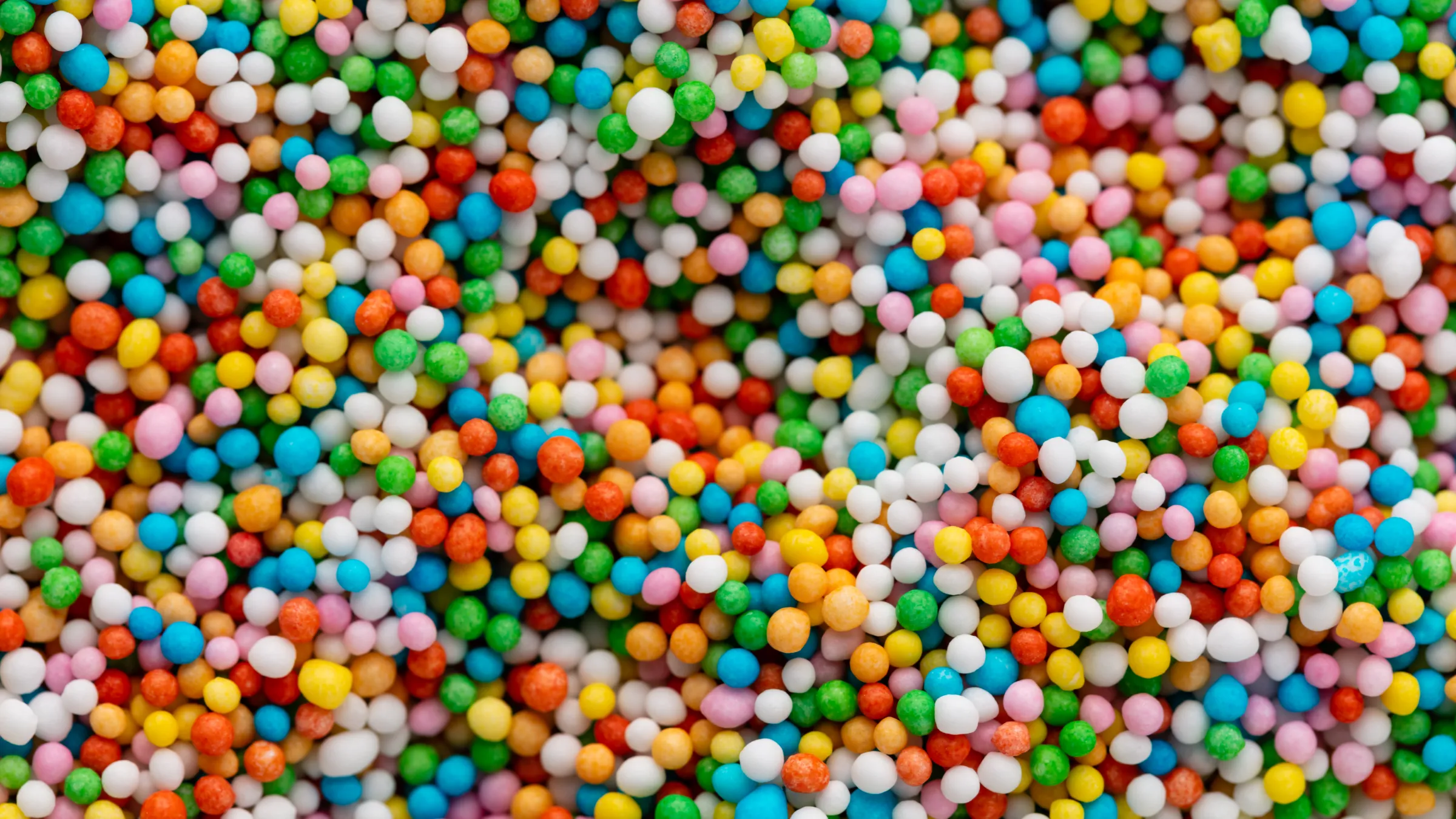
Some formats are coated with crunchy, colored sugar beads (nonpareils) to create a multi-textured experience, contrasting the soft gel center with a brittle exterior. These specialized coatings require precise binding techniques before the curing phase and offer strong visual differentiation for premium retail lines.
Production Variables: Drying Rooms and Quality Metrics
Once the syrup is cooked and deposited into molds, the product enters the curing or drying phase. This step is a primary variable in gummy manufacturing.
Commercial gummies require specific drying times in climate-controlled rooms to reach their target moisture content and water activity (Aw). Water activity measures the free water available for microbial growth. Gummy candy is formulated to sit at a low water activity, well below the point where mold and bacteria become active. Hitting the target Aw and Brix consistently is part of what keeps every batch within its shelf-life window. Drying room capacity frequently acts as the main bottleneck in gummy production. Factories with advanced, dual-mode drying rooms can manage lead times more reliably during peak seasons.
Transport and Storage Considerations
Shelf life is established through formulation, process control, packaging selection, and validation, and is then protected through compliant storage and transportation.
Shipping gummies across various long-distance trade routes involves assessing the formula, moisture targets, and packaging specifications. Standard shipping containers function well for many routes when these variables are evaluated in advance. Where environmental conditions or long transit times demand additional measures, thermal insulation films or refrigerated containers serve as practical options. Buyers can discuss route specifics, target destinations, and expected turnover periods with their supplier prior to production to establish the correct shipping protocols.
Working with a Gummy Manufacturer
We operate automated production lines supporting gelatin, pectin, starch, and carrageenan systems. Our facility produces a wide range of gummy formats, from standard solid shapes to aerated and filled products, for wholesale and private label buyers. Standard catalog items are detailed on our wholesale page. Custom formulation, flavor matching, and specific shape development are managed from brief to sample through our custom program. For an overview of our dosing systems, drying capacity, and quality controls, refer to our capabilities page. Specific product feasibility and production scheduling are confirmed on a per-project basis.
Yes. Plant-based gelling agents can be deposited into most standard and custom molds. Specific tooling requirements, demolding efficiency, and mold materials (such as silicone or Teflon) are evaluated during the project sampling stage.