Gelatin in Gummies: What It Does and How Buyers Should Choose It
Gelatin is the most widely used gelling agent in gummy candy, and it is also the ingredient buyers ask about most often. Gelatin in candy performs three functions at the same time: it forms the gel network that holds the shape, it determines the chewing texture, and it controls how the product behaves in the mouth. For an overview of the full recipe, what gummies are made of. This article focuses on gelatin alone, covering how it works, which parameters define quality, and what a buyer should verify before approving a supplier.
What Is Gelatin and Why Is It Used in Candy?
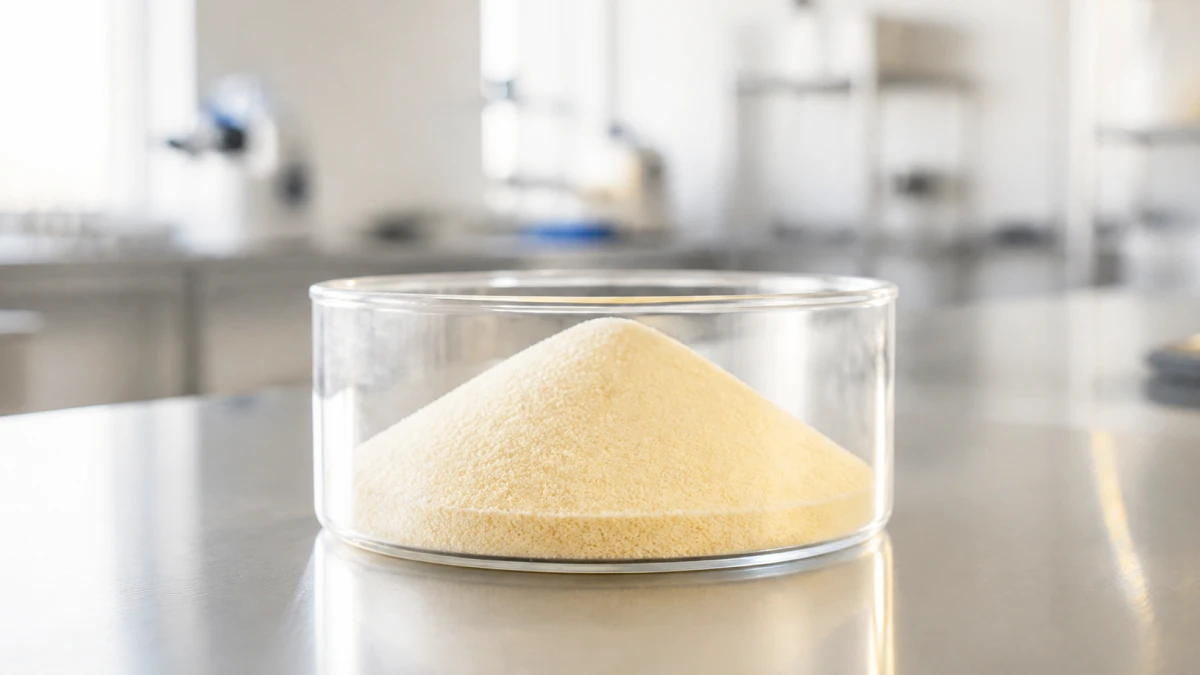
Gelatin is a protein obtained by partial hydrolysis of animal collagen. Food-grade gelatin is produced mainly from bovine hides and bones, pig skin, or fish skin. The raw material is cleaned, treated, extracted with hot water, filtered, and dried into a powder or sheet with no significant taste or odor of its own.
This neutrality is one reason gelatin became the standard gelling agent in candy. It sets without adding flavor, it produces a clear and glossy surface, and it melts at close to body temperature. A gelatin gummy softens on the tongue and releases flavor gradually, a behavior that plant-based gelling agents do not reproduce exactly.
The Functions of Gelatin in Gummy Candy Texture
Inside a finished gummy, gelatin performs several functions at once.
Gel formation. When a warm gelatin solution cools, the protein chains link into a three-dimensional network that traps water, sugar, and glucose syrup. After depositing, this network helps transform the flowing candy mass into a stable gel that retains its molded shape
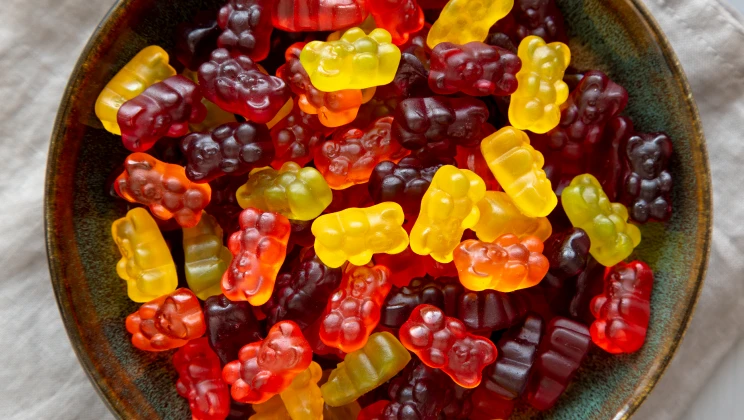
Elasticity and chew. The same network gives gelatin gummies their characteristic stretch and elastic bite. This is the texture most consumers associate with the word gummy, and it is the main reason classic gummy bears and gummy worms still use gelatin systems.
Surface gloss and clarity. Gelatin sets with a smooth, glossy surface and good transparency, so molded detail and color come out clean.
Moisture binding. Gelatin binds water effectively. A well-formulated gelatin gummy can therefore carry a relatively high moisture content without becoming sticky or losing shape in the package, which supports the shelf life buyers expect.
Foaming. Gelatin has a natural ability to form and stabilize foam because its protein molecules act at the air-liquid interface. Aerated (foamed) gummies rely on this property, and it is difficult to reproduce with pectin or starch. This is why aerated products are normally built on gelatin, and why vegan versions of aerated gummies remain a development challenge across the industry.
Bloom Strength, Dosage, and Moisture: The Parameters That Define a Gelatin Gummy
A gelatin specification sheet contains many values. For gummy production, three of them decide most of the final quality: bloom strength, dosage, and moisture.
Bloom strength
Bloom strength measures the firmness of a standard gelatin gel. A higher number means a firmer gel at the same dosage. The Bloom test is a standardized method maintained by industry bodies such as the GME, which keeps results comparable between suppliers. Gummy production normally uses gelatin in the 180 to 250 Bloom range. Lower Bloom grades produce a softer, more tender bite and require a higher dosage. Higher Bloom grades set firmer at a lower dosage and suit products that need a pronounced chew or sharp molded detail.
Bloom strength and dosage work together, and both are adjusted to the product: softer pieces and firm, detailed shapes call for different combinations. Two factories can both claim to use gelatin and still produce very different textures, because the combination of Bloom grade and dosage differs. Buyers can either specify a preferred Bloom strength when they have a defined technical requirement, or describe the target texture based on their market, consumer preferences and brand positioning. An experienced manufacturer should be able to translate that profile into the appropriate gelatin Bloom strength, dosage and process parameters, then validate the result through sampling and adjustment.
For buyers who need independent verification, we can provide third-party analysis (TPA) covering gelatin source, Bloom verification, moisture, and other specification items on request.
Moisture content
Texture is not set by gelatin alone. Because gelatin binds water strongly, a gelatin gummy can hold more moisture than other systems without losing stability. products with higher gelatin content can be packed at a higher moisture level, while sour sanded products and products shipped to hot-climate markets are held at lower levels to protect stability and shelf life.
Moisture is also where many quality complaints originate. Excess free water leads to sweating, sticking, and shortened shelf life. Insufficient moisture leads to hardening within months. Finished gummies should also meet an appropriate water activity target, since mold activity increases once water activity rises beyond the safe range. Buyers evaluating a supplier should ask how moisture and water activity are measured and controlled, in addition to how the syrup is cooked.
Process Control: Dissolving, Cooking, Acid, and Drying in Gelatin Gummy Production
Gelatin quality is affected by how it is handled in the process as much as by the raw material itself. Four control points matter most.
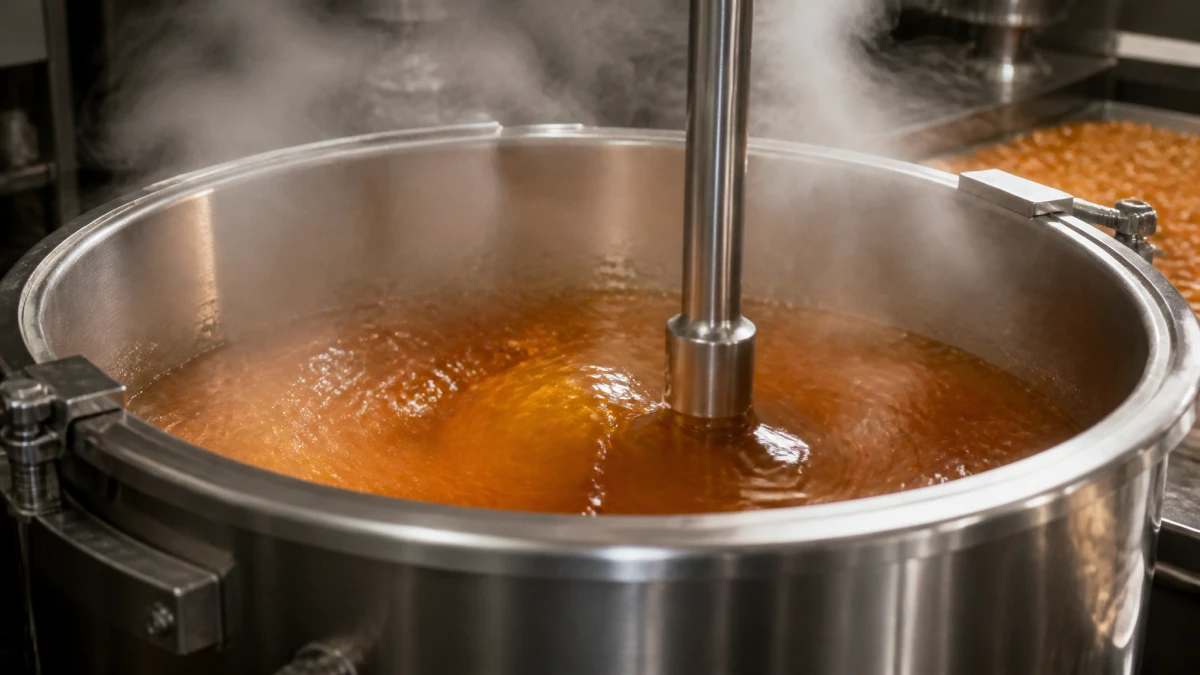
Dissolving. Gelatin is dissolved in a dedicated low-temperature tank, separate from the tanks used for starch or pectin. Gelatin dissolves in water at 60 to 80°C and is held at around 60°C for use. It must not share the high-temperature steam dissolving step used for pectin or starch, because prolonged high heat breaks down the protein network.
Cooking and degradation. Gelatin tolerates short exposure to higher temperatures, but extended time at temperatures above roughly 80°C reduces molecular weight and gel strength, especially in acidic conditions. Peer-reviewed research on gelatin processing confirms that temperature, time, and acidity act together on molecular weight and gel strength (MDPI Foods, 2024).
Acid addition. Acid is added after cooking, not before. Holding gelatin at high temperature together with acid accelerates hydrolysis and destroys gel strength. This is a standard control point in professional gummy production.
Drying. Gelatin gummies require cold drying: return air temperature should not exceed 28°C, with approximately 25°C as the preferred point, because high temperatures relax the gel network and can collapse the product. Starch, pectin, and carrageenan gummies tolerate hot drying at 55 to 60°C supply air. Drying time is one of the main factors in delivery time, so drying capacity and control are legitimate audit questions for any gummy supplier.
Gelatin vs Pectin vs Carrageenan vs Starch: How the Gelling Systems Compare
Gelatin is the classic system, but it is not the only option. The table below compares the four systems we work with, using actual production parameters.
| Factor | Gelatin | Pectin | Carrageenan | Starch |
| Source | Animal collagen (bovine, porcine, fish) | Citrus peel or apple pomace | Red seaweed | Plant starch |
| Dissolving condition | 60 to 80°C in water | 80 to 90°C with steam | 70°C and above | Gelatinization at 80°C and above |
| Gelling mechanism | Cooling, thermo-reversible | High sugar plus acid (pH 3.2 to 3.5, above 65 Brix) | Cooling with ion cross-linking | Cooling and dehydration, irreversible |
| Texture | Soft, elastic, extended chew | Firm, short, clean bite | Firm, springy | Firm, dense |
| Heat stability | Low, softens around 35 to 40°C | High | Medium to high | High |
| Drying mode | Cold drying at 28°C or below | Hot drying at 55 to 60°C | Hot drying | Hot drying |
| Dietary fit | Requires halal or kosher source control | Vegan, halal friendly | Vegan friendly | Vegan friendly |
| Typical use | Classic gummy bears, worms, rings, aerated products | Fruit gummies, vegan lines | Vegan jellies | Jelly centers, firm jelly products |
The practical conclusions are these. Gelatin leads on texture familiarity, process forgiveness, and aeration capability. Pectin leads on heat stability and dietary positioning, but its gelation depends on pH and sugar concentration, so the process window is narrower and errors such as premature gelation are harder to recover. Carrageenan sits between the two in texture and is used in some vegan-positioned products.Starch systems produce firm, dense textures and are common in jelly centers and firm jelly products.
Recipe selection is flexible. We adjust the formula to the client's requirements, target market, and product positioning rather than offering a single fixed recipe, and samples of different gelling systems can be produced for comparison before a decision is made.
Hot-Climate Shipping and Moisture Standards
Gelatin gummies are heat-sensitive: the gel softens at elevated temperatures, and hot routes or unconditioned warehouses can push the product beyond its comfort range. This does not make gelatin gummies unsuitable for warm destinations. Many shipments travel in standard containers without problems, provided the formula, moisture level, packaging, route, and season are properly assessed in advance. Where conditions call for extra protection, thermal insulation film can be used inside the container, and refrigerated containers may be considered for the most demanding routes or seasons. The decision is made per shipment, based on route temperature, packaging barrier performance, and the client's storage conditions.
Pectin and carrageenan gels do not share this behavior once set. For routes where heat exposure is difficult to control, a pectin-based recipe is the safer choice. If gelatin is preferred for its texture, the formula can be adjusted with a firmer Bloom grade, a lower packaging moisture target, and packaging with an adequate moisture barrier. For any route with uncertain conditions, we recommend stability testing before confirming the order, and we run hot-climate stability tests for export projects as part of development.
Packaging moisture standards should follow the shipping conditions rather than a single factory-wide number. Products traveling with reliable cold-chain conditions can accept a slightly higher moisture level for better texture, while products shipping in standard containers through hot routes are held at the lower end of the range. Whether refrigerated containers are necessary depends on route temperature, packaging barrier performance, and the client's storage conditions, and should be confirmed by transport validation.
Halal, Kosher, and Vegan: What Gelatin Source Means for Your Market
Because gelatin is an animal product, its source determines which markets the finished product can enter.
Halal markets. Pork-derived gelatin is not acceptable. Bovine gelatin must come from halal-slaughtered animals and carry recognized certification, and sourcing halal-certified bovine gelatin requires advance coordination with qualified suppliers. Fish gelatin and plant-based systems are also accepted alternatives. Our factory holds halal certification and supports halal production through validated cleaning procedures and customer-specific requirements.
Kosher markets. Kosher-certified bovine gelatin qualifies, and fish gelatin is also a common choice for kosher-positioned products. The final selection depends on the client's requirements and the certifying body. All raw material suppliers must provide kosher certificates, and production must follow the segregation and cleaning procedures defined by the certifying body.
Vegan and vegetarian markets. Any animal gelatin is excluded. Pectin, agar, carrageenan, and selected starch systems can be used as alternatives. Our vegan gummy range uses pectin- and starch-based systems.
A practical note for specification work: ingredient labels do not always disclose the source of gelatin, and the source can differ between suppliers and product lines. If the source matters for your market, the gelatin type and its certification should be written into the product specification at the beginning of the project, including allergen declaration where applicable.
How Buyers Should Verify a Supplier's Gelatin Program
A buyer does not need laboratory knowledge to audit a supplier's gelatin management. The following checks are sufficient in most cases.
Request the gelatin specification sheet. It should state the source (bovine, porcine, or fish), the Bloom grade, and the certificates attached. A factory purchasing from traceable producers can provide this without delay.
Ask which gelatin supplier is used and whether a designated supplier is accepted. Our standard is bovine gelatin, and we can source from a client-designated supplier when required. Reluctance to disclose gelatin sourcing is a warning sign.
Ask how gelatin is handled in the process. Two details are revealing: whether gelatin is hydrated and dissolved in a dedicated low-temperature tank, and whether acid is added only after cooking.
Ask about cross-contamination controls for certified orders. Halal and kosher production should include validated cleaning and disinfection between runs. We stop the line and carry out full cleaning when a certified order requires it, and this should be standard practice at any qualified supplier.
Ask for batch documentation. A certificate of analysis covering moisture, Brix, microbiological results, and heavy metals should be available per shipment, and third-party laboratory reports carry more weight than in-house results alone. Our quality system operates under HACCP and ISO 22000 with FDA registration, and third-party reports can accompany shipments on request.
Evaluate the sample correctly. Check the bite, surface gloss, and clarity, then store the sample in a warm room for a week. A well-made gelatin gummy remains elastic and clear. A poorly controlled one sweats or hardens.
Conclusion: Choosing Candy with Gelatin
Gelatin remains a widely used gelling agent in gummy candy: familiar texture, glossy appearance, forgiving processing, aeration capability, and a melt-in-the-mouth flavor release. Its limitations are equally clear. It softens in heat, it requires source control for specialty markets, and its quality depends on parameters such as Bloom grade, dosage, moisture, and drying that are invisible on a price sheet.
Work with a Gummy Manufacturer That Controls the Details
Gelatin grade, dosage, moisture control, drying method, and certification scope are decided at the factory level. If you are comparing suppliers or developing a new gummy line, the fastest way to evaluate these parameters is to test them in a sample.
Send us your target market, texture reference, and certification requirements. We can prepare gelatin, pectin, and hybrid samples through our custom gummy program, with documentation matched to your destination market. Standard MOQs and lead times are listed on our wholesale gummies page, and our production lines and quality systems are detailed on the capabilities page.
Most gummy production uses gelatin in the 180 to 250 Bloom range. Higher Bloom grades produce a firmer, chewier bite at a lower dosage. Lower Bloom grades produce a softer bite and require a higher dosage. The appropriate grade depends on the product style, and a qualified manufacturer should be able to state the Bloom grade and dosage for your product.