What Are Gummies Made Of? A Manufacturer's Complete Ingredient Guide
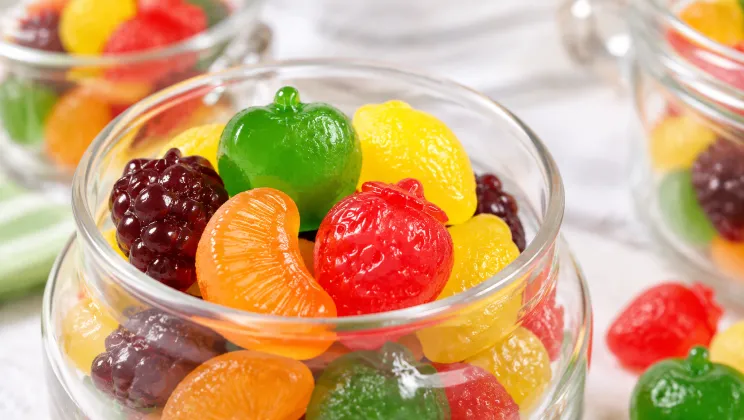
Gummies are made of four functional ingredient groups: a gelling agent (gelatin, pectin, or starch), a sweetener system built on glucose syrup and sucrose, food acids such as citric or malic acid, and flavors and colors. Water binds everything during cooking and is then partly removed in drying, while a light oil or wax finish protects the surface. Of these, the gelling agent matters most — it alone decides whether a gummy springs back like a classic bear, cuts cleanly like a fruit jelly, or chews dense like a traditional starch gum.
At Sweeto Sweets we formulate and export gummies, and ingredient questions come up in almost every buyer call: Is the gelatin halal? Can this recipe go vegan? Will it survive a summer container to Dubai? This guide answers those questions the way we answer them for importers and brand owners — by ingredient class, and by what each choice changes on the production line.
The Full Gummy Ingredient Classification
A commercial gummy recipe reads long on the label, but every item falls into one of seven groups. The table below shows what sits in each group and the job it does.
| Ingredient Group | Common Ingredients | Function |
| Gelling agents | Gelatin, pectin, modified starch, agar-agar, carrageenan | Build the gel network; set texture and melting behavior |
| Bulk sweeteners | Glucose (corn) syrup, sucrose | Sweetness, body, moisture control, preservation |
| Water | Purified water | Dissolves and hydrates the system |
| Food acids | Citric, malic, lactic acid | Tartness, pH control, microbial stability |
| Flavors | Natural and nature-identical fruit flavors | Taste profile and repurchase appeal |
| Colors | Fruit/vegetable concentrates, food dyes | Visual appeal and shelf differentiation |
| Surface treatments | Oil/carnauba polish, sugar sanding, sour powder | Anti-stick, gloss, sour effect |
Two points stand out. First, sweeteners make up the bulk of any gummy. Second, the gelling agent is used in only a small share of the recipe, yet it defines texture, dietary claims, melting behavior, and even which markets the product can enter.
Gelling Agents: The Ingredient That Defines a Gummy
Gelatin, pectin, and starch are the three gelling agents behind nearly every gummy sold worldwide, with agar-agar and carrageenan covering niche needs. Each builds a different gel network, and that network is what your customers feel when they chew.
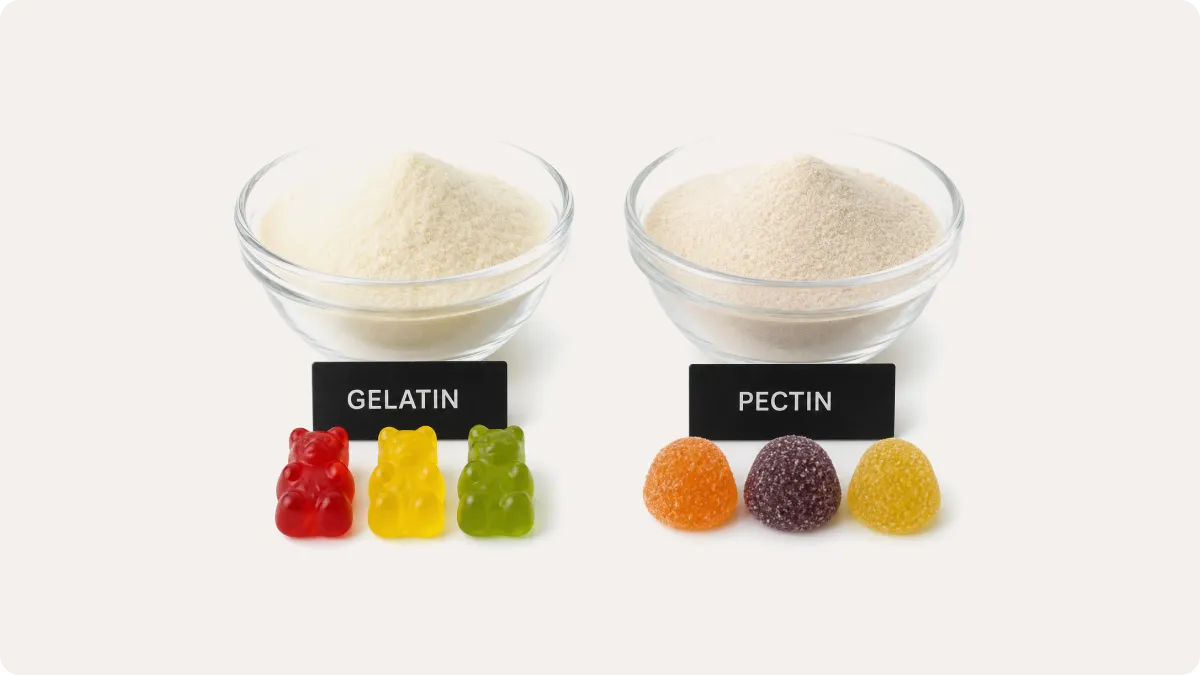
Gelatin
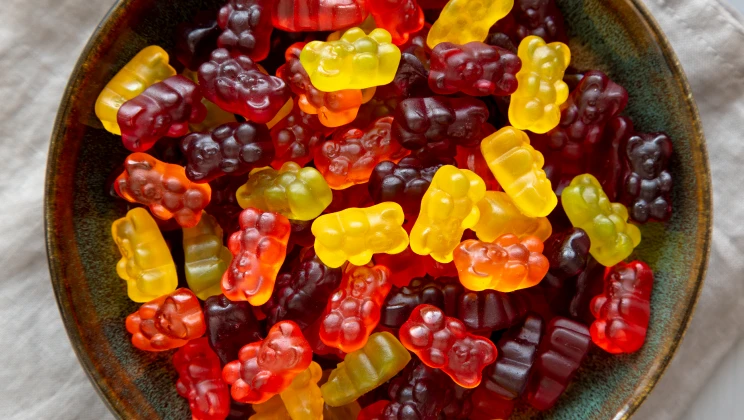
Gelatin is a protein obtained from animal raw materials. It creates the elastic, bouncy chew that defined the category for a century: bend a gelatin bear and it springs back. Gelatin is supplied in different gel strengths, and a stronger grade gives a firmer set at the same dosage. Gelatin is thermoreversible: it melts near body temperature, which produces the pleasant melt-in-mouth release but also makes gelatin gummies sensitive to heat above roughly 35°C in transit. For Muslim-majority markets we can work with halal-certified bovine gelatin, subject to the certification scope of the formulation; the gelatin source of any project is confirmed in its product specification.
Pectin
Pectin is a soluble fiber extracted from citrus peel and apple pomace, which makes it plant-based by nature and the standard choice for vegan, vegetarian, and halal-first lines. It sets a firmer, more tender gel with a clean bite and fast flavor release, and unlike gelatin the gel does not re-melt once formed — pectin gummies hold their shape in hot climates far better. The trade-offs: pectin needs tightly controlled sugar content and pH to gel, raw material cost runs higher, and the elastic chew children prefer is hard to replicate.
Starch
Modified starches produce a short, dense, cloudy gum — think Turkish delight or classic wine gums rather than a bouncy bear. Starch is cheap and vegan, but it requires long drying and conditioning times, so it suits high-volume traditional formats more than fast-turn custom projects.
Agar-Agar and Carrageenan
Both are seaweed extracts. Agar sets a firm, brittle gel at low dosage; carrageenan gives a softer, more elastic plant-based texture and often works blended with other hydrocolloids. We use them mainly when a customer needs a vegan texture closer to gelatin than pectin alone can deliver.
Sweeteners: Bulk, Texture, and Shelf Life
Glucose syrup and sucrose do far more than sweeten. Their ratio, which is set recipe by recipe, controls crystallization, chewiness, and moisture retention. Too much sucrose and the gummy grains over time; too much glucose and it turns sticky. The high final sugar concentration is also the main preservation system: it leaves too little free moisture for microbial growth, so gummies reach a 12–18 month shelf life with no added preservatives.
Sugar-free recipes replace this system with polyols such as maltitol and isomalt, or blends of soluble fiber with stevia or sucralose. They demand reformulation, not substitution — polyols gel, dry, and store differently — and digestive-tolerance labeling applies in most markets. Demand keeps climbing, and sugar-free is now one of the custom briefs we receive most often.
Food Acids: Tartness, pH, and Timing
Citric acid is the workhorse, delivering the bright tartness consumers expect from fruit gummies at a small dosage. Malic acid brings a longer, sharper sour used in extreme-sour products; lactic acid gives a milder, rounder note. Acid also lowers pH, which supports microbial stability. Timing matters in production: adding acid while the syrup is still hot can degrade gelatin before the gel sets, so acid addition timing is controlled according to the gelling system and the formula. On sour-coated gummies, most of the punch comes from a citric or malic sanding on the surface, not from the gel itself.
Flavors and Colors
Flavor loads are small, but they drive repurchase more than any other ingredient. Standard lines use nature-identical fruit flavors; clean-label programs move to natural extracts and juice concentrates. Colors split the same way: conventional food dyes give the brightest, most stable shades at the lowest cost, while fruit and vegetable concentrates (black carrot, beet, spirulina, turmeric, paprika) cover the natural claim. Which route to take is usually a market decision: EU retailers increasingly ask for natural colors and some require warning labels on certain azo dyes, while many Middle East and Asian channels still favor high-brightness conventional colors.
Coatings and Finishing
The last ingredients never show in the gel. A thin polish of vegetable oil with carnauba wax reduces sticking between pieces and gives the glossy classic look. Sugar sanding creates the frosted sparkle on rings and wedges; sour sanding blends that sugar with acid. On peelable and filled formats, surface treatment also controls how the layers separate.
What Ingredient Choices Mean When You Source Gummies
For a B2B buyer, the ingredient list is really a market-access checklist. The gelling agent decides dietary claims: halal bovine gelatin or pectin for GCC markets, pectin or starch for vegan ranges. It also decides logistics: pectin ships through summer heat that would deform gelatin pieces. The sweetener system decides whether you can print sugar-free; colors decide which retail chains will list you. This is why we ask about destination market before we quote a recipe.
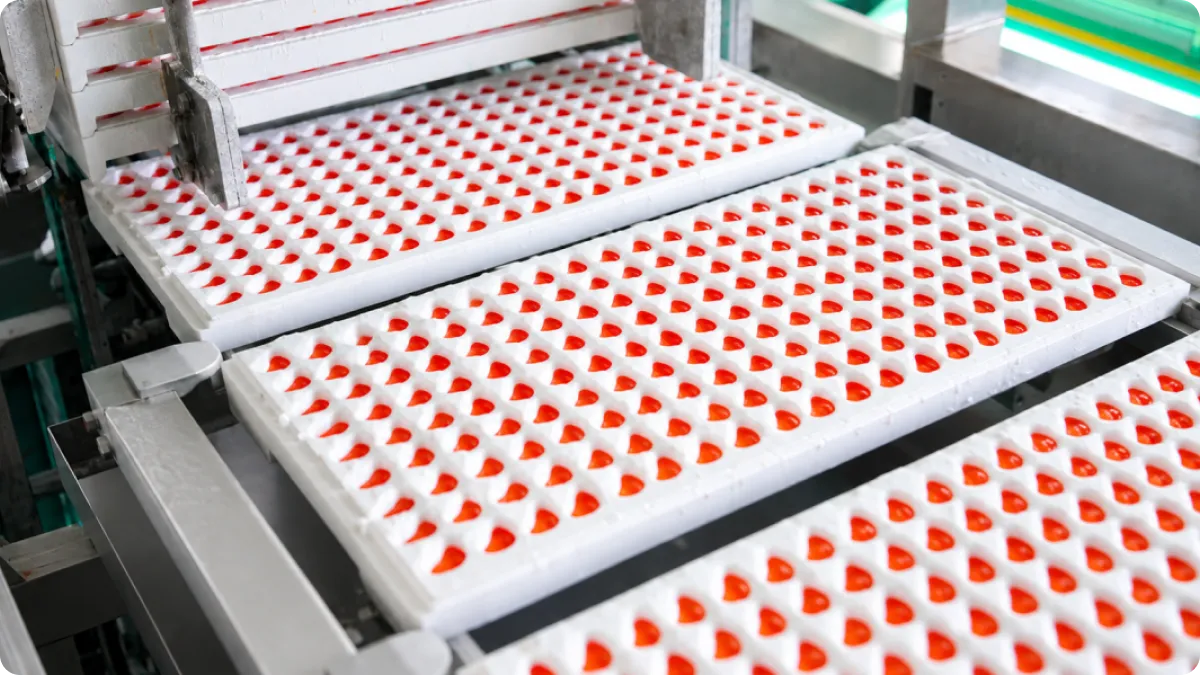
All of these choices are open on our side. You can pick finished recipes from our gummy product catalog, order standing formulas at container volume through our wholesale program, or brief us on a fully custom gummy — base, flavor, color system, and coating built to your market's rules. Sampling takes approx. 1 week for standard products, and custom shapes that need a new mold add about another week; production runs under HACCP and ISO 22000 food safety systems with batch traceability.
Ready to match a recipe to your market? Send us your target market, format, and dietary requirements at info@sweetosweets.com and our team will return a formulation proposal and quote within 24 hours.
Not always. Commercial gelatin can come from different animal raw materials, and the source is defined in each product specification. For Muslim-majority markets, Sweeto Sweets can work with halal-certified bovine gelatin, subject to the certification scope of the formulation, and pectin-based recipes avoid animal ingredients entirely.