Custom Gummy Development: Formulation, Texture, and Compliance in One Program
Custom gummy development covers more than picking a flavor and a shape. A complete development program includes the base formula, the texture target, the regulatory requirements of the destination market, and the packaging that protects the product through shipping and shelf life. When these parts are handled by separate vendors, the buyer carries the coordination cost and the risk of mismatched decisions. When they run inside one program at the manufacturer, each decision is made with the others in view. This article explains how that process works in practice, from the first brief to production. Our custom gummy program is organized around this same sequence, and the checkpoints below describe what happens at each stage.
The following sections cover the four building blocks of a custom gummy project: formulation, texture, compliance, and process, followed by what buyers should prepare before starting. For brand owners and importers, the practical value of this structure is predictability: each decision is documented, each stage has a physical or written output, and the product that ships is the product that was approved.
What Custom Gummy Development Covers
A custom gummy project moves through a defined sequence: brief, formulation, sampling, specification, pilot production, and mass production. Each stage has its own output, and each output becomes the input of the next stage.
The brief defines the product in commercial terms: target market, sales channel, price positioning, dietary requirements, and expected volumes. Formulation translates the brief into a recipe: gelling system, sweeteners, flavors, colors, acid balance. Sampling turns the recipe into a physical product for evaluation. The specification sheet records the agreed parameters in writing and becomes the quality reference for production.
Development also covers decisions that are easy to overlook at the start. Mold selection or new tooling, surface finish, pack format, film barrier, label content, and certification scope all belong to the same program, because each one affects another. A sour sanded finish changes the moisture requirements of the packaging film. A vegan claim changes the cleaning validation between production runs. Handling these decisions together is what separates a development program from a simple price quotation.
Formulation: The Base System and Its Options
The gelling system is the first formulation decision, because it shapes texture and heat behavior at the same time. Gelatin, pectin, carrageenan, and starch systems each carry a different profile, and the choice follows the target market and the desired bite rather than habit. Gelatin suits the classic elastic chew and aerated formats. Pectin suits firm, clean-bite products and plant-based positioning. Starch-based and blended systems cover further texture and format requirements.
Sweeteners come next. Standard recipes use sugar and glucose syrup, and sugar-free versions use bulk sweeteners such as isomalt, maltitol, depending on the specification. Sugar-free formulas behave differently in cooking and drying, so they are developed as their own recipes rather than simple substitutions.
Flavor and color are among the factors that shape shelf appeal, alongside packaging and format. Flavor selection follows the market: fruit profiles differ between regions, and acid choice shapes the sourness curve. Citric acid reads sharp and short, malic acid reads rounder and longer, and the two are blended to tune the profile. On color, artificial and natural options behave differently: natural shades are less vivid and fade faster under light and heat, which makes packaging protection part of the color decision. The shift toward natural colors is also backed by regulation. The U.S. FDA is working with the food industry to phase out petroleum-based synthetic dyes from the food supply by the end of 2027 and tracks these commitments publicly FDA, Tracking Food Industry Pledges. This is a trade-off worth stating clearly in the brief, so the product on the shelf matches the expectation set at development.
Moisture and soluble solids are set at the same stage. The finished product's moisture target and its Brix, the share of dissolved solids in the syrup, decide how the candy holds water over its shelf life. These targets are chosen together with the gelling system, because each system binds water differently. Setting them early keeps later decisions, such as drying time and packaging barrier, consistent with the recipe.
Texture Engineering: From a Reference to a Repeatable Bite
Texture is the part of a brief that is hardest to put into words, and the part that matters most to repeat purchase. Development handles it as a measurable target rather than a vague preference.
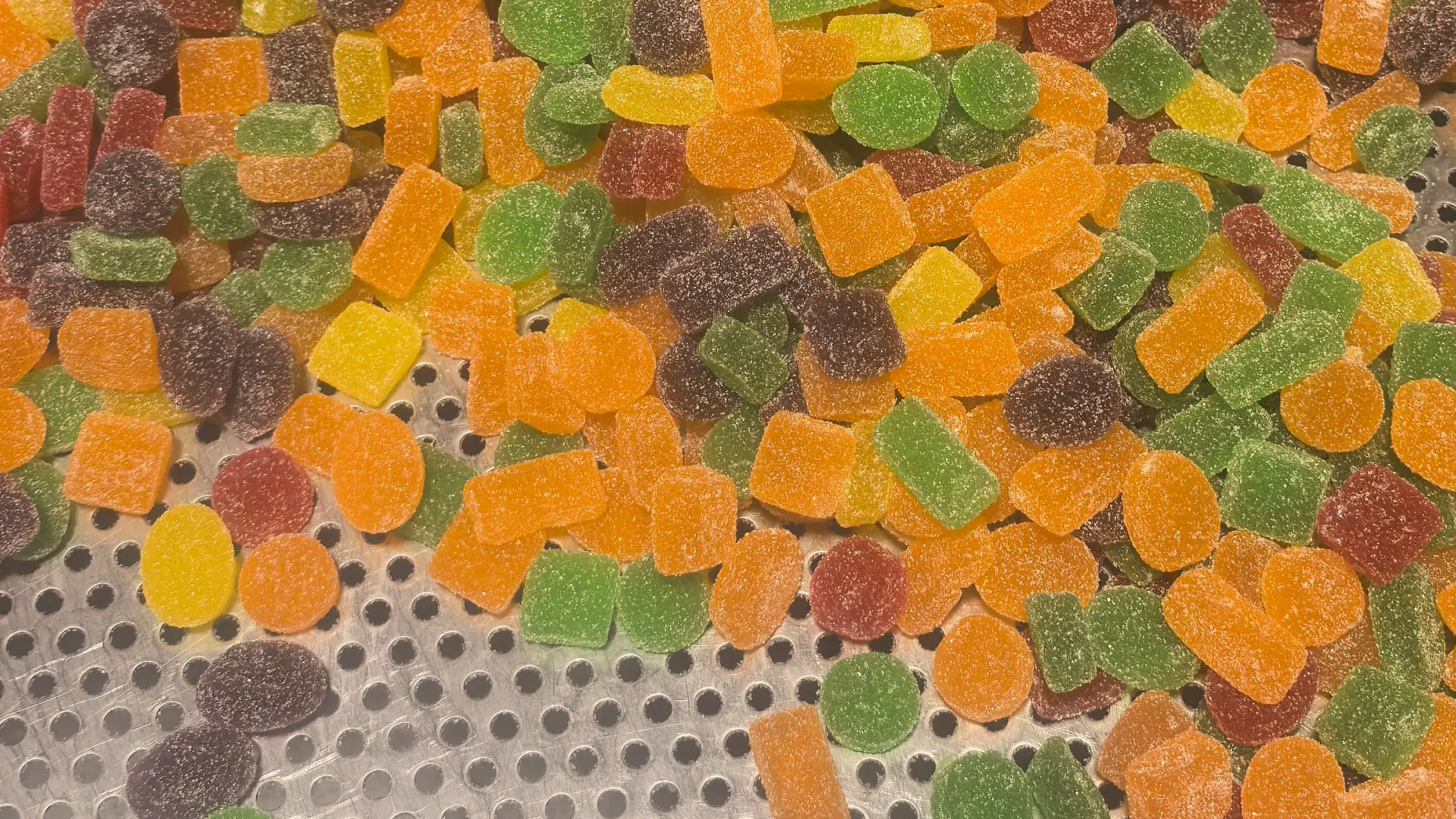
The useful starting point is a reference: an existing product on the market, or one of the manufacturer's current samples. From that reference, the formulator adjusts the bite in defined directions, such as softer or firmer and the surface feel, such as oiled, sugar sanded, or sour sanded. Each direction corresponds to known formulation levers, including the gelling system, its grade and dosage, and the moisture target of the finished product.
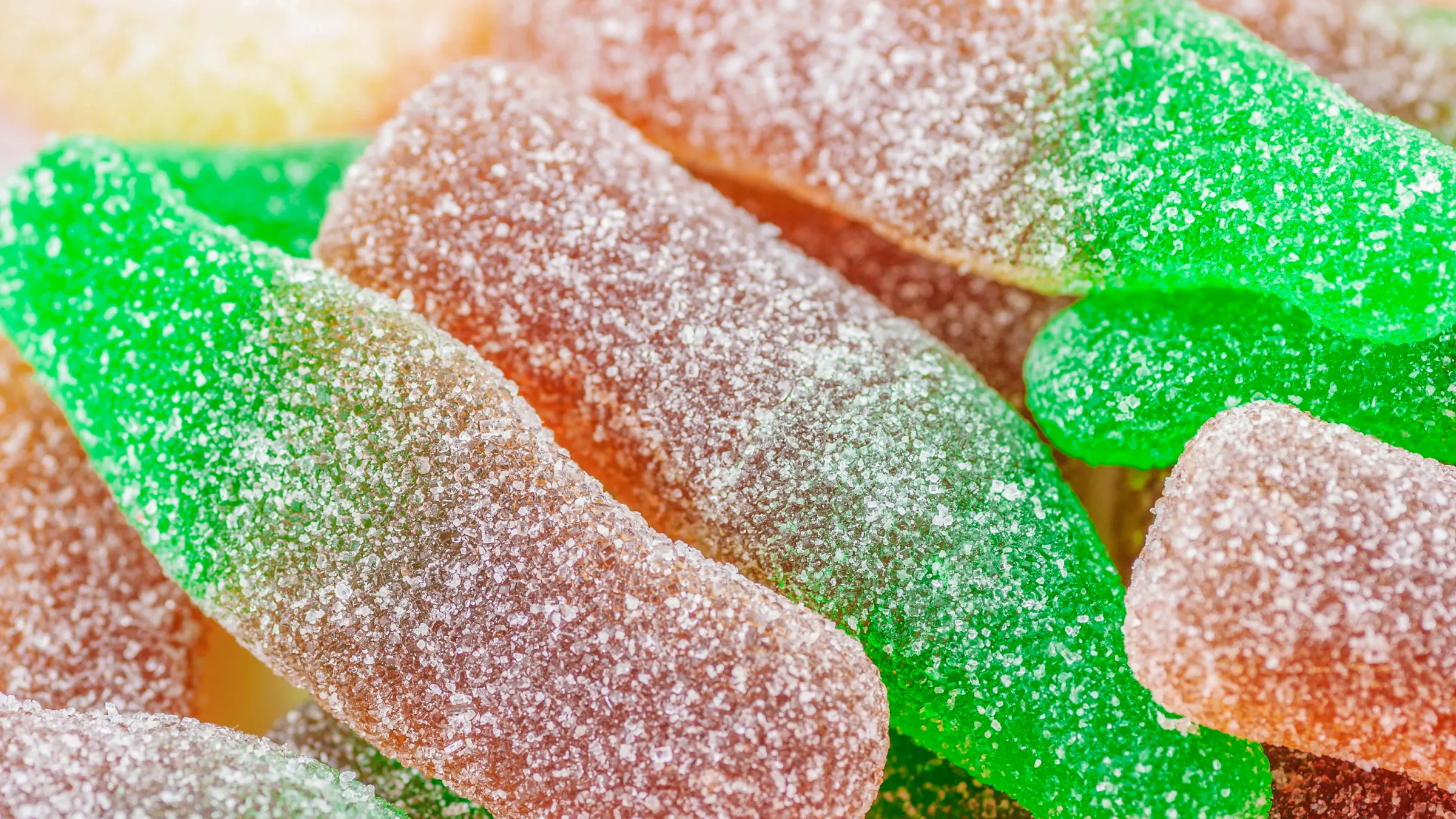
Texture decisions also interact with format. Filled and peelable products need a shell and a center designed to stay stable together over shelf life. Aerated products rely on foam stability in the syrup stage. Belts and ropes are produced on extrusion lines and carry a different bite from deposited pieces. Surface finish is part of texture work rather than decoration. An oiled finish changes the surface feel and reduces sticking. Sugar sanding adds a crystalline layer and a first sweetness note. Sour sanding adds acid at the surface, which reads before the body of the candy is chewed. Each finish interacts with moisture control and packaging, so the finish is confirmed at sampling, not after.
A development program reviews format and texture together, because a texture that works in a bear shape may need adjustment in a filled or layered format.
One practical note on evaluation: texture is judged on the sample, not on the specification. Numbers such as moisture targets and gelatin grades describe the product, but the decision to approve should come from tasting and handling the physical sample under realistic conditions, including a few days of storage in conditions similar to the destination market. Samples are produced precisely so that this judgment can happen before any production commitment.
Sampling closes the loop. Physical samples are produced for evaluation, adjusted against feedback, and produced again until the buyer signs off. The approved sample then anchors the specification sheet, so that mass production is measured against something both sides have held and tasted.
Compliance Built into Development
Compliance work starts at formulation, not at the port. The destination market's rules shape which colors, acids, and claims can be used, and designing around them early avoids reformulation later.
Color regulation is the clearest example. The European Union, Israel, and Turkey do not permit titanium dioxide, E171, in food, while other markets still allow it. The European Union also requires warning labels on six synthetic colors associated with effects on children's attention, which leads many brands to avoid them voluntarily. The evaluation and authorization status of additives in the EU is published by the European Food Safety Authority, and it is a useful reference when planning formulas for European markets. For products targeting these markets, development can work with natural colors or physical whiteness from aeration instead of E171, depending on the visual target.
Dietary claims follow the same logic. Halal, kosher, and vegan positioning each carry ingredient-source requirements and production-control requirements. A formula can be designed for them from the start, with gelatin source specified, plant-based systems selected, or sugar sourcing defined. Certification then verifies what was designed in, rather than forcing changes after the fact. Certification scope and documentation are matched to the destination market, and supporting documents are provided on request.
Labeling sits at the end of the same chain. Ingredient declarations, allergen statements, and nutrition panels follow different formats in the United States, the European Union, and Middle Eastern markets. The specification sheet produced during development supplies the data for these labels, so label review is a confirmation step rather than new work.
From Brief to Sample: How the Process Runs
The operational sequence of a custom project is straightforward when each stage has a clear output, and both sides know what to expect at the next step.
Brief and feasibility. The buyer provides the target market, product direction, and any reference products. The manufacturer responds with a feasibility view covering the gelling system, format, and any constraints, together with a development proposal.
Formulation and sampling. The formulator builds the recipe and produces samples. Stock-based samples move quickly, and projects involving new shapes need additional time for tooling. Sample feedback cycles continue until the product is approved.
Specification sheet. The agreed product is documented: formula parameters, moisture and Brix targets, packaging, testing items, and tolerances. The specification sheet functions as the quality agreement between both sides, and it is the reference for every reorder.
Production. Production begins after the specification is signed, with batch records and process data kept per batch. For buyers who want independent verification, third-party testing can be arranged on request, with reports issued before shipment.
Timelines depend on the project scope, so schedules are confirmed per project once the specification is clear. A factory that develops and produces in the same site can adjust priorities internally when a project needs to move faster.
What to Prepare Before Starting a Custom Project
A project moves faster when the brief answers the questions the formulator will ask. Five items cover most of it:
- Target market and channel, which define compliance scope and packaging direction.
- Texture reference, ideally a physical product or a description against a known product.
- Dietary and certification requirements, such as halal, kosher, vegan, or sugar-free, stated at the start rather than added later.
- Expected volume and reorder pattern, which shape MOQ discussions and production scheduling.
- Packaging direction, including format, size range, and any label languages. Film structure, pack size, and closure type are selected with the product rather than after it, since the finish and moisture target of the candy define what the packaging has to do.
None of these needs to be final at the first contact. Development is a structured way of turning approximate answers into a finished product, and the early conversations are part of that work.
Developing Custom Gummies with Sweeto
Custom development at our factory runs as one program. In-house formulators handle recipe design, texture adjustment, and sampling, with production, quality control, and packaging in the same facility. We work across gelatin, pectin, carrageenan, and starch systems, and support sugar-free, high-protein, natural color and natural flavor, halal, kosher, and vegan projects within certification scope. The factory operates under HACCP and ISO 22000 with FDA registration, and hot-climate stability testing is available for export projects, so route and destination conditions enter the development discussion before production starts.
To start a project, send us your target market, texture reference, and certification requirements through our custom gummy program. Standard commercial terms are listed on our wholesale gummies page, and an overview of production lines and quality systems is on the capabilities page. Buyers reviewing formats can also browse our published guides on types of gummy candies and gelatin in gummies.
Custom gummy development is the process of turning a product brief into a manufacturable gummy: formulation, texture design, compliance review, sampling, specification, and production. It covers the recipe as well as the shape, surface finish, packaging, and documentation needed for the destination market.