Gummy Candy Market Trends 2026: Data and Outlook from a Manufacturer
The global jellies and gummies market is valued at roughly USD 7.8 billion in 2026 and is forecast to reach USD 13.2 billion by 2036, a 5.4% CAGR, according to Future Market Insights. Broader definitions that also count gummy vitamins and supplements push the estimate past USD 25 billion (Dataintelligence). Three forces shape the 2026 outlook: functional and reduced-sugar recipes are growing faster than the category itself, texture innovation such as peelable and cluster formats is winning the novelty shelf, and demand is shifting geographically toward Asia-Pacific and halal-certified markets.
At Sweeto Sweets we manufacture and export gummies to more than thirty markets, so we read market reports from the production side: which trends change what buyers order, which ones change what factories must build, and which ones are noise. This report summarizes the 2026 numbers and translates them into decisions for importers, wholesalers, and private-label brands.
Market Size and Growth at a Glance
Published estimates vary because each research house draws the category border differently — some count only confectionery gummies, others fold in gummy vitamins and supplements. The table below puts the most cited published figures side by side, with the scope and the research house behind each one.
| Metric | Figure | Scope / Source |
| Market value 2026 | USD 7.8 billion | Jellies and gummies, confectionery focus (Future Market Insights) |
| Forecast 2036 | USD 13.2 billion, 5.4% CAGR | Same scope |
| Broad gummy market 2025 | USD 25.5 billion, ~9.8% CAGR | Including supplement gummies (Dataintelligence) |
| Functional share | ~35% of product mix | Functional vs. traditional gummies (Future Market Insights) |
Two readings hold across every report regardless of scope. First, the category grows steadily rather than explosively in confectionery terms, and nearly all of the incremental value comes from functional, reduced-sugar, and plant-based recipes. Second, manufacturing capacity keeps concentrating in China, which is why sourcing decisions increasingly decide who captures the growth.
The Six Trends That Matter in 2026
1. Functional and Better-for-You Gummies Keep Expanding
Functional gummies keep taking share: Future Market Insights puts them at roughly a third of the product mix, and new launches skew further toward vitamin, plant-based, and wellness positioning. On the consumer side, sugar reduction has moved from a niche preference to a mainstream shopping habit, and sugar-free and plant-based output is growing faster than the conventional range. The practical result for 2026: every conventional assortment now needs a better-for-you answer, and for most importers that starts with a reduced-sugar or plant-based SKU rather than a supplement format.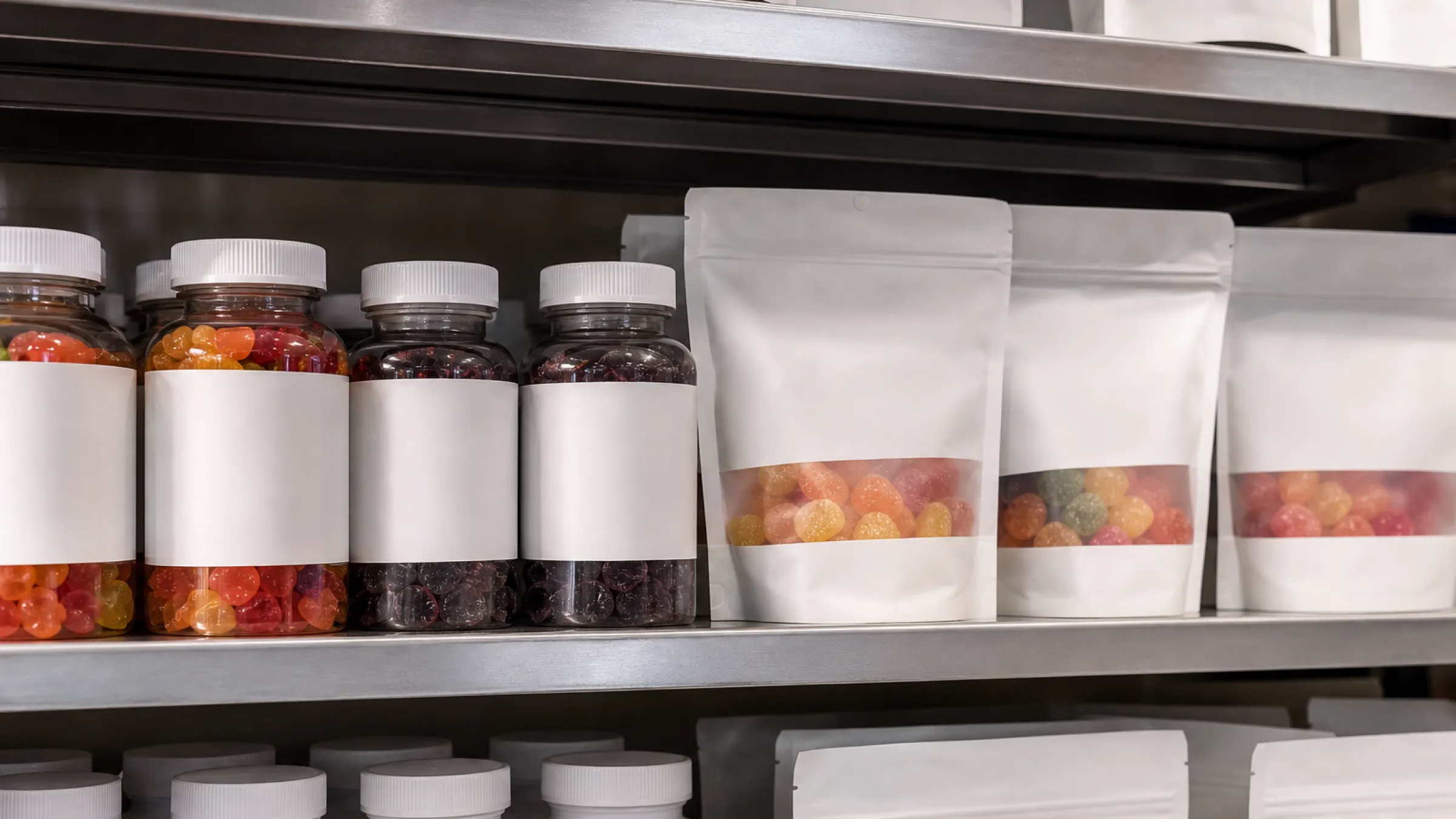
2. Texture Innovation Wins the Novelty Shelf
The loudest launches of the past three years share one trait: a second texture. Crunchy-shell clusters, liquid-filled centers, and layered peelable gummies all sell the experience before the flavor. Peelable formats moved from Asian viral status to mainstream listings in Europe and the Americas, and they hold a higher price point than standard gummies. Texture hybrids are the safest novelty bet for 2026 because the format itself generates the marketing content.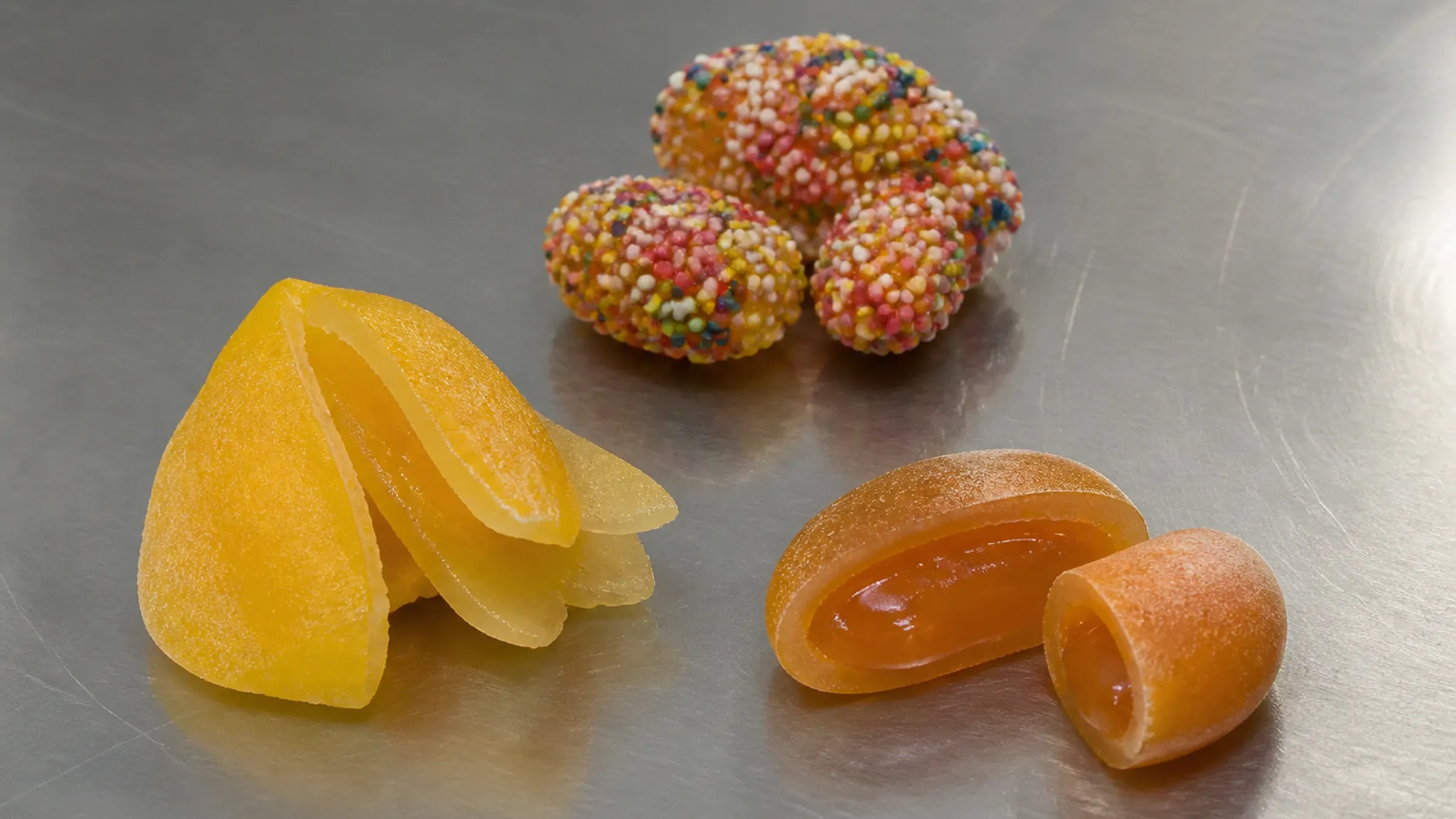
3. Plant-Based and Halal Move from Niche to Standard Request
Gelatin still carries most of the world's gummy volume, but the direction of travel is clear: pectin recipes are the default request in premium and wellness channels, and buyers in the Middle East, Southeast Asia, and parts of Europe increasingly ask for halal certification, within the scope each supplier holds. For import programs, the question has shifted from "should we offer a vegan or halal line" to "which SKUs justify the second recipe first." Our guidance is to start where the segment premium is real — sour and fruit shapes — rather than converting the whole catalog.
4. Sour Holds Its Growth Run
Sour remains the strongest flavor trend in conventional gummies, with malic-acid extreme-sour lines extending the segment upward in age. Sour worms, belts, and sour assortments consistently rank among the fastest-rotating SKUs in the wholesale programs we ship, and the format translates across regions with almost no localization cost.
5. Growth Shifts East
North America still leads consumption, but Asia-Pacific is the fastest-growing region: Future Market Insights forecasts China at a 7.3% CAGR through 2036 — the highest country-level rate in that forecast — with India building from a smaller base. The Middle East adds a compliance-driven opportunity: demand for halal-certified gummies rises with retail modernization in the Gulf states, and buyers there raise certification scope early in the sourcing process.
6. Clean Label and Packaging Become Shelf Criteria
Retailers increasingly read ingredient lists before they taste samples. Natural colors and flavors, shorter labels, and barrier packaging that protects texture without excess plastic now appear in buyer scorecards alongside price. A gummy that arrives sticky or faded after ocean transit fails the listing regardless of how the recipe tasted at sampling — which is why we treat film specification and moisture control as part of the product, as covered in our manufacturing capabilities.
Channel Watch: Where Gummies Are Gaining Shelf
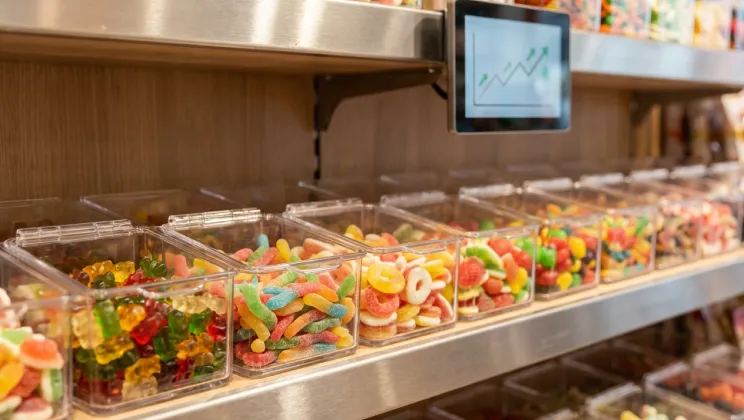
Distribution data adds a layer the headline figures miss. Supermarkets and hypermarkets still move the largest gummy volumes, and their planograms are where functional and reduced-sugar SKUs are displacing slow conventional items. Specialist candy stores and bulk-bin retail keep growing on color and variety, which favors fruit shapes, belts, and pick-and-mix formats over packaged novelty. Online retail is the smallest of the three channels by volume but the most important for new formats: peelable gummies and texture clusters built their initial demand almost entirely through social commerce before supermarkets listed them. For buyers, the practical rule is to let online sell-through validate a novelty format, then move it into physical distribution once the repeat rate is proven.
Private label deserves a separate note. Retailers in Europe and North America continue expanding own-brand confectionery, and gummies are among the easiest categories to convert because the manufacturing base in China already runs the certifications these programs ask for. A private-label gummy program launched in 2026 lands on exactly the trends above: the retailer wants a better-for-you option, a novelty format, and a halal or plant-based claim somewhere in the range. Factories that can run all three on one line set shorten the program by months.
What the 2026 Trends Mean for Your Assortment
Market data only matters when it changes a purchase order. The table below converts each trend into a concrete assortment move for importers and private-label programs.
| Trend | Assortment Move | Timing |
| Functional and reduced sugar | Add one better-for-you SKU to validate the channel before expanding | Next order cycle |
| Texture innovation | Carry one peelable or cluster item as the novelty anchor | Now; the format is still climbing |
| Plant-based and halal | Convert sour and fruit SKUs first, where the segment premium is proven | Within 6–12 months |
| Sour growth | Anchor the range with worms and belts, extend with extreme sour | Immediate |
| Regional shift | For Gulf and Southeast Asia programs, confirm halal certification scope from day one | Before listing negotiations |
| Clean label and packaging | Request natural color options and barrier film specs in every quotation | At RFQ stage |
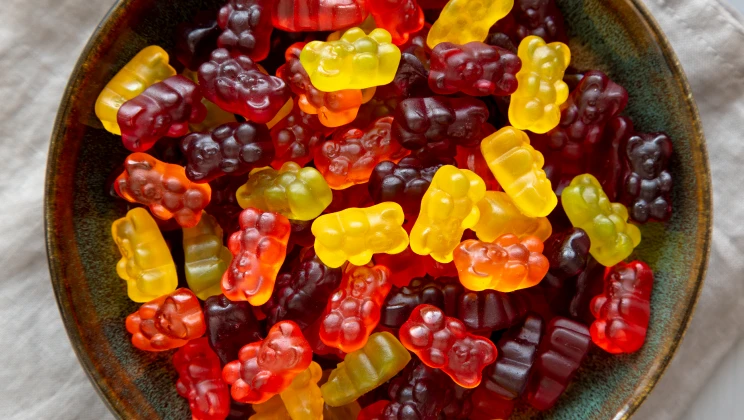
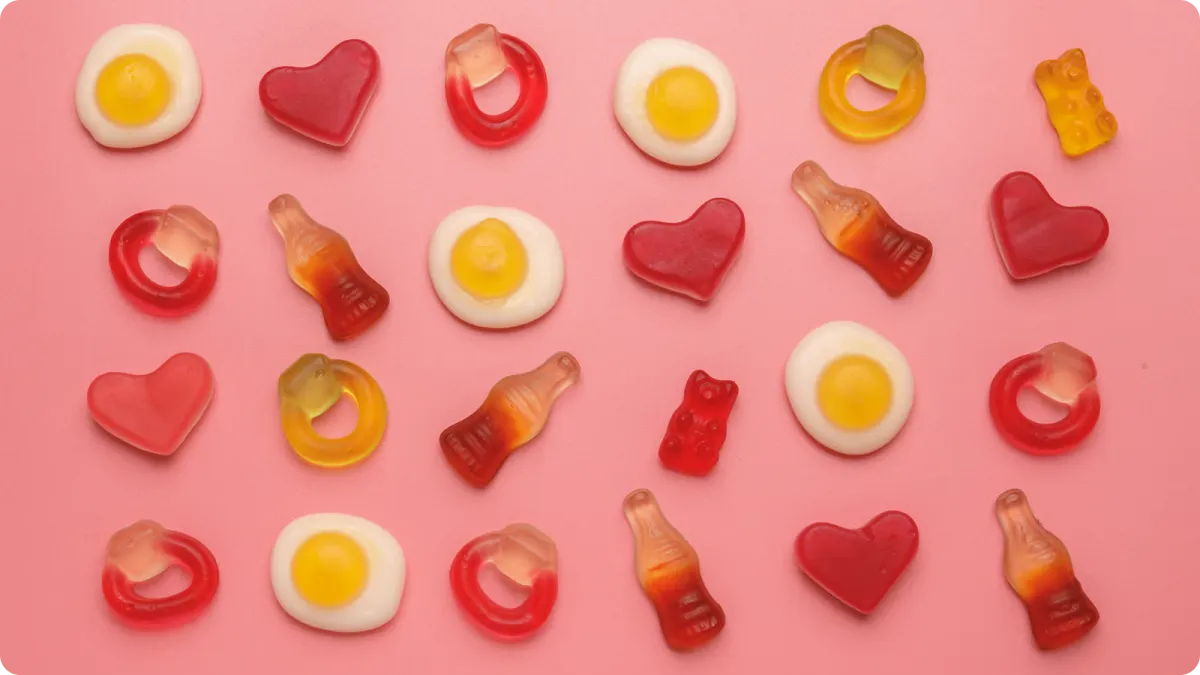
One caution applies to the whole list. Trend SKUs earn their place through rotation, not through presence. The buyers we see succeed run a stable core — gummy bears, worms, and cola bottles still generate the volume — and reserve a controlled share of shelf for trend items they review every two quarters.
Seasonality rounds out the planning picture. Halloween, Christmas, Valentine's Day, and Easter each create a predictable demand spike for themed shapes, and the buyers who capture it place orders three to four months ahead so production, drying, and ocean transit finish before the selling window opens. Trend items follow the same calendar once they enter a seasonal program.
Build Your 2026 Program on Current Data
Whether you are refreshing a wholesale assortment or developing a custom line for a specific market, send us your channel and target region. We reply with specifications, samples, and a quotation aligned with the trends above. Browse the product catalog to see current formats.
Estimates depend on scope. Future Market Insights values the jellies and gummies confectionery market at USD 7.8 billion in 2026, growing to USD 13.2 billion by 2036 at a 5.4% CAGR. Broader definitions that include gummy vitamins and supplements put the market above USD 25 billion (Dataintelligence).