How Are Gummies Made? The Complete Manufacturing Process Explained
Gummies are made in eight steps: raw materials are weighed and cooked into a syrup, the syrup is deposited into molds, the pieces set and dry to their final moisture, and then they are demolded, surface-finished, inspected, and packed. A production run can take anything from about a day to several days from cooking to finished candy, depending on the recipe and the piece, with drying consuming most of that time. The two variables that shape everything else are the gelling agent — gelatin sets slowly and needs long drying, pectin sets fast and tolerates heat — and the molding method, which is either a starch mogul line or starchless molds.
At Sweeto Sweets we run this process daily, producing gummies for importers, wholesalers, and private-label brands in more than thirty markets. Buyers rarely ask for a factory tour, but they always ask the questions behind one: why a first order takes 30–45 days, why custom shapes need new mold tooling, why a sample can arrive perfect and a container can still fail. Each answer sits in one of the eight steps below.
The Eight Steps of Gummy Manufacturing
1. Compounding and Cooking
Production starts in the kitchen. Gelatin is soaked in water until it hydrates, then mixed with glucose syrup, sucrose, and water in a jacketed cooker. The batch is heated and stirred until the solids reach the level that recipe calls for, checked at the cooker with a refractometer. Flavors, colors, and acids go in near the end of cooking, because prolonged heat degrades both aroma and acidity. Vacuum deaeration removes trapped air at this stage on premium lines, which is why high-clarity gummies look translucent instead of cloudy.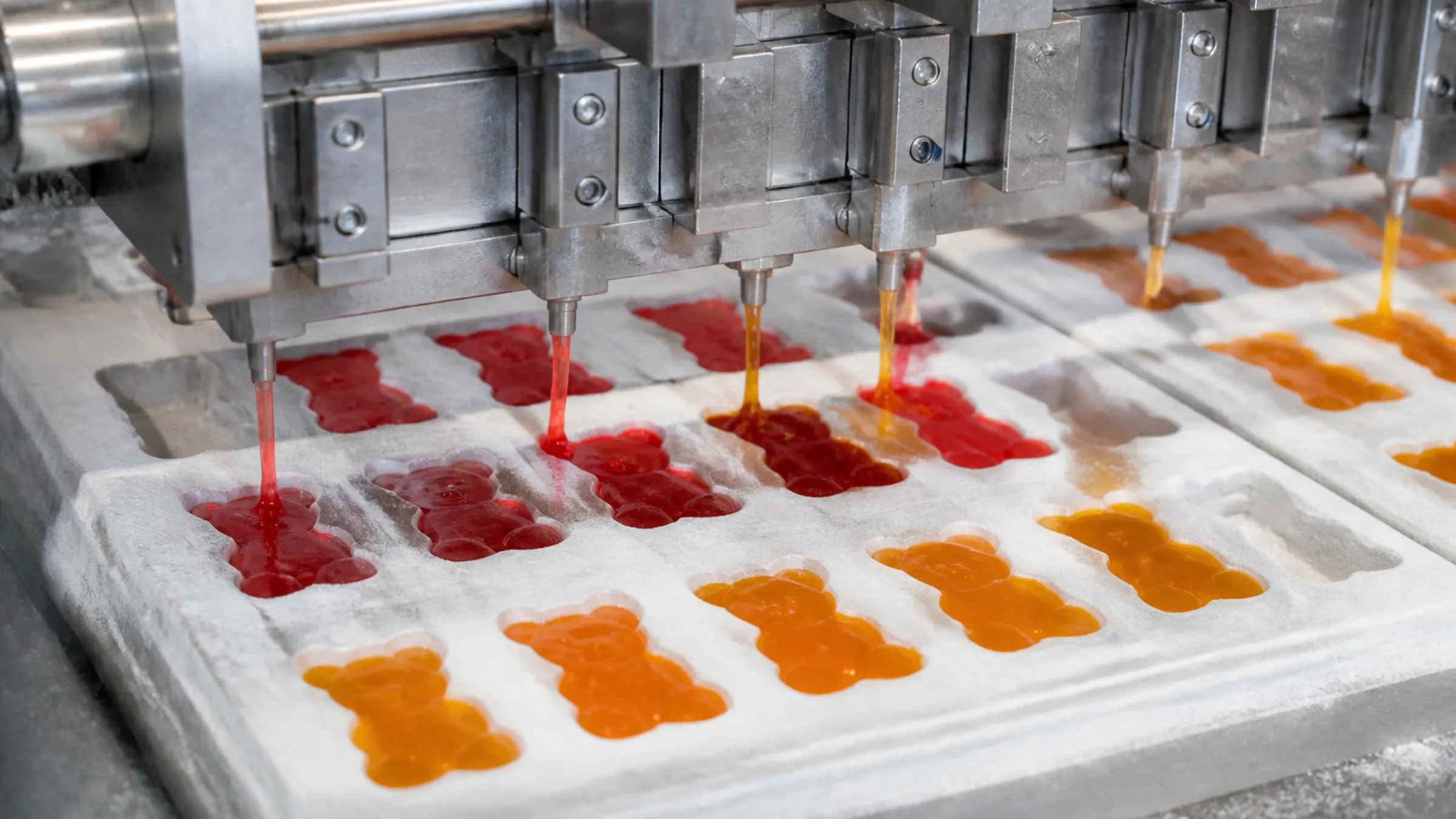
2. Depositing
The hot syrup moves to a depositor, which doses it into molds at controlled volume. Servo-driven piston depositors fill hundreds of cavities per cycle and can run two hoppers at once for two-color pieces, layered products, or center-filled gummies with a liquid core. Deposit accuracy matters more than speed here: a one-gram deviation per piece becomes a weight dispute across a full container.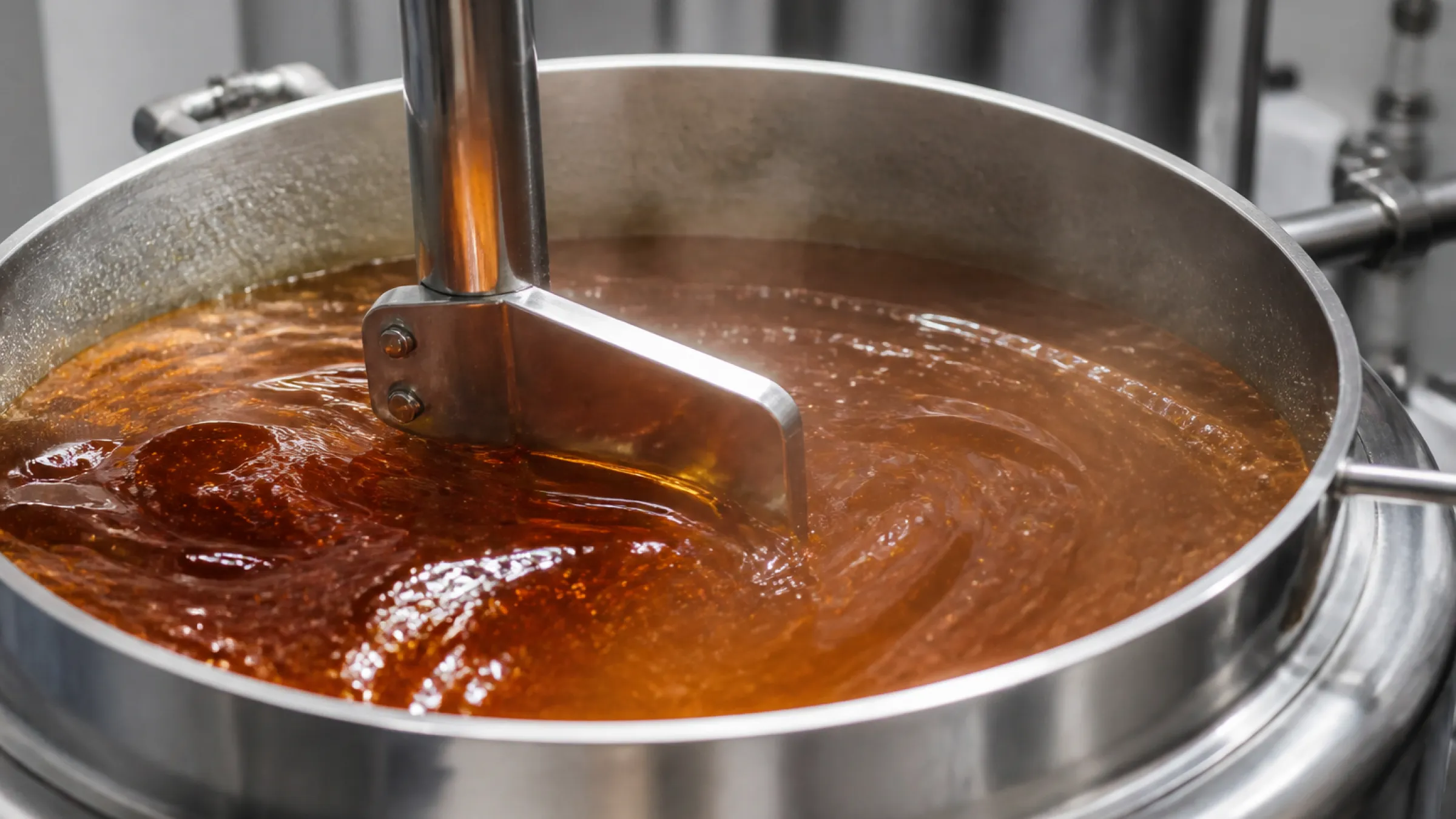
3. Setting
Freshly deposited gummies are soft enough to deform under their own weight, so they rest until the gel network forms. Pectin sets within minutes as the syrup cools past its setting point. Gelatin sets more slowly and keeps relaxing for hours, which is why gelatin pieces stay in their molds longer before they can be handled.
4. Drying and Curing
Drying is the longest step and the one that decides shelf life.
Drying and setting conditions are set by formulation and product format, not by one schedule that fits every gummy. Gelatin pieces are dried in conditioned rooms at moderate temperature, because the gel network softens when the air runs too warm, and they only hold their shape once enough water has left the piece. Starch-molded, pectin and carrageenan products behave differently: the starch tray itself draws water out of the piece, and these systems tolerate warmer, shorter drying. Piece size, coating and pack format move the target again, since a large filled shape loses water far more slowly than a small sanded one. Depending on destination countries and shipping conditions, we further adjust drying to achieve a suitable moisture level and minimize adverse impacts on the candies. Under-dried gummies sweat, stick together, and grow mold in transit; over-dried gummies turn hard and lose their chew. 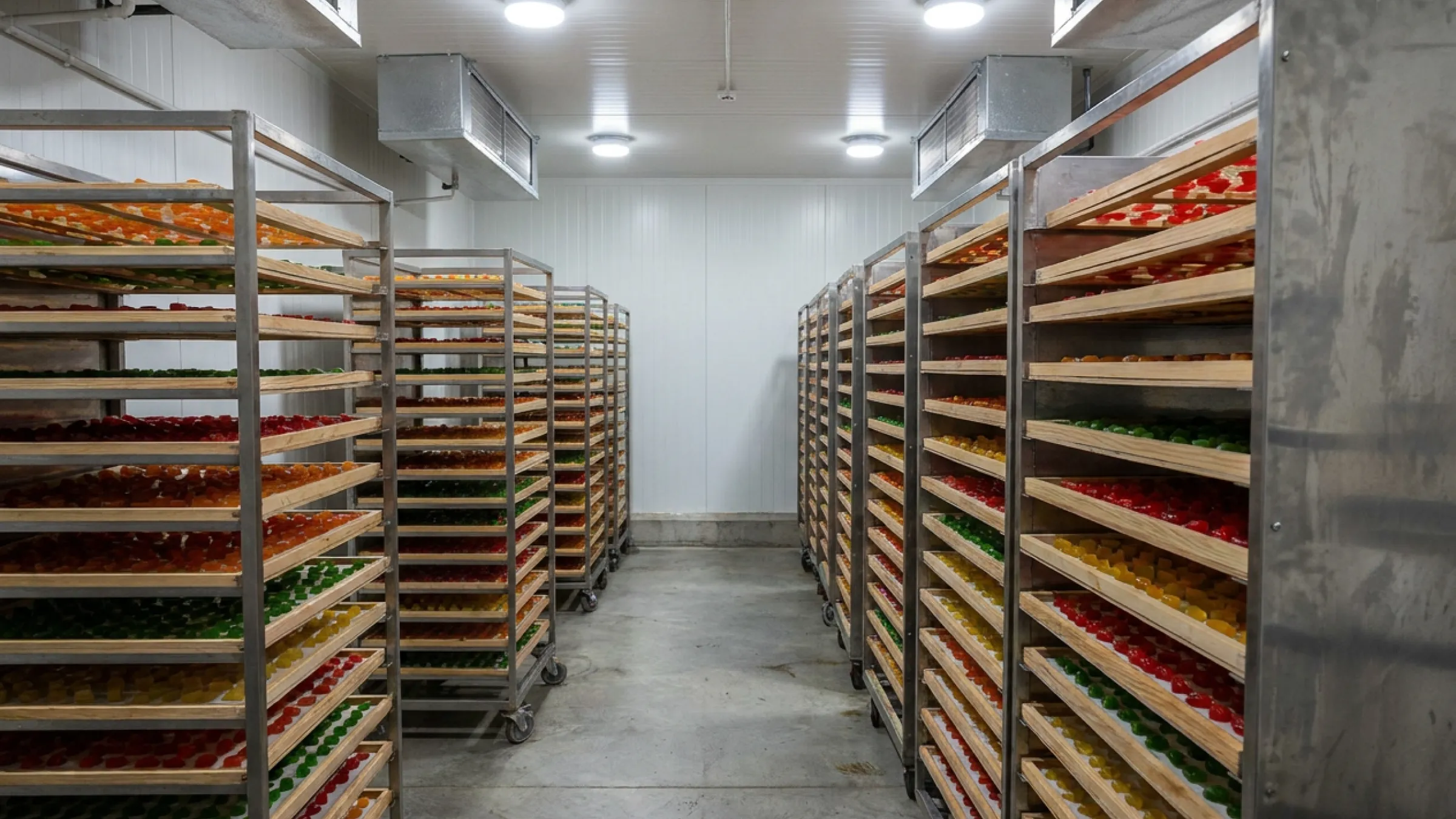
5. Demolding
Once the pieces reach handling strength, they are separated from the mold. On a starch mogul line, trays are tipped and the starch is sifted away, reclaimed, reconditioned, and reused. On starchless lines, pieces are ejected from silicone or metal molds and the molds cycle back for the next deposit.
6. Surface Finishing
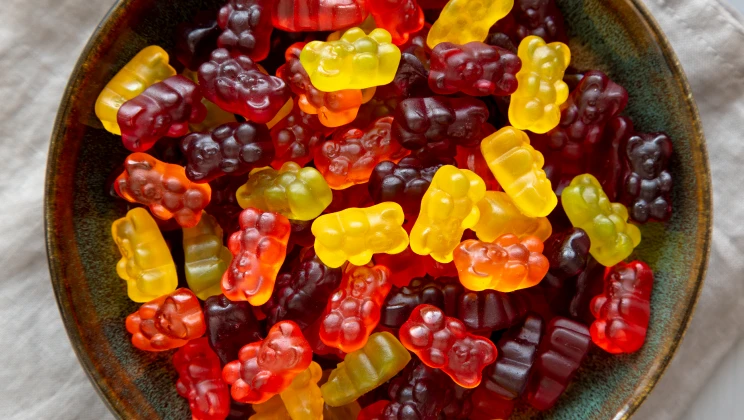
Raw demolded gummies are tacky, so every piece gets a surface treatment. Sanding drums tumble the candy with sugar or with an acid-sugar blend for sour lines; oiling drums apply a thin coat of food-grade oil for a glossy, free-flowing finish like the one on classic gummy bears. The coating is functional, not decorative: it blocks moisture pickup and keeps pieces from clumping in the bag.
7. Quality Control
Inspection runs through the whole line rather than sitting at the end. Line checks cover piece weight, moisture, texture, color, and coating evenness against the specification agreed for that product, and finished goods pass through metal detection and checkweighing before release. Production records identify the run behind each carton, so a later complaint can be traced back to the batch it came from, and third-party laboratory testing can be arranged when a buyer or a destination market asks for it.
8. Packaging
Finished gummies go into barrier film bags that limit moisture exchange, then into cartons sized for ocean freight. Packaging is part of the process, not an afterthought: a correctly dried gummy in a poor barrier bag will still absorb moisture during a humid transit and arrive sticky. This is why we treat film specification as a formulation decision.
Starch Mogul vs. Starchless Depositing
Two molding technologies dominate industrial gummy production, and most export factories run one or both. The differences matter to buyers because they affect shape flexibility, hygiene profile, and cost.
| Starch Mogul Line | Starchless Line | |
| Molding medium | Trays of food-grade starch, printed with cavities | Reusable silicone or metal molds |
| Shape flexibility | Very high; new shapes only need new tray impressions | Limited; each shape needs machined molds |
| Best for | Novelty shapes, layered pieces, filled and peelable gummies, frequent SKU changes | High-volume standard shapes with strict hygiene demands |
| Hygiene profile | Starch must be conditioned and monitored; well-run lines control it fully | No starch in the environment; easier to validate for sensitive certifications |
| Residue | Trace starch on the surface, removed in finishing | None |
One detail worth knowing is how the starch itself is managed. On a modern mogul line, used starch is continuously collected, sifted, dried back to its target moisture, and returned to the trays, so the molding medium stays consistent across shifts. When a factory's gummies arrive with surface grit or cloudy patches, the cause is usually poorly conditioned starch rather than the recipe.
The mogul line has shaped gummies for over a century, and it remains the default for variety-driven production because changing a product means changing a tray impression rather than a machined mold. Starchless technology wins where the same shape runs for weeks and the customer audit puts hygiene above flexibility. For most wholesale assortments with dozens of shapes, mogul is the practical choice.
How the Process Changes Between Gelatin and Pectin
The same equipment can run both gelling systems, but the process windows differ enough that a line must be scheduled and controlled differently for each.
- Setting behavior. Gelatin is thermoreversible: it melts near 35°C and resets when cooled. Pectin sets irreversibly within a narrow pH window, so the acid that would balance flavor must be dosed late and precisely, or the batch sets inside the depositor.
- Drying time. Gelatin gummies dry slowly and at moderate temperature, so they occupy the drying rooms for the longest part of the cycle. Pectin and starch-molded pieces release water faster and tolerate warmer air, which shortens the production cycle. The actual schedule is fixed product by product.
- Heat tolerance. Finished gelatin gummies soften again in a hot container, while pectin pieces hold their shape. For summer shipments to the Middle East, this single difference often decides the recipe.
- Certification path. Gelatin recipes can serve halal programs through certified bovine gelatin, for eligible formulations and projects and subject to certification scope; pectin recipes serve vegan programs directly. Both systems are available, and the choice is a market decision before it is a technical one.
Factory-made gummy bears start as a cooked syrup of gelatin, glucose syrup, sugar, and water. The syrup is deposited into bear-shaped cavities printed in starch trays, sets as it cools, dries in conditioned rooms until it reaches the moisture target for that recipe, and is then demolded, coated with a light oil finish, inspected, and packed.