Best Gummy Candy: A Manufacturer's Guide to Quality and Bestsellers
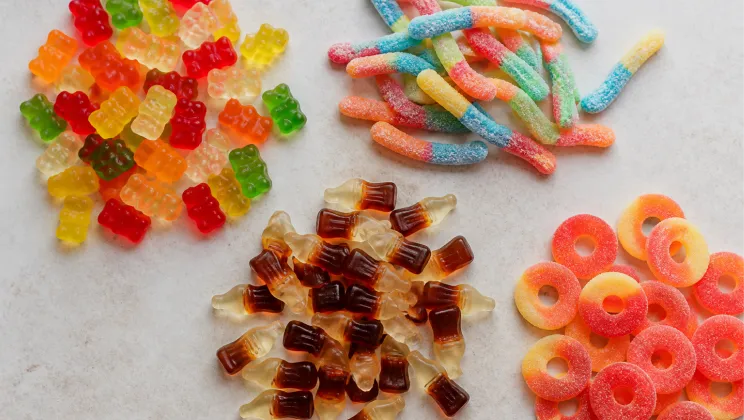
The best gummy candy delivers a clean, elastic chew, a flavor that matches its shape and color, and a surface that stays dry and free-flowing from the production line to the retail shelf. Measured by global retail sales, gummy bears remain the best-selling gummy format in the world, with sour gummies and cola bottles close behind. Measured by quality, the "best" label belongs to any gummy that meets five technical markers: gel strength, flavor authenticity, sweetness-acid balance, appearance, and shelf stability.
At Sweeto Sweets we formulate, produce, and export gummies. Two questions come up in most buyer conversations: which gummy types sell best in each market, and how to tell a premium gummy from a generic one before placing a container order. This guide answers both. The first part defines the quality markers we control in production. The second part ranks the formats by global demand and closes with a practical checklist buyers can use when sourcing.
What Makes the Best Gummy Candy: Five Quality Markers
Taste is personal, but quality is measurable. Across thousands of production runs, the same five parameters separate a gummy that sells through from one that sits on the shelf. The table below lists each marker with the range we work to and the fastest way to check it.
| Quality Marker | What It Means | Target Range | How to Check |
| Gel strength | Firmness and bounce of the chew | Gelatin graded for the bite the product needs; high-methoxyl pectin on vegan lines | Press a piece between two fingers; it should spring back without sticking to skin or teeth |
| Flavor authenticity | Taste matches the shape and color | Fruit flavors dosed at 0.1–0.3%, often with real juice concentrate | Smell the bag on opening; weak aroma almost always means weak flavor |
| Sweetness–acid balance | Sour notes cut through the sugar | Citric or malic acid at 1–2%, plus an acid-sugar sanding on sour lines | A good gummy tastes bright; a poor one tastes flat and cloying after three pieces |
| Appearance | Translucency, color uniformity, mold detail | Even color, sharp mold edges, uniform sugar or oil coating | Hold pieces to the light; cloudiness points to starch residue or process problems |
| Shelf stability | Texture survives shipping, warehousing, and display | Moisture target set per recipe, piece size and pack format; typical ambient shelf life 12–18 months | Ask for the spec sheet, then retest retained samples after 30 days |
Texture deserves one extra note because it decides the first bite. Gelatin gives the classic elastic chew that springs back and melts slowly in the mouth. Pectin gives a shorter, more tender bite with faster flavor release and no melt-back. Neither is better in absolute terms. The best gummy candy in the gelatin style needs a gelatin grade firm enough to hold its shape in a warm container; the best pectin gummy needs precise pH control, because pectin sets within a narrow pH window and fails outside it. When a buyer tells us a competitor's sample "tastes cheap," the cause is usually here: under-dried gel, weak gelatin, or sanding that slides off because the surface was too wet.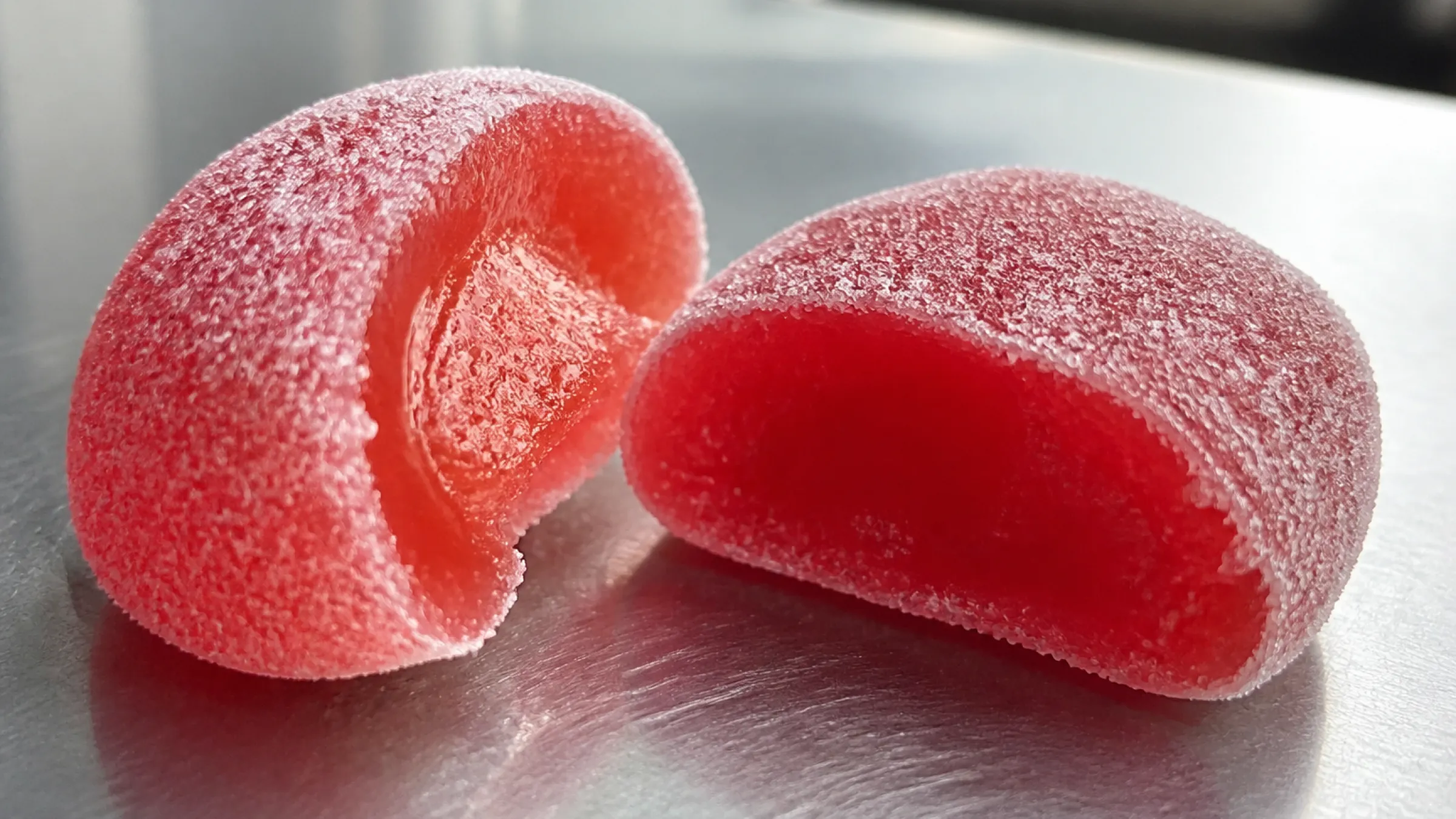
The Best Gummy Candy Types by Global Demand
Rankings below combine public retail data with the order patterns we see from importers, wholesalers, and private-label brands across Europe, the Americas, and the Middle East.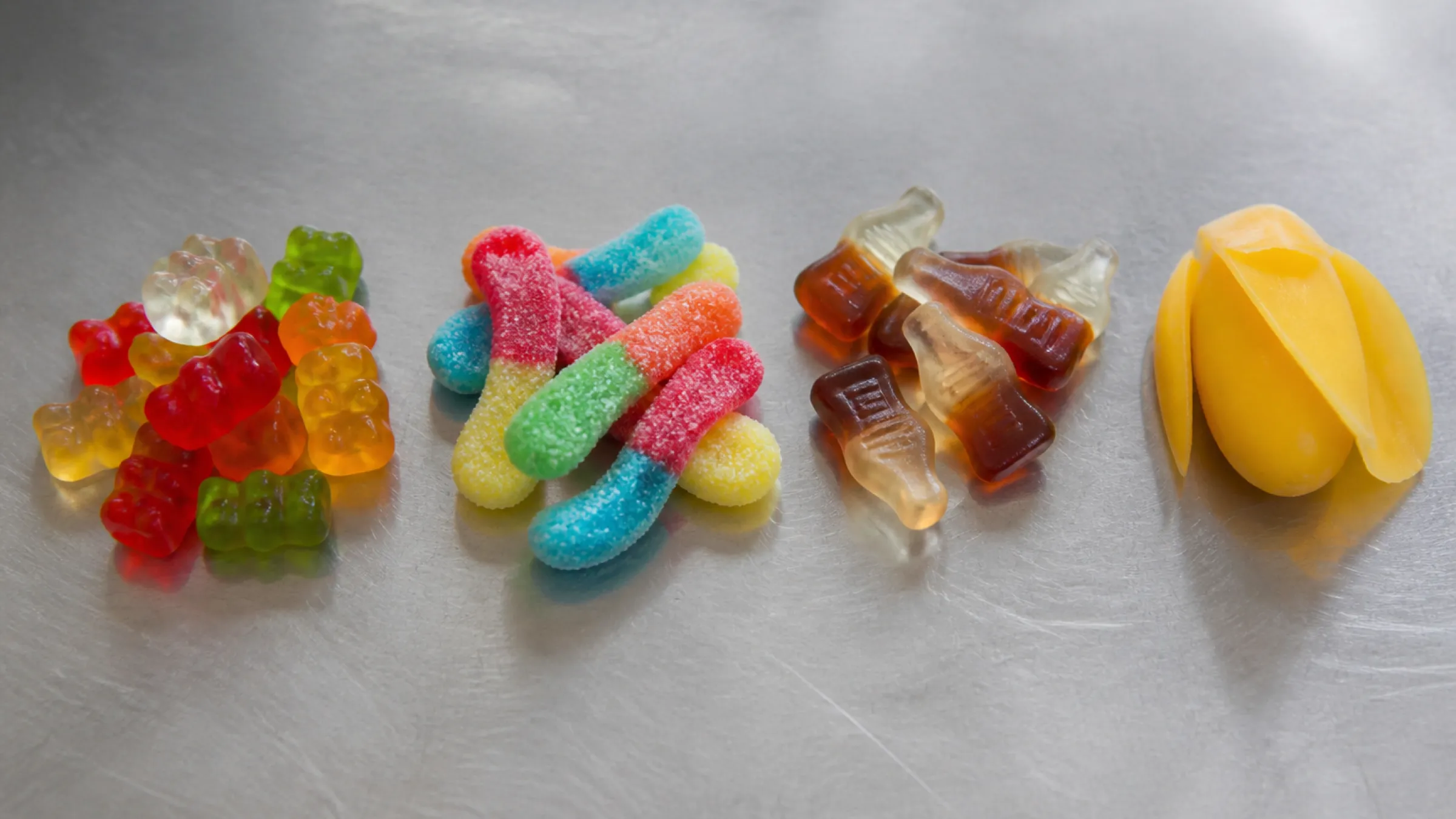
Gummy Bears
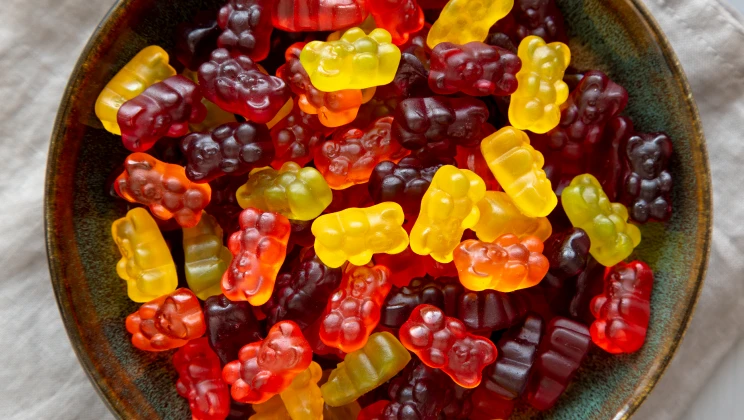
The gummy bear is the original format, created in Germany in 1922, and it is still the benchmark every other gummy is measured against. It leads global sales because it works in every channel: hanging bags, bulk bins, party mixes, and seasonal gift packs. The best gummy bears share three traits: high translucency, a distinct flavor for each color instead of one generic fruit note, and a medium-firm chew that suits both children and adults. Our own gummy bear line follows the same specification, and it is the format new buyers reorder most often.
Sour Gummies
Sour is the fastest-growing gummy segment in most export markets we serve. The format depends on surface sanding: a coating of citric or malic acid mixed with sugar delivers the sour hit, while the gel inside stays sweet. Malic acid gives a longer, sharper sour than citric, which is why extreme-sour lines rely on it. Sour worms and sour belts dominate the category, and the best examples balance the transition so the acid hits first and the sweetness closes. Buyers building a sour assortment usually start with sour gummies and add gummy worms as the anchor SKU.
Cola Bottles
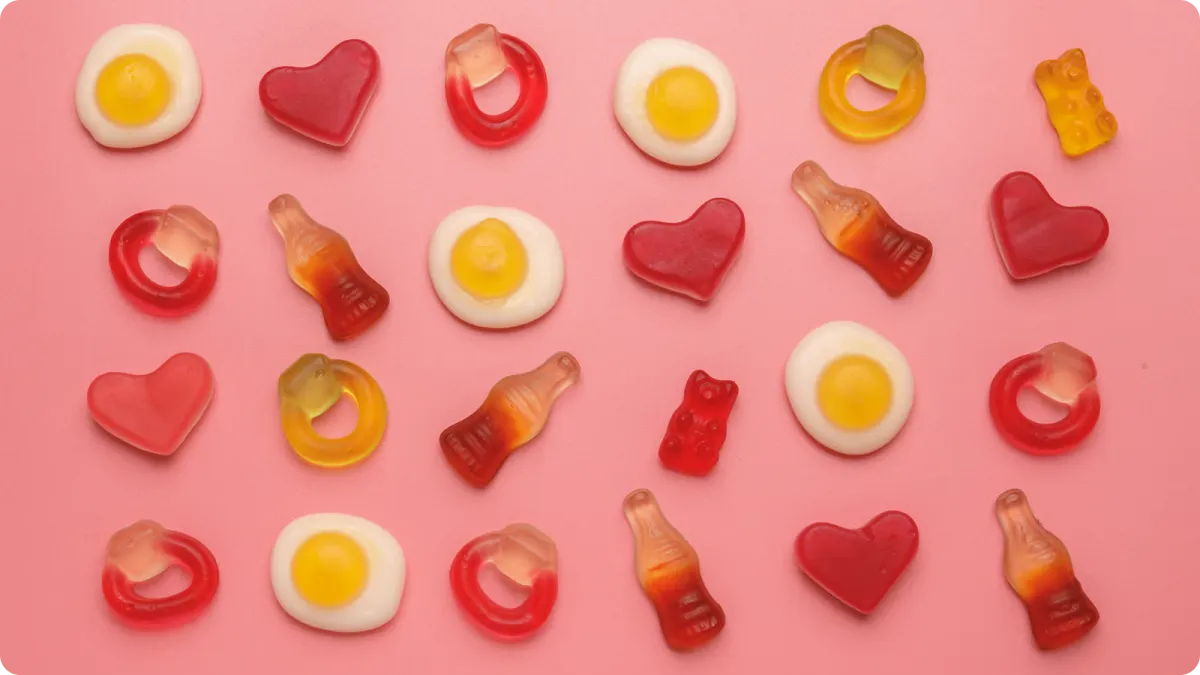
Cola bottle gummies have held a stable niche since the 1960s and remain one of the strongest sellers in Europe and the Middle East. The appeal is specific: a caramel-acid cola flavor with a slight fizzy note, in a shape every consumer recognizes. Fizzy-coated versions extend the line. For import programs, cola gummies work as a reliable second SKU alongside bears because the flavor profile is unique and faces no direct substitute.
Peelable Gummies
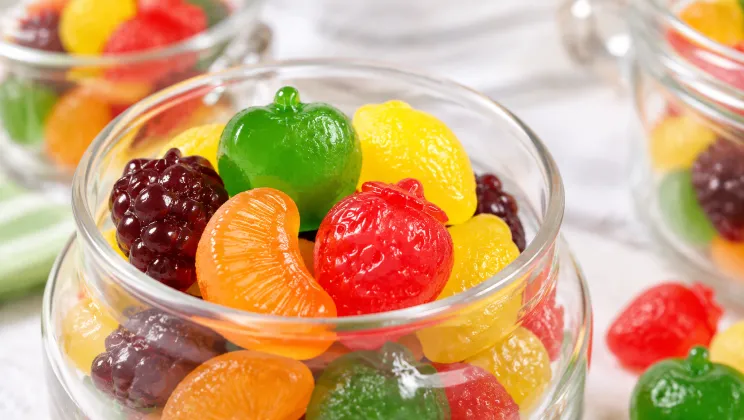
Peelable gummies are built in layers that the consumer peels apart by hand before eating. The format went viral in Asian markets around 2021 and has since spread to Europe and the Americas, where it commands a higher price point than standard gummies. Mango, banana, and grape shapes lead the segment. The interactive eating experience generates its own social media content, which lowers marketing cost for the brands that stock it. We cover the format in detail on our peelable gummy page.
Texture Hybrids: Clusters and Filled Gummies
The clearest recent trend in the category is texture contrast. Crunchy-shell clusters combine a soft gummy center with a crisp candy coating, while filled gummies carry a liquid or jam center. Both formats ranked among the most talked-about gummy launches of the past three years because the double texture reads as premium at a modest cost increase. For buyers, hybrids suit novelty shelves and social-commerce channels better than they suit bulk bins, since the coatings are more fragile in loose display.
Fruit Shapes and Giant Novelty Gummies
Fruit-shaped gummies such as watermelon slices and peach rings are the workhorses of candy shops and pick-and-mix displays, where color impact drives the purchase. At the other end of the scale, giant gummies serve the gift and impulse segment: a giant bear or giant snake sells on spectacle rather than price per kilo. Both directions are covered in our fruit gummy and giant gummy collections.
The Best Gummy Candy by Use Case
The right answer to "which gummy is best" changes with the channel. The table below summarizes what we recommend after shipping these formats to more than thirty markets.
| Use Case | Best Formats | Why |
| Supermarket hanging bags | Gummy bears, worms, cola bottles | Recognized shapes rotate fast and need no consumer education |
| Candy shops and bulk bins | Fruit slices, rings, belts | Color variety drives mix-and-match purchases by weight |
| Party and seasonal programs | Giant shapes, themed mixes | Visual novelty converts impulse buyers |
| Halal markets | Bovine gelatin or pectin recipes, subject to certification scope | Recipe and certification scope have to match what the buyer and the destination market ask for |
| E-commerce and social commerce | Peelable gummies, clusters, novelty shapes | Interactive formats generate organic content and reviews |
How to Judge "Best" Before You Place a Bulk Order
For a consumer, the best gummy candy is a matter of taste. For an importer, it is a matter of specifications. Five checks will tell you more than any marketing claim:
- Request the spec sheet for the exact product. It should name the gelling system, the moisture and texture targets, the coating, the pack format and the stated shelf life, together with the storage conditions those figures assume. Targets move from one recipe and one piece size to the next, so read them against your own climate and channel rather than against a single industry number.
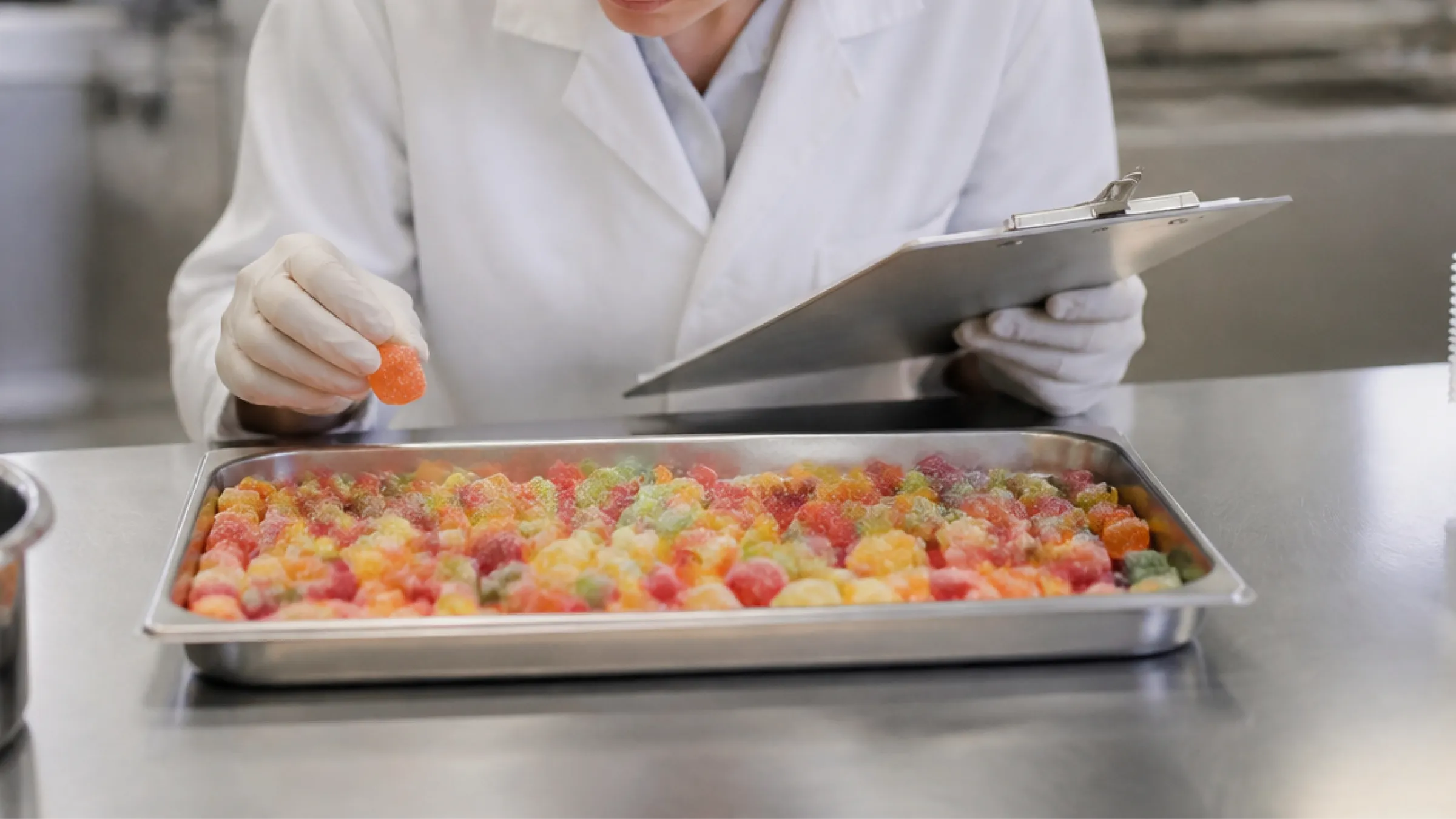
- Test samples twice. Evaluate once on arrival and again after 30 days at room temperature. Texture drift, sweating, or sanding loss only shows up over time.
- Verify certifications against your market. HACCP and ISO cover food safety; halal certification matters for Muslim-majority markets; label compliance matters everywhere.
- Start with a trial order. A flexible MOQ lets you validate sell-through before committing to full containers.
- Check the packaging barrier. The best gummy formula still fails if the film lets moisture in. Barrier bags and sealed cartons protect texture through ocean transit.
Buyers who want a deeper look at our process can review our manufacturing capabilities or browse the full product catalog by format.
Sourcing the Best Gummy Candy for Your Market
Sweeto Sweets produces the formats covered in this guide under OEM and private-label programs, with bovine gelatin and pectin-based vegan recipes; halal is available for eligible formulations and projects, subject to certification scope. Whether you need a wholesale gummy program built on proven bestsellers or a custom gummy developed for a specific market, send us your target channel and format list. We reply with specifications, samples, and a quotation.
By global sales, gummy bears are the best-selling gummy candy in the world, and the original German Goldbears recipe remains the quality benchmark. By quality, the best gummy candy is any product that meets five markers: gel strength, flavor authenticity, sweetness-acid balance, appearance, and shelf stability. Taste preference then decides the rest.