Which Gummies Are Vegan? Ingredients, Labels, and Sourcing Explained
A gummy is vegan when it contains no animal-derived ingredients. In practice, that mainly means the gelling agent comes from plants, most often pectin, agar, carrageenan, or starch, instead of gelatin, and that the colors, glazing agents, and other additives are also free from animal sources. Our vegan gummy range is formulated with pectin and starch systems to meet this exact demand.
The sections below explain what separates vegan from non-vegan gummies, which label claims and certifications mean what, and what buyers should specify when sourcing vegan gummies in bulk.
What Makes a Gummy Vegan or Not
A gummy is a simple product on paper: sweeteners, a gelling agent, acid, flavor, color, and a surface treatment. Whether it is vegan comes down to the source of each component.
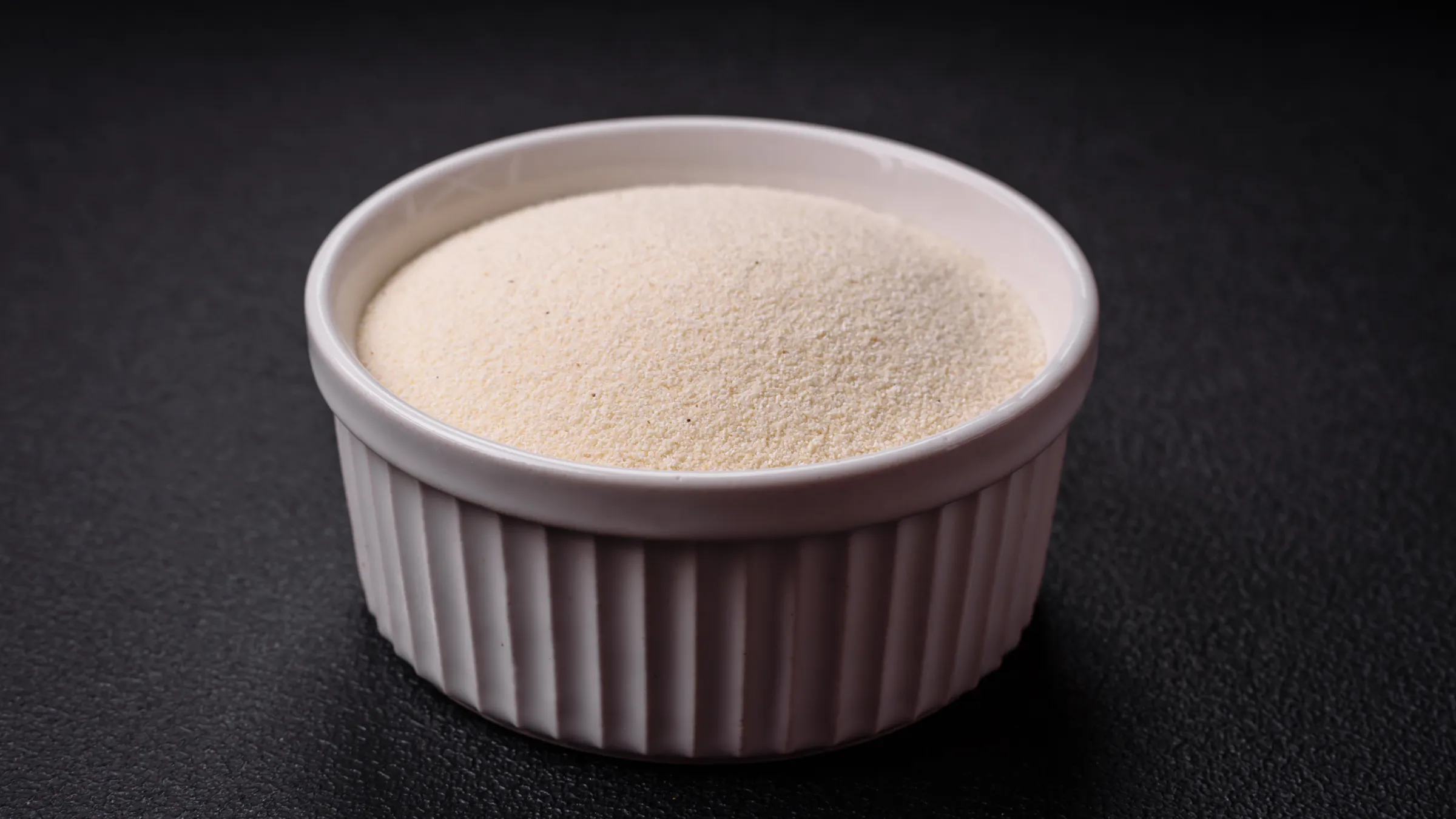
The gelling agent is the main dividing line. Gelatin is derived from animal collagen, from bovine, porcine, or fish sources, so any gummy containing gelatin is not vegan. Plant-based gelling agents, including pectin from citrus peel or apple pomace, agar from seaweed, carrageenan from red seaweed, and modified starch from corn, potato, or pea, are all vegan by origin.
Colors can be animal-derived. Carmine, also labeled as cochineal extract or E120, is a red pigment produced from insects. It appears in some red and pink candies and is not vegan. While synthetic dyes do not contain animal ingredients, brands targeting strict vegan or clean-label markets overwhelmingly prefer natural colors derived from fruits and vegetables.
Glazing agents vary. Some shiny candies are glazed with shellac, a resin secreted by the lac insect, which is not vegan. Confectionery glazes based on carnauba wax, a plant wax, or simple oil coatings are vegan-friendly alternatives.
Sugar processing is a nuance. In some markets, part of the refined sugar supply is processed with bone char. Strict vegans and some certification bodies pay attention to this. Organic sugar and beet sugar avoid the issue, and buyers with strict requirements can specify sugar sourcing in the product specification.
So "vegan" is not one ingredient swap. It is a full formula review, plus the production and sourcing records to back it up.
For buyers, the practical takeaway is that a vegan claim is built ingredient by ingredient and then protected in production. A supplier should be able to walk through each component of the formula and state its source, rather than naming the gelling agent alone.
Gelatin vs Pectin, Carrageenan, and Agar: Animal and Plant Gelling Agents Compared
The four gelling systems most common in gummy production differ in source, texture, and process behavior. The table below summarizes the practical differences.
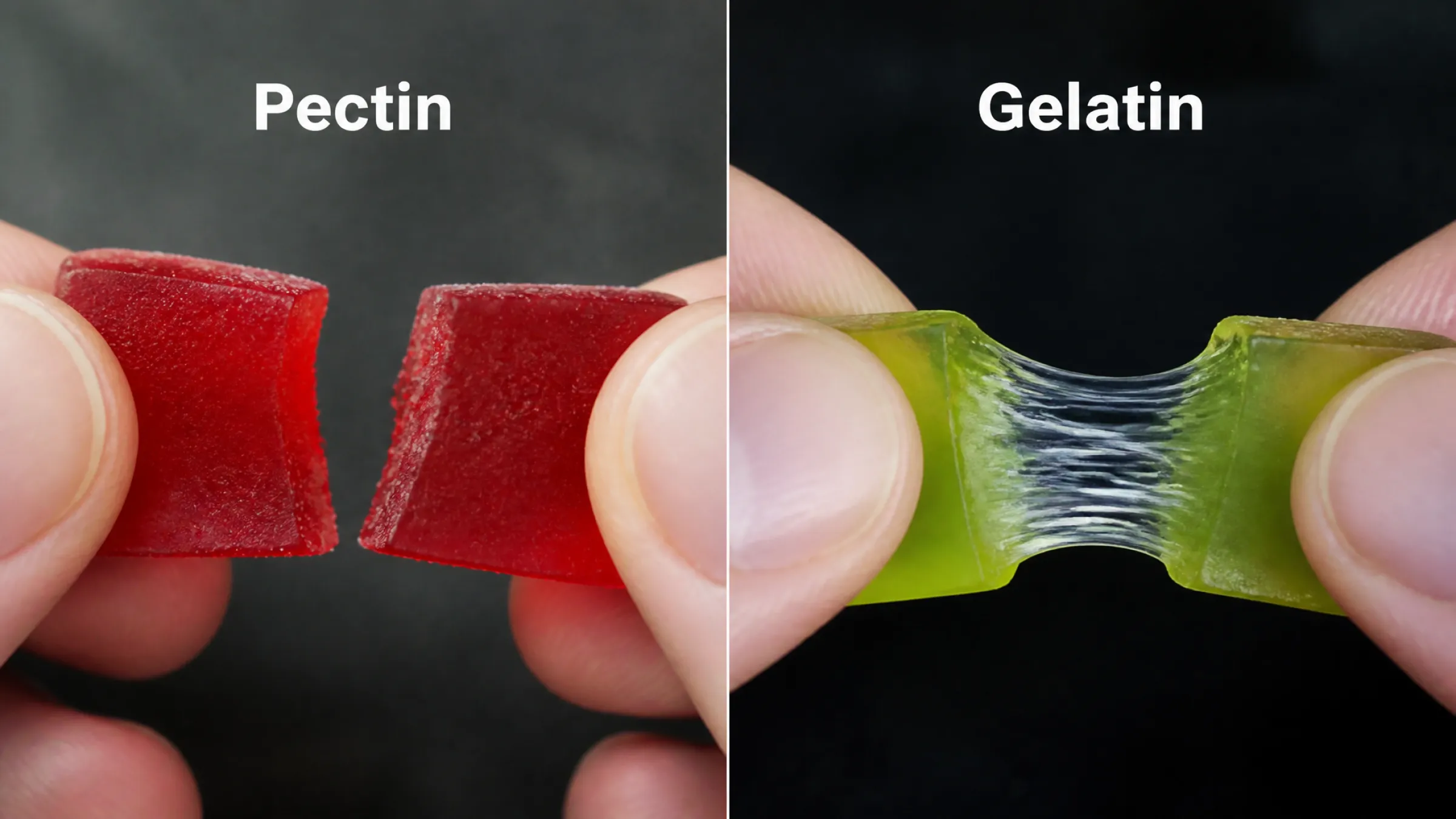
Factor Gelatin Pectin Carrageenan Agar Source Animal collagen (bovine, porcine, fish) Citrus peel or apple pomace Red seaweed Seaweed Dietary fit Not vegan; needs source control for halal or kosher Vegan, halal, kosher friendly Vegan friendly Vegan friendly Texture Soft, elastic, extended chew Firm, short, clean bite Firm, springy Firm, brittle bite
Gelatin: Standard, Halal (Bovine), or Kosher (Fish). Adjustable from soft and tender to highly elastic and bouncy (via Bloom grade). Classic gummy bears, worms, rings, and aerated (foamed) products.
Pectin: 100% Vegan, Plant-based, Halal/Kosher friendly. Customizable from a soft melt-in-mouth feel to a firm, clean bite. Premium fruit gummies, vegan lines, and hot-climate destinations.
Carrageenan: 100% Vegan, Plant-based. Engineered for an elastic, springy chew that closely mimics gelatin. Vegan products requiring a bouncier texture than standard pectin.
Agar: 100% Vegan, Plant-based. Set to a firm, short, and slightly brittle structure. Traditional jellies, specialized Asian formats, and firm centers.
A few practical notes behind the table. Gelatin is traditionally favored because its texture is familiar and its process is forgiving. Its elastic chew and its ability to hold air in aerated products are difficult to reproduce with plant systems. Pectin serves as a primary plant-based alternative for quality gummies, offering a clean bite and strong heat stability, making it the foundation for many premium vegan lines. Carrageenan produces a springy, firm gel and is selected for specific vegan jellies. Agar sets very firmly and suits products where a brittle bite is acceptable.
Agar and starch have supporting roles. Agar produces a notably firm, brittle gel and appears in traditional jelly products. Modified starch gives a dense, firm texture and is common in jelly centers and in combination formulas. In practice, many commercial vegan gummies blend systems, for example, pectin with starch, to balance texture, stability, and processability.
Texture and Process Differences in Vegan Gummies
Buyers moving from a gelatin product to a vegan product should expect a different eating experience and a slightly different development process.
The bite changes. A pectin gummy has a firmer, shorter bite and breaks cleanly rather than stretching. Consumers who buy vegan gummies generally accept and often prefer this texture, but it is not identical to a gelatin gummy, and samples should be evaluated on their own terms rather than as a copy. Parallel sampling of both systems is the standard way we resolve this question with clients, because texture preference is easier to judge on a sample than on a spec sheet.
The process window is narrower. Pectin sets through a combination of sugar concentration and acidity rather than cooling alone. If the balance drifts, the mass can begin to set before depositing is finished. This makes recipe development and process control more demanding, and it is one reason vegan lines are usually run by factories with dedicated formulation capacity.
Shelf life is comparable, not shorter. A correctly formulated vegan gummy reaches the same shelf-life standard as a gelatin product. The variables that decide aging are the same ones covered in our shelf-life guidance: water activity, Brix, packaging barrier, and storage conditions.
Aeration. Gelatin naturally stabilizes foam, making it the traditional base for aerated and foam-textured gummies. While plant-based foaming systems are available and continually advancing, developing an aerated vegan gummy requires specific formulation approaches. Buyers planning a vegan aerated product should confirm texture and feasibility with samples early in the process.
Flavor and color pairing matters. Vegan products often target health-conscious shelves, so they are frequently paired with natural colors and natural flavors. Natural colors fade faster than synthetic ones under light and heat, which makes packaging and shelf-life planning part of the same conversation.
Vegan Claims: Certification and Labeling Rules
"Vegan" on a package is a claim, and how that claim is substantiated depends on the market.
There is no single global legal definition. Different markets treat vegan labeling differently, and the claim is mostly governed by general rules against misleading consumers rather than a dedicated vegan law. This places the burden on the manufacturer to control ingredients and cross-contamination, and on the brand to keep records.
Cross-contamination statements matter. If a factory produces both gelatin and vegan products, the production plan, cleaning procedures, and changeover records become part of the claim's credibility. Certification bodies review these documents exactly, and buyers with specific requirements can also request to review them.
Label wording should match the evidence. "Vegan" is a stronger claim than "gelatin-free" or "plant-based." A product labeled vegan implies the entire formula and its processing aids have been reviewed, including colors, glazes, and sugar sourcing.
How the label review works in practice. Before print, the ingredient list, allergen statement, and claim wording go through a review against the destination market's rules. In the United States, the focus is the ingredient declaration and truthful claims. In the European Union and the United Kingdom, additive numbers, allergen emphasis, and nutrition declarations follow their own formats, and some colors permitted elsewhere carry warnings or restrictions there.
Where Vegan Gummies Sell: Channels and Demand
Vegan gummies serve several buyer groups at once, and understanding them helps when planning a product line.
Health and specialty retail is the natural home. Stores built around dietary products treat vegan as a baseline filter, and a certified vegan mark shortens the listing conversation.
Mainstream retail increasingly carries vegan options inside the regular candy fixture rather than a separate section. In these channels, the product competes on taste and texture first, with vegan as an added attribute on the pack.
Markets with dietary requirements overlap with vegan positioning. Because plant-based formulas avoid animal gelatin entirely, the same product often fits halal and kosher shelves after the corresponding certification is in place. One vegan line can therefore serve several distribution programs.
Online and direct-to-consumer brands have driven much of the category's visibility, and they often prioritize fast sampling, agile development, and flexible packaging before scaling. This preference favors manufacturers that can respond and adapt quickly.
Seasonal and promotional programs are a further entry point. Halloween, Christmas, Valentine's Day and Easter assortments increasingly include a vegan option, and mixed containers let a buyer test a vegan SKU next to established products without committing a full container to it.
What Buyers Should Specify When Sourcing Vegan Gummies
A vegan sourcing project runs smoothly when the specification answers the questions before the factory has to ask them.
Define the gelling system. Pectin-based and starch-based builds cover a wide range of requests, and they differ in texture and cost structure. If you are unsure, ask for samples of both. We produce vegan gummies on pectin and starch bases and can prepare parallel samples for comparison.
Define the claim level. Decide whether the product will carry a third-party vegan mark, a self-declared vegan claim, or a plant-based description. The choice affects documentation, audit scope, and timelines.
Specify colors, flavors, and sugar sourcing. Natural colors and flavors pair naturally with vegan positioning. Where strict sugar sourcing matters, state it in the specification so the factory sources accordingly.
Ask how the vegan run is protected in production. Scheduling, cleaning, and changeover control between gelatin and vegan batches should be described in writing. We support this with validated cleaning procedures, and documentation can be provided on request.
Confirm packaging and shelf life together. Vegan formulas with natural colors benefit from stronger light and moisture barriers. Packaging, shelf life, and the vegan claim should be reviewed as one package.
Plan verification. For buyers who want independent confirmation, third-party testing and analysis can be arranged on request, covering ingredient verification and other specification items before shipment.
Sourcing Vegan Gummies from Sweeto
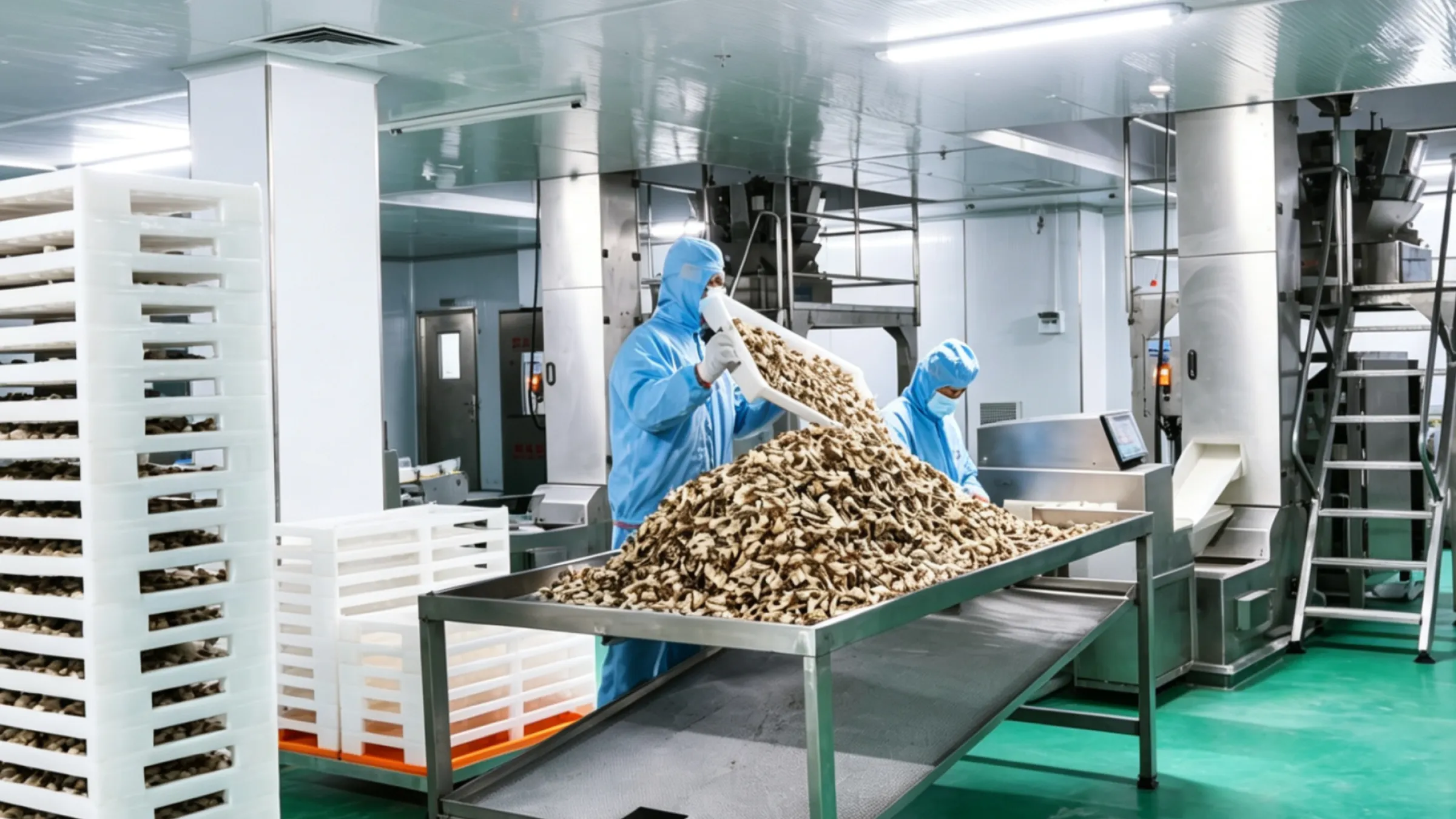
Vegan gummy production is a standard part of our program rather than an exception. We run pectin and starch systems for vegan lines. Common requests include fruit-flavored pectin gummies in bear, worm, ring, and fruit shapes, vegan versions of existing catalog items, and fully custom shapes for new brands. We support halal and kosher requirements within certification scope, and develop custom formulas from brief to sample, including sugar-free, natural color, and natural flavor options. The factory operates under HACCP and ISO 22000 with FDA registration, and hot-climate stability testing is available for export projects.
If you are planning a vegan gummy line, send us your target market, texture reference, and claim level. We can prepare samples through our custom gummy program and match documentation to your destination market. Standard terms are listed on our wholesale gummies page, and an overview of lines and quality systems is on the capabilities page.
Most gummy bears are not vegan, because the classic recipe is built on gelatin, an animal-derived gelling agent. Vegan gummy bears exist and are made with pectin, agar, or starch instead. The ingredient list is the reliable check: gelatin means not vegan, pectin or agar means plant-based. Color and glazing agents are the second checkpoint, since carmine and shellac can appear in otherwise gelatin-free products.