How Long Do Gummies Last? Shelf Life, Storage, and What Buyers Should Check
The sections below cover how long gummies last under different conditions, what actually determines that number, how gelatin and pectin products differ, how to store product through long-distance shipping, and how to verify dates and remaining shelf life when a container arrives.
How Long Do Gummies Last? The Direct Answer
The direct answer: a commercially produced, properly packaged gummy lasts 12 to 24 months from production. Within that range, the position depends on the formulation, the packaging barrier, and the storage temperature.
A few common variations on the question:
Unopened, commercial product. 12 to 24 months is the normal industry range.
After opening. Once a bag is opened, the clock speeds up because the product is exposed to air and humidity. In a dry environment with the bag resealed, opened gummies stay in good condition for several weeks to a few months.
Past the printed date. A best-before date on a shelf-stable candy is a quality marker. The section on signs of aging below covers what to look for.
Gelatin vs Pectin: Do Different Gummies Age Differently?
Both gelatin and pectin gummies are shelf-stable products, and both can reach the same 18 to 24 month standard when they are formulated and packed correctly. The practical differences show up in how they respond to conditions along the way.
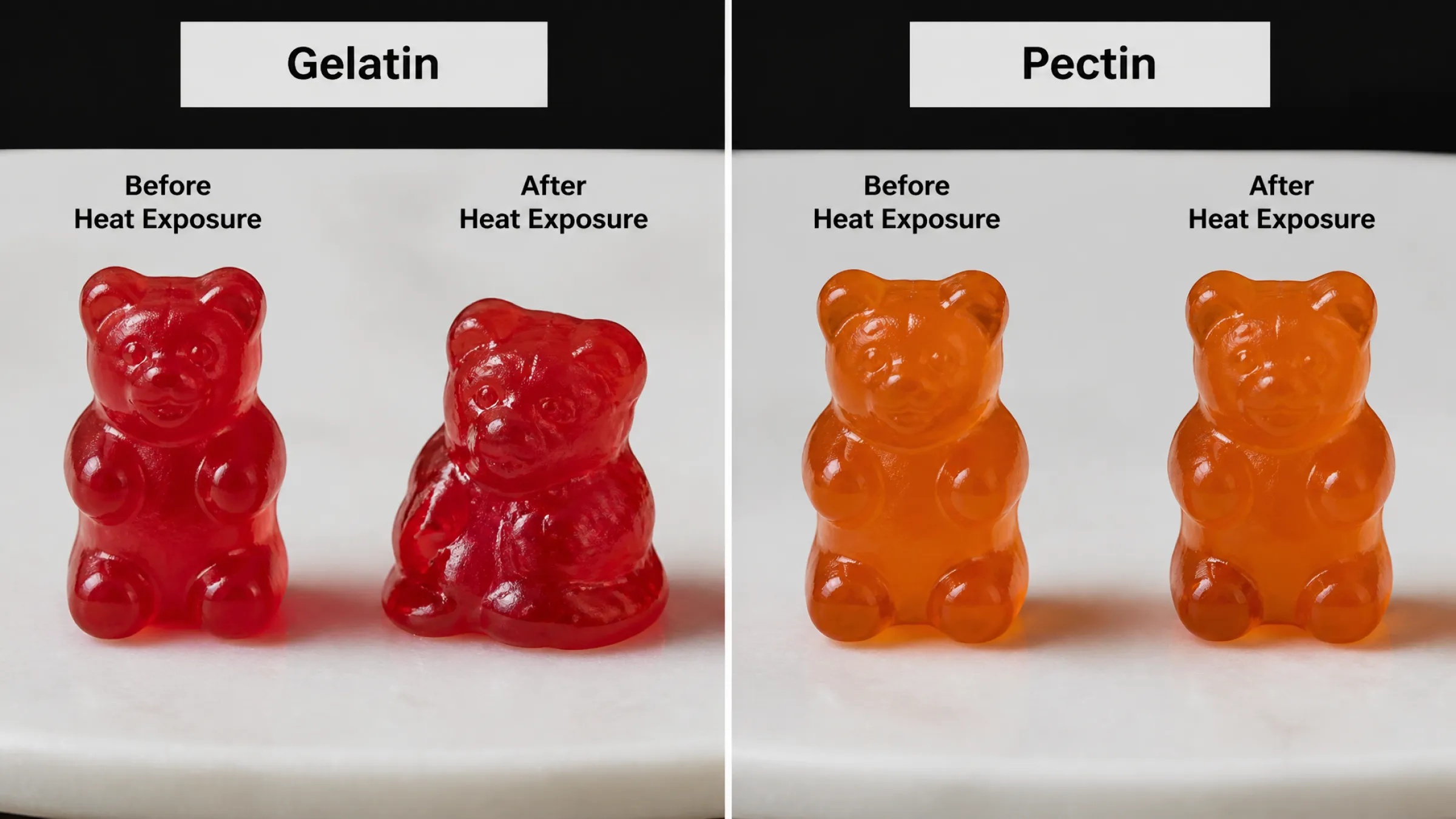
Gelatin gummies deliver the classic elastic chew, and their gel network is generally sensitive to heat. Prolonged exposure to high temperatures, for example in a hot container or a warehouse without climate control, can soften the gel and change the shape and texture of the product. Within normal temperature ranges, gelatin gummies hold their quality well across the full shelf life.
Pectin gummies set through a different mechanism, yielding a firmer texture and a shorter bite. They are often noted for holding their structure in warmer conditions. However, it is not a blanket rule that all pectin gummies are more heat-resistant than gelatin ones. A gummy's actual thermal stability depends heavily on the specific pectin type, the sugar-acid system, moisture content, surface coating, and packaging barrier. When these variables are correctly engineered, a pectin formula can be a highly forgiving option for routes where temperature is difficult to control.
Over long storage, the two systems also age slightly differently. Gelatin gummies tend to lose moisture gradually and firm up toward the end of their life, while pectin gummies hold their firm bite but can dry at the surface if the packaging barrier is weak. Neither pattern is a defect within the stated shelf life, and both are slowed by correct moisture targets at production and a sound packaging film.
The point for buyers is not that one system lasts longer than the other. Both reach the same shelf-life standard. The difference is which system tolerates your specific route and storage conditions with more margin. This is a formulation discussion worth having at the start of a project, and our custom gummy program can prepare both versions of the same product for comparison.
What Determines Shelf Life: Water Activity, Brix, and Formulation
Gummy candy resists spoilage for structural reasons, and three variables explain most of it.
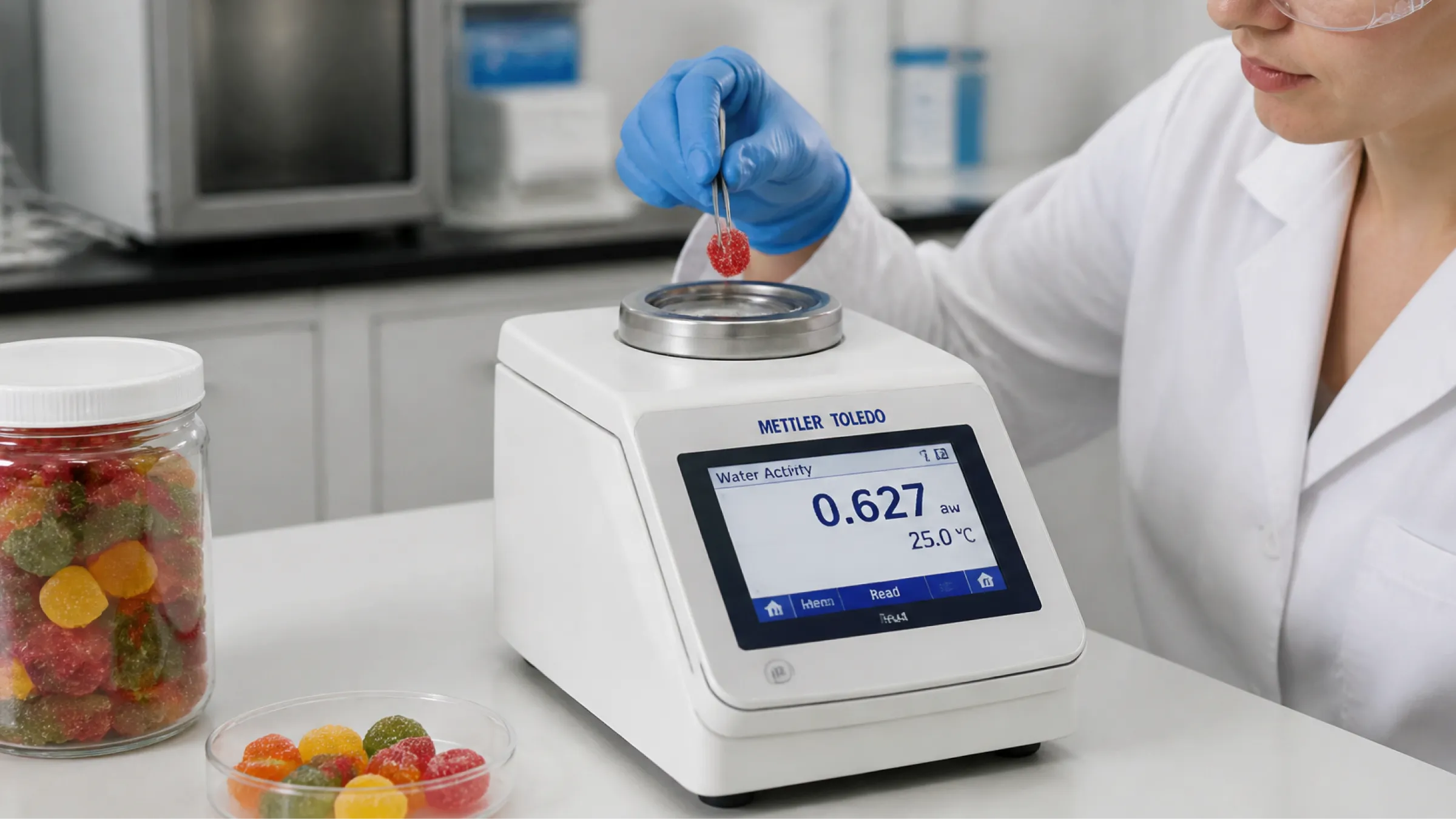
Water activity. Microorganisms need available water to grow. Water activity measures how much of the water in a product is actually available to them, on a scale from 0 to 1. Gummy candy is formulated to sit at a low water activity, well below the point where mold and bacteria become active. This is the main reason a gummy can sit in a bag for two years without preservatives. When a product's water activity drifts upward, through formulation error or moisture pickup in storage, shelf life shortens fast.
Brix and soluble solids. Brix measures the percentage of dissolved solids in a syrup, mostly sugars. High Brix means less free water, and high sugar concentration creates osmotic pressure that further discourages microbial growth. The cooking stage of gummy production drives the syrup to a target Brix, and hitting that target consistently is part of what keeps every batch within its shelf-life window.
Formulation choices. Acid level, gelatin or pectin content, and any coatings all influence how a product ages. Sour sanded products, for example, carry organic acid on the surface, and that acid attracts moisture from the air. A sour product therefore depends more on moisture control than a plain oiled product. Oil-coated gummies carry a thin layer of oil or food-grade wax that reduces sticking and slows moisture exchange with the environment.
None of these variables appears on a price sheet, but all of them are visible in a specification. A supplier who can state the target water activity and moisture for your product is measuring them. A supplier who cannot is guessing.
Packaging: The Largest Shelf-Life Lever After Formulation
Once the candy itself is stable, packaging decides how much of that stability survives the journey.
Moisture barrier. The primary job of gummy packaging is to keep the surrounding humidity away from the product. Barrier performance varies widely between film structures. A basic polyethylene bag offers modest protection, while laminated films with foil or metallized layers block far more moisture. For humid destinations or long storage, the film specification matters as much as the recipe.
Oxygen and light. Both fade colors and degrade flavors over time. Opaque or metallized films protect against light, and well-sealed packaging limits oxygen exposure. Natural colors are more sensitive to light and heat than synthetic ones, so products using natural colors benefit from stronger packaging protection.
Pack size and closure. Individually wrapped pieces isolate each gummy from the environment after the outer bag is opened. Resealable pouches protect partially used stock.
Secondary packaging for shipping. Cartons, pallet wrapping, and container-level protection determine how the product arrives. The shipping section below covers this in more detail.
Storage Conditions and Long-Distance Shipping
Gummies ask for the same basics as most shelf-stable foods: cool, dry, and away from direct sun. University food preservation guidance, such as the resources published by the National Center for Home Food Preservation at the University of Georgia, applies the same principles to candies and other sugar-preserved products.
In the warehouse. Room temperature in a dry, ventilated space is sufficient. The two enemies are heat, which softens the gel structure, and humidity, which adds surface moisture and can make pieces stick together. Refrigeration is not required for commercial gummies, and moving product in and out of cold storage can cause condensation on the surface, which is worse than steady room temperature.
In transit. Long sea routes pass through warm zones, and container interiors can run hotter than the outside air. This is a manageable problem rather than a reason to avoid warm destinations. Many gummy shipments travel in standard containers without issues when the formula, moisture level, packaging, route, and season are assessed in advance. Where conditions call for more protection, thermal insulation film can line the container, and refrigerated containers are an option for the most demanding routes or seasons. The decision should be made per shipment, based on the route, the packaging barrier, and the storage conditions at the destination.
After arrival. Stock rotation matters from day one. First in, first out keeps older cartons moving before newer ones, and opened master cartons should be resealed or repacked promptly.
We assess hot-climate stability as part of export project development, so route and season enter the formulation and packaging discussion before production starts.
How to Tell When Gummies Are Past Their Best
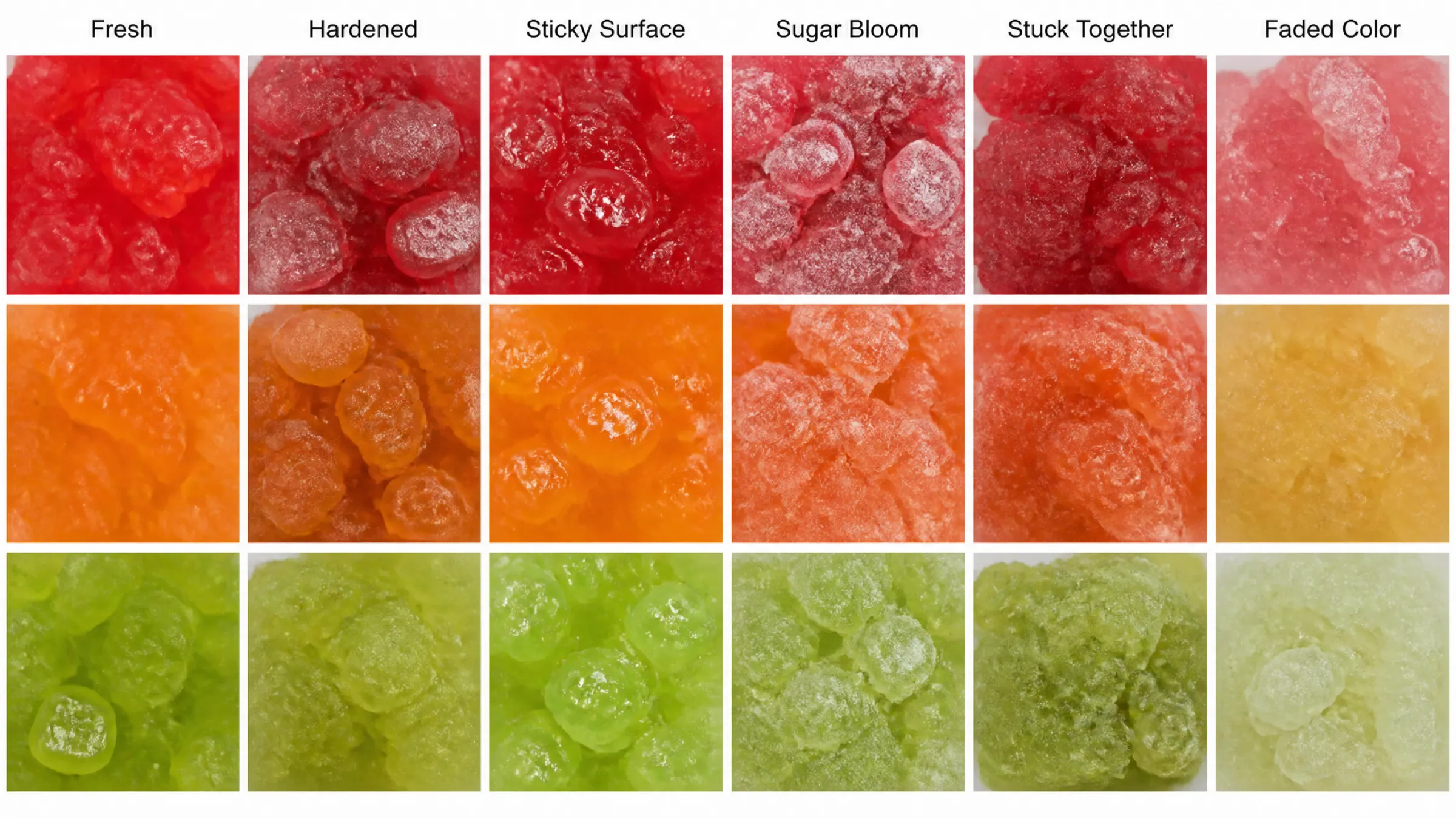
Hardening. The piece loses its elastic chew and turns firm or tough. This points to moisture loss, from old stock or packaging that breathes.
Sweating or stickiness. Moisture droplets or a tacky surface indicate moisture pickup, from humid storage or a compromised seal.
Sugar crystallization. A grainy surface or a whitish haze can appear when the sugar structure changes over time or after temperature swings.
Clumping. Pieces fused together in the bag usually mean heat exposure at some point in the chain.
Faded color or flat flavor. Light, heat, and time degrade both, with natural colors fading faster than synthetic ones.
Visible mold or off-odor. Rare in gummies, but a clear rejection signal. This points to a water activity problem or packaging failure and the stock should not be sold.
When receiving any containerized food product, reviewing cartons from a few different pallet positions provides a complete picture of the shipment's condition.
How Wholesale Buyers Should Check Production Dates and Remaining Shelf Life
Shelf life only has value if you can verify where a batch sits inside it. A few habits cover most of the risk.
Ask for the production date and batch code before shipping, not after arrival. Every carton should carry a readable production or best-before date linked to a batch. Confirm the date format with the supplier, since formats differ between markets.
Define the minimum remaining shelf life in the purchase agreement. Many importers and retail chains require a set percentage of shelf life remaining on arrival, and figures such as two-thirds or three-quarters of total shelf life are common in buying contracts. Stating this in writing before production prevents disputes at the port.
Request the certificate of analysis for the batch. A COA ties the batch to its measured moisture, Brix, and microbiological results. Shelf-life claims are only as solid as the measurements behind them, and third-party laboratory reports add another layer of confidence. We provide third-party analysis on request for buyers who want independent verification.
Keep retain samples. Hold back sealed samples from each order and store them under controlled conditions. If a question about texture or appearance comes up months later, the retain sample shows how the product left the factory.
Match order volume to realistic sales velocity. The simplest shelf-life protection is inventory discipline. A mixed container that sells through in four months carries less aging risk than a single-SKU container that sits for a year. Our wholesale program supports mixed-SKU loading for exactly this reason.
Working with a Manufacturer on Shelf Life
Shelf life is established through formulation, process control, packaging selection, and validation, and is then protected through compliant storage and transportation. As a manufacturer, we handle shelf life as a specification: target moisture and water activity are defined per product, packaging films are selected for the destination, and hot-climate stability testing is available as part of development. Our quality system operates under HACCP and ISO 22000 with FDA registration, and batch documentation can accompany orders on request.
If you are planning a gummy program and want to confirm shelf-life details for your route, send us your destination, packaging format, and expected turnover period. We can recommend a formulation and packaging combination and provide samples for your own storage testing. Standard terms are listed on our wholesale gummies page, development projects start through our custom gummy program, and an overview of our production and quality systems is on the capabilities page.
Commercially produced gummies last 12 to 24 months unopened when stored cool and dry. The exact figure depends on the formula, the packaging barrier, and storage conditions, so the specification sheet for your product is the right reference.