Sour Gummies: Acid Types, Sanding, and What Buyers Should Specify
Sourness in a gummy is built from three decisions: which acid, where the acid sits, and how strong it should hit. Buyers who understand how each of these is produced can write a specification that a factory can actually follow, instead of a brief that says "make it sour" and leaves the rest to interpretation.
This article goes through the four things worth understanding before a sour program starts: the acids themselves, how the sour-sanded coating is made, the process routes that put acid in different positions, and how the sour sensation is structured. The closing section covers how sourness gets locked for production.
The Acids Behind Sour Gummies
Citric acid is the default acid in confectionery. It hits fast and bright, peaks quickly, and fades within a short moment, which makes it the first impression in most sour products. Malic acid behaves differently: it comes on more slowly and stays much longer, with a rounder, apple-like character. Ingredient producers who work in confectionery describe the difference in persistence directly, and note that malic acid extends sour notes in gummies beyond what citric acid alone can hold (Bartek Ingredients, Confectionery applications).
The difference matters to buyers in practical terms. Two samples can carry the same total acid and still taste different, because one releases its sourness in the first moments and the other spreads it across the chew. When a sample tastes "sharp" or "flat," the cause is usually the acid blend and its position, and both can be adjusted without changing the product’s shape, colour, or base recipe.
Most sour gummies do not use one acid alone. A citric and malic blend is the common structure: citric gives the fast opening, malic carries the finish. Changing the ratio changes the shape of the sourness over time, which is why two products with the same total acid can taste noticeably different.
How Sour Sanding Works
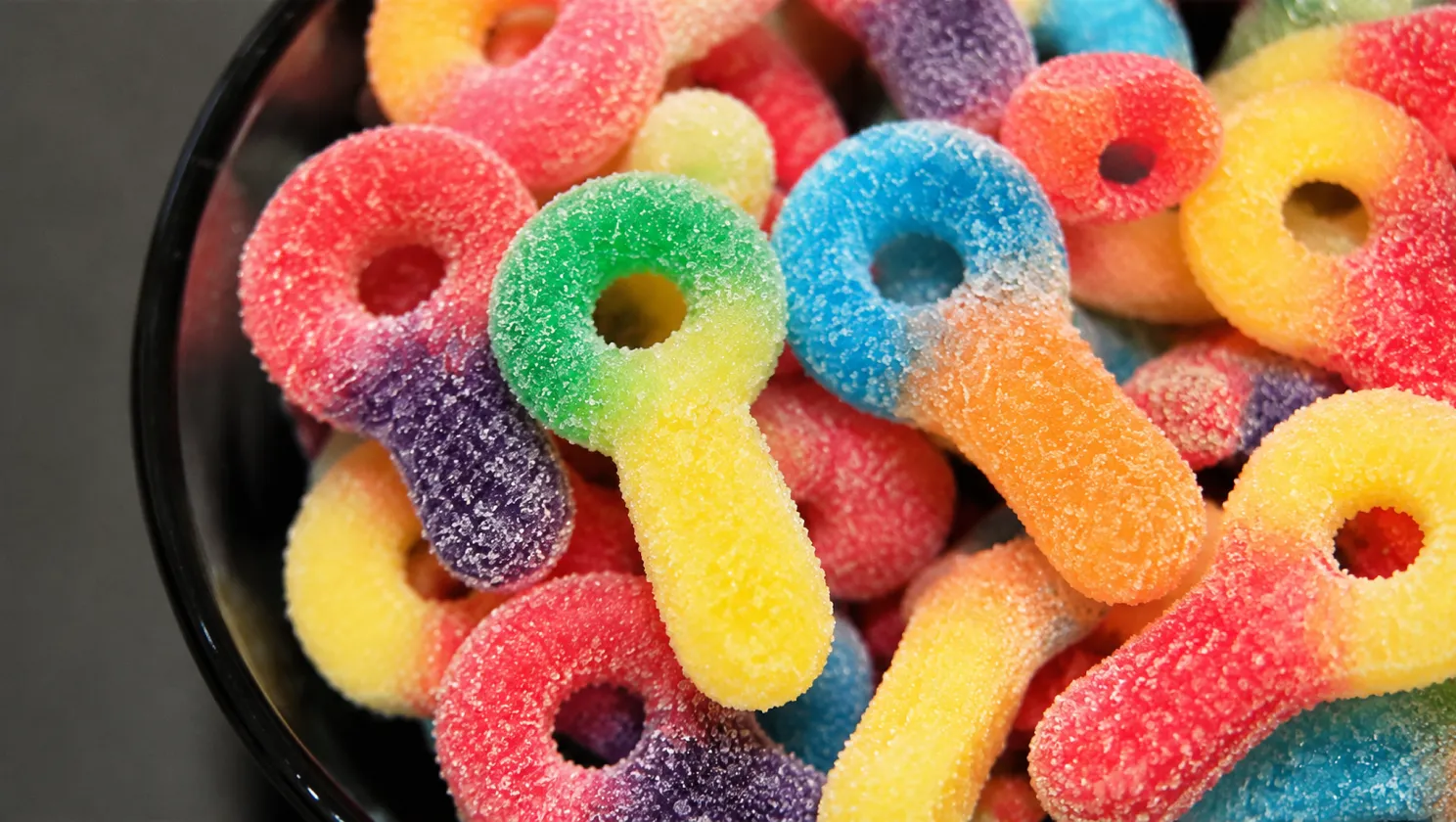
The crystalline coating on a sour gummy is a dry blend of sugar and acid, and it is applied mechanically. Pieces leave the drying stage with a slightly tacky surface and then tumble in a sanding drum while the sugar-acid mix is added. The drum keeps the pieces moving so the coating builds evenly; at Sweeto the same drum handles sugar sanding and sour sanding, since both are dry coatings applied the same way.
Coating quality is visible without instruments. On a well-run line the crystals sit evenly across every piece, with no bare patches and no clumps at the contact points. Uneven sanding usually traces back to the drum: too little tumbling time, an overloaded drum, or a surface that was not tacky enough when the mix went in. Buyers evaluating sour samples can read this directly off the product.
Where the Acid Goes: Three Ways to Build a Sour Gummy
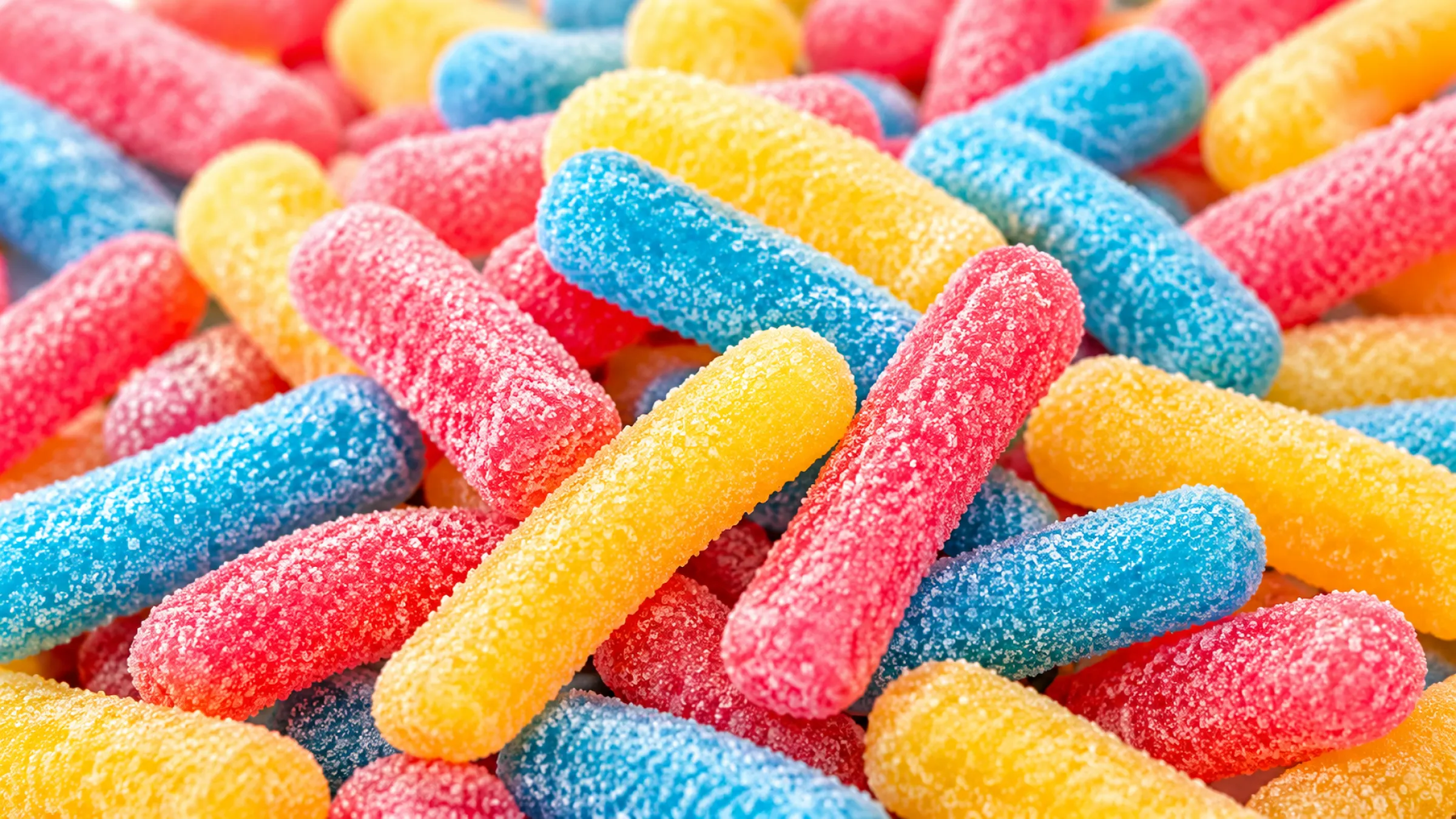
The first route puts acid in the body. The acid is dosed into the cooked mass before depositing, so the sourness runs evenly through the piece and arrives gradually as it is chewed. The second route puts the acid on the surface, so the eating experience opens sour and turns sweet. Sour crunchy beans, for example, can carry acid in the outer shell, and the centre can be acidified as well, depending on the specification, as in our sour crunchy bean range.
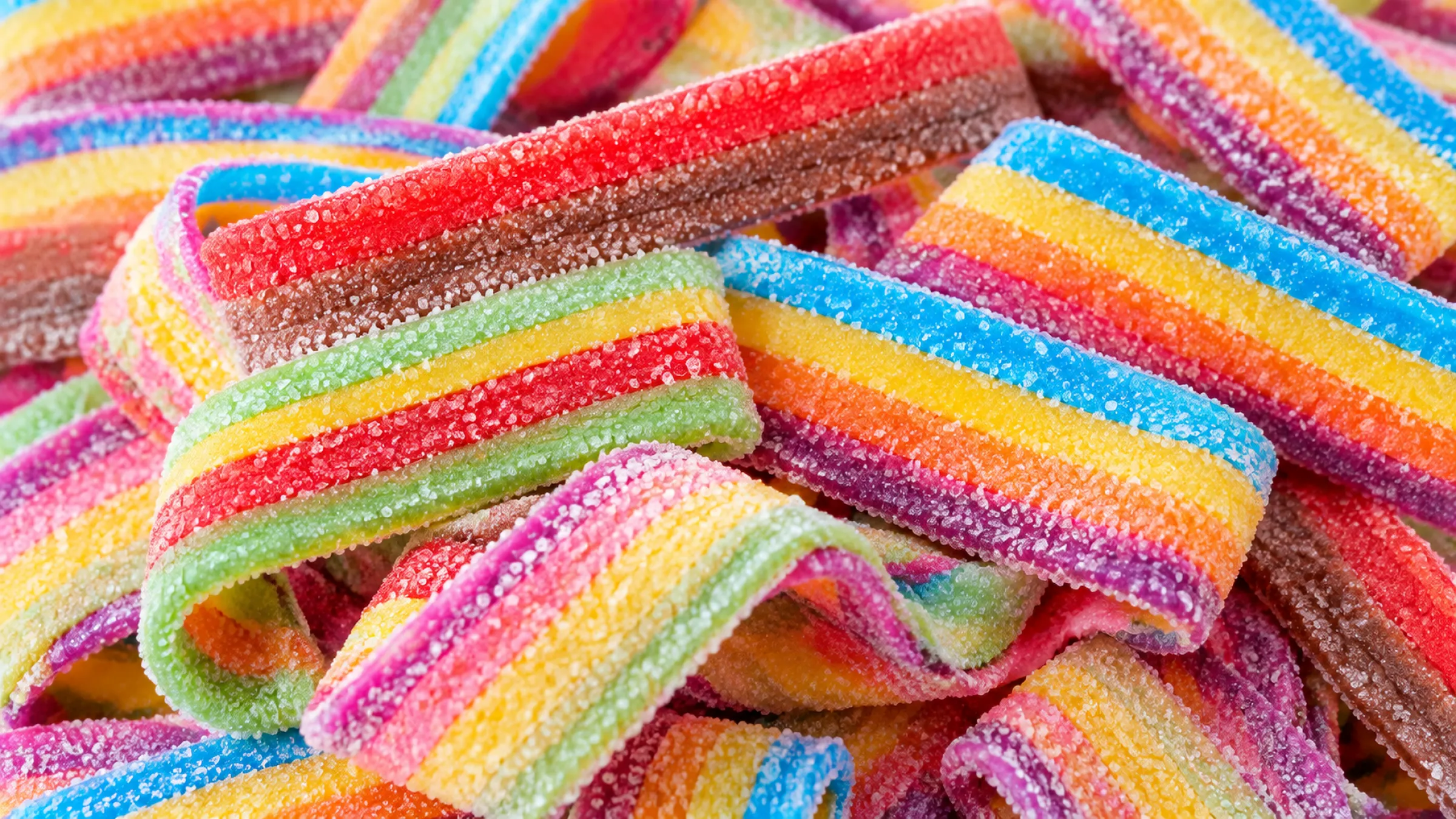
The third route combines both. A sour worm, for example, carries acid in the body and a sour-sanded coating over it, so the first contact is sharp and the chew stays sour underneath, as in our gummy worm range. Shape changes the arithmetic as well. A flat belt has far more surface per gram than a round piece, so the same sanding mix reads stronger on a belt than on a chunky shape, as in our gummy belt range.
How the Sour Hit Is Built
What buyers call an explosive sour is a sequence. The surface coating dissolves first and releases its acid in the opening moments, before the body of the piece takes over with its own flavour and acidity. The strength of that opening one of the sanding mix; the length of the experience comes from the acid types and whatever acid sits in the body. A product built for a strong opening and a short finish uses a heavy coating over a mild body. A product built to stay sour through the chew needs acid in the body as well.
Because sourness is a sensation and not a number, it cannot be specified by description. It is set against a physical reference: the buyer provides a target product, or chooses one of the factory’s current samples as the anchor, and the acid system is adjusted from there until the sample is signed off.
The sequence also explains why the same product reads differently to different markets. A product tuned for a mild opening can feel flat to buyers whose customers expect a sharp first hit, and an extreme build can overshoot a market that reads sourness as a background note. Tasting against a reference from the actual target market is what closes this gap.
How Sweeto Handles Sour Programs
Sour production at Sweeto covers the three routes described above: acid in the body, acid in the coating, and dual-acid builds, across oiled, sugar-sanded, and sour-sanded finishes. Sour levels are adjusted against a physical reference provided by the buyer or chosen from our current samples, and the signed-off sample is recorded as the production reference. Our sour gummy range covers standard and super-sour builds, and sampling for sour programs runs inside the same custom program as other development work.
If you are planning a sour gummy program, send us your target product or a reference sample and your destination market.
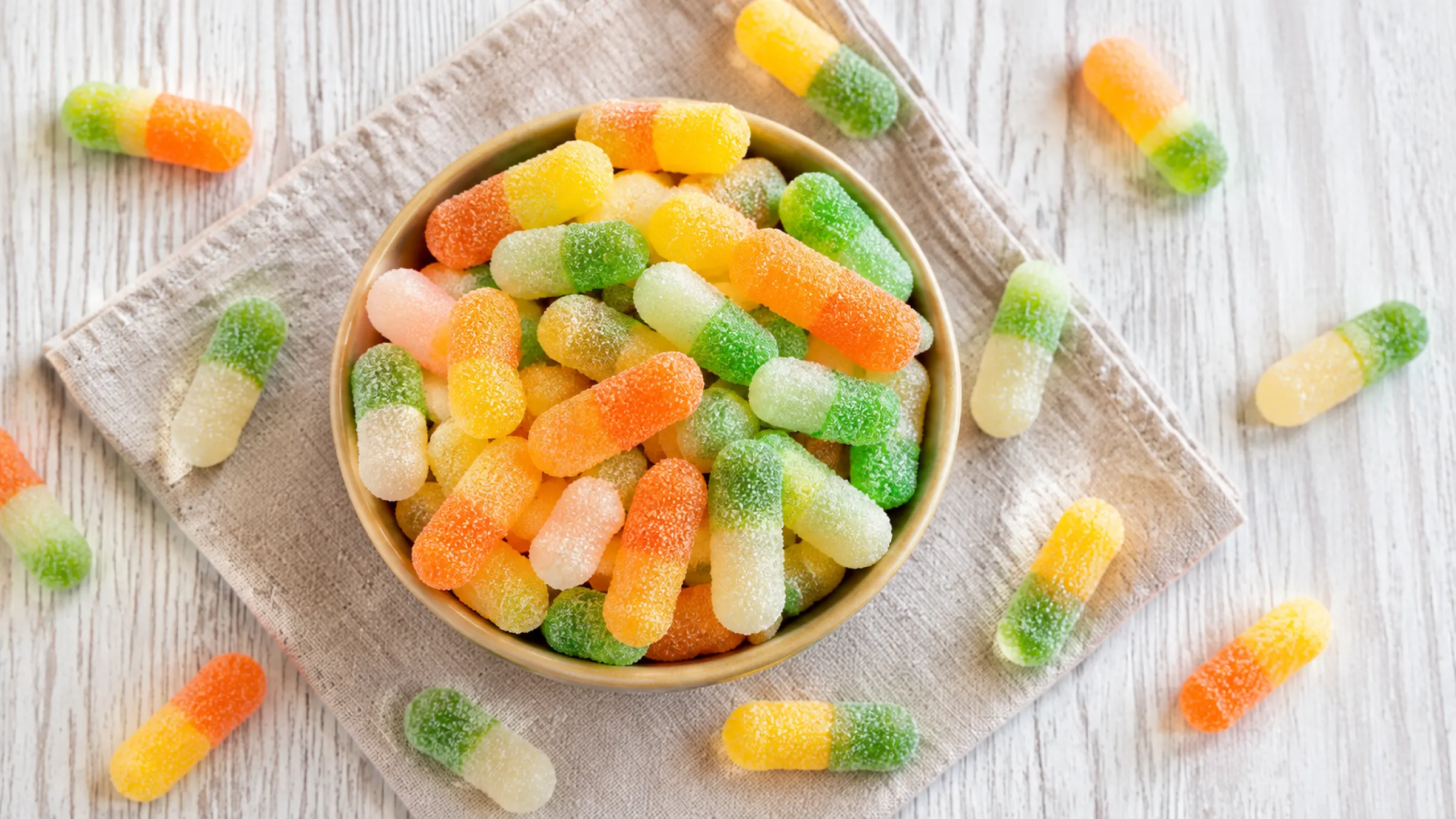
Citric acid hits fast and bright and fades quickly, which makes it the opening note of most sour products. Malic acid comes on more slowly and lasts much longer, with a rounder character. Many sour gummies blend the two: citric for the opening, malic for the finish.