
Peach Gummies
Wholesale & Custom Peach Gummies
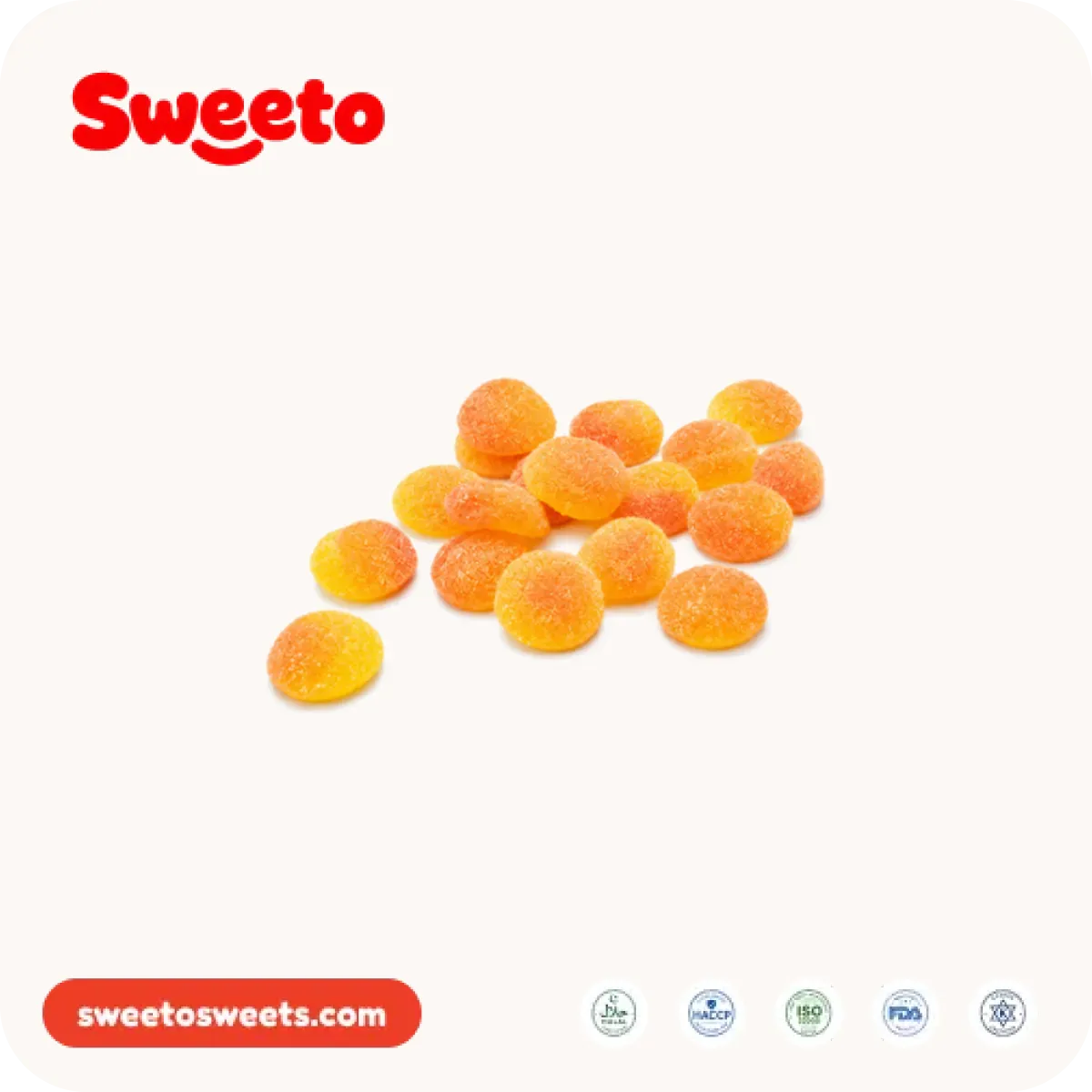
Peach gummies are produced at 5 g per piece in oiled and sugar-sanded finishes. Wholesale and OEM supply runs from the existing mould; colour and flavour intensity are specified by the buyer.
- Factory Direct Supply
- Full OEM & Custom Support
- Audit-Ready & Certified
- Comprehensive Custom Packaging Solutions
- Fast Sampling & Delivery
- Halal Within Certification Scope
Peach Gummies by Type
Oiled Classic Peach GummiesSugar-Sanded Peach GummiesSour-Sanded Peach Gummies
Key Specs & Capabilities
| Product Type | Peach-shaped gummies |
| Unit Weight | 5 g |
| Coating & Finish | Oiled · Sugar sanded · Sour sanded |
| MOQ | 1,000 kg / SKU for single color; 2,000 kg / SKU for multi-color |
| Food Safety & Compliance | HACCP · ISO 22000 · FDA-registered facility · Halal available for eligible formulations, subject to certification scope |
| Shelf Life | 18 months |
How Sweeto Makes Better Gummies
With over 15 years of gummy manufacturing experience, a daily production capacity of 60 tons, and a portfolio of more than 300 SKUs, Sweeto supports buyers across global markets. We develop and refine gummy formulas to deliver diverse flavor profiles, and colors and shapes that stay attractive on the shelf. That is what Sweeto stands for: dependable quality, flexible product development, and gummies built to perform in your market.
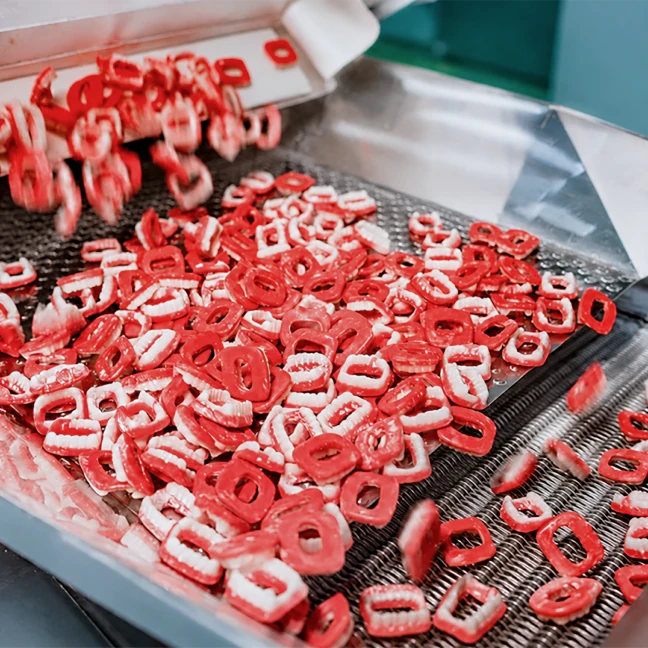
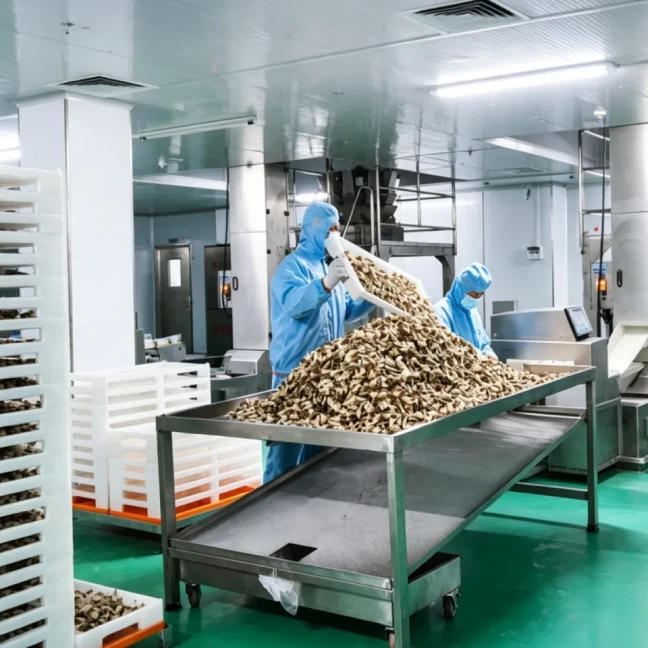
Automatic Conveying System

In-House R&D Lab
Metal Detection Before Packaging
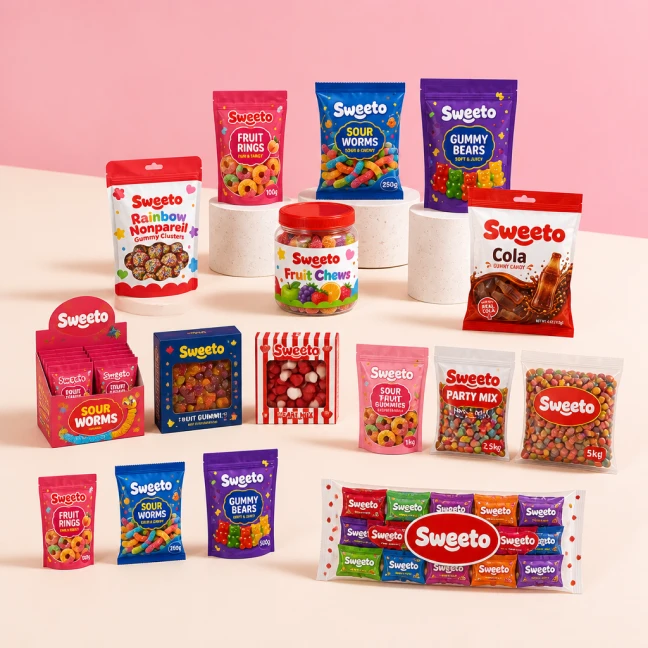
Private Label Packaging
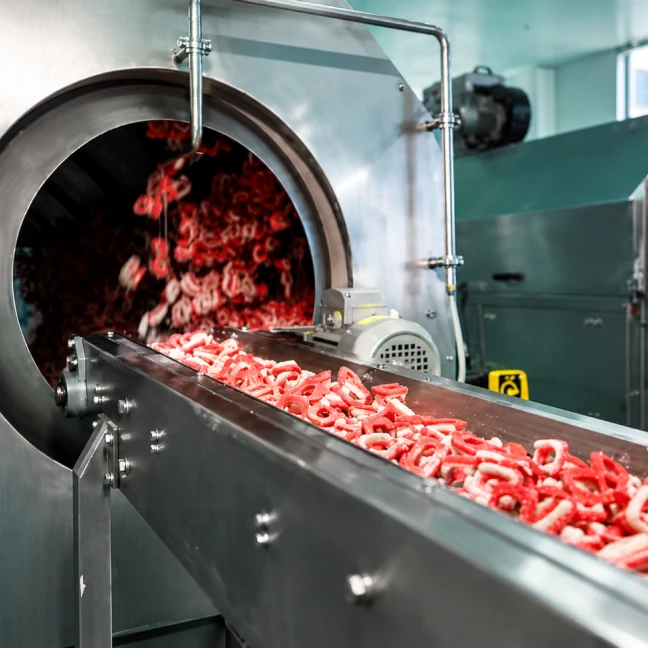
Sanding & Oiling
300+SKU
Automatic Conveying System
In-House R&D Lab
Metal Detection Before Packaging
Private Label Packaging
Sanding & Oiling
The MOQ is 1,000 kg / SKU for single-color orders and 2,000 kg / SKU for multi-color orders. Trial orders are accepted.
The Look of Peach Gummies: The Orange-Yellow Gradient, Finishes, and Colour Matching
A Shape with a Colour Gradient
Peach gummies are peach-shaped gummy candies produced with a colour gradient from orange to yellow. The gradient is part of what makes the piece recognizable, and it is produced by controlling how the two colours meet in the mould. Colour and flavour intensity are specified by the buyer, and the piece runs in oiled, sugar-sanded, and sour-sanded finishes.
How the Gradient Is Produced
The gradient comes from the way the two colours meet during depositing. A line that is too sharp may look striped, while one that is too soft may look washed out, so the transition is set to sit between the two. The setting is recorded in the process specification, and the gradient on finished pieces can stay consistent across batches and across reorders.
How the Finish Changes the Surface
The finish changes how the gradient reads. An oiled piece carries a glossy surface where the colour transition stays most visible. A sugar-sanded piece adds a crystalline coating that delivers sweetness first, and a sour-sanded piece puts acid at the surface before the peach note arrives.
Colour Matching for Private Label Programs
Colour depth and gradient sharpness can be set per specification, so a private label program can work toward its own visual standard. Both colours are matched against an approved reference on finished pieces, because the final colour may shift slightly during production. The approved sample becomes the reorder reference for the program.
Peach in Fruit Assortments
Peach pieces work in fruit assortments next to strawberry, mango, and citrus pieces, where the two-tone appearance adds visual variety to the mix. The shape is identified at a glance in a pack. A program can use peach as a supporting flavour in an assortment or as a lead on its own.
The Gradient in a Pack
The two-tone gradient also affects how the pack looks. In a clear pouch or display box, the colour transition gives each piece more presence than a single-colour piece, and a mixed pack of gradient pieces presents more variety than a single-colour fill. Programs using window formats or transparent packs may find the gradient works for them at the pack level as well as on the piece.