Mars Starts Selling Naturally Colored M&M's, With Blue and Brown on Hold
Mars has started selling M&M's made with natural food colors in August 2026, the first time the 85-year-old brand ships a dye-free version of its core product. The naturally colored bags are available on Amazon in the United States. Two colors are missing from the launch: Blue and Brown, which depend on the synthetic dye Blue No. 1 and have proven the hardest to replace. The launch is the most visible result so far of the U.S. push to phase petroleum-based dyes out of the food supply, and it lands directly on the candy aisle.
What Mars Announced
The announcement was first reported by The Wall Street Journal on June 18, with the product reaching Amazon in August to mark the brand's 85th anniversary. Red, orange, yellow, and green candies are now colored with ingredients such as beet juice and turmeric. Blue and brown presented a different problem: both shades require Blue No. 1, and the natural substitute Mars chose is spirulina extract. The Journal reported that concentrated food-grade spirulina costs more than $100 per pound, against $9 to $11 per pound for turmeric, and that its thick, viscous texture clogged spray nozzles on the production line, prompting Mars to upgrade more than 300 machines. The same report put Mars's target for bringing back all six colors at 2028. These figures come from that reporting; Mars's own announcement of the launch is linked in the sources below. Anton Vincent, head of the company's North American snacks division, described the reformulation to the Journal as "a daunting situation," noting that "you're messing with an 85-year-old icon."
The original artificially colored M&M's remain on sale alongside the new version. According to the same report, Mars has committed to natural-dye versions of three more products — Skittles Original, Starburst Original, and Extra Spearmint gum — without firm dates for them.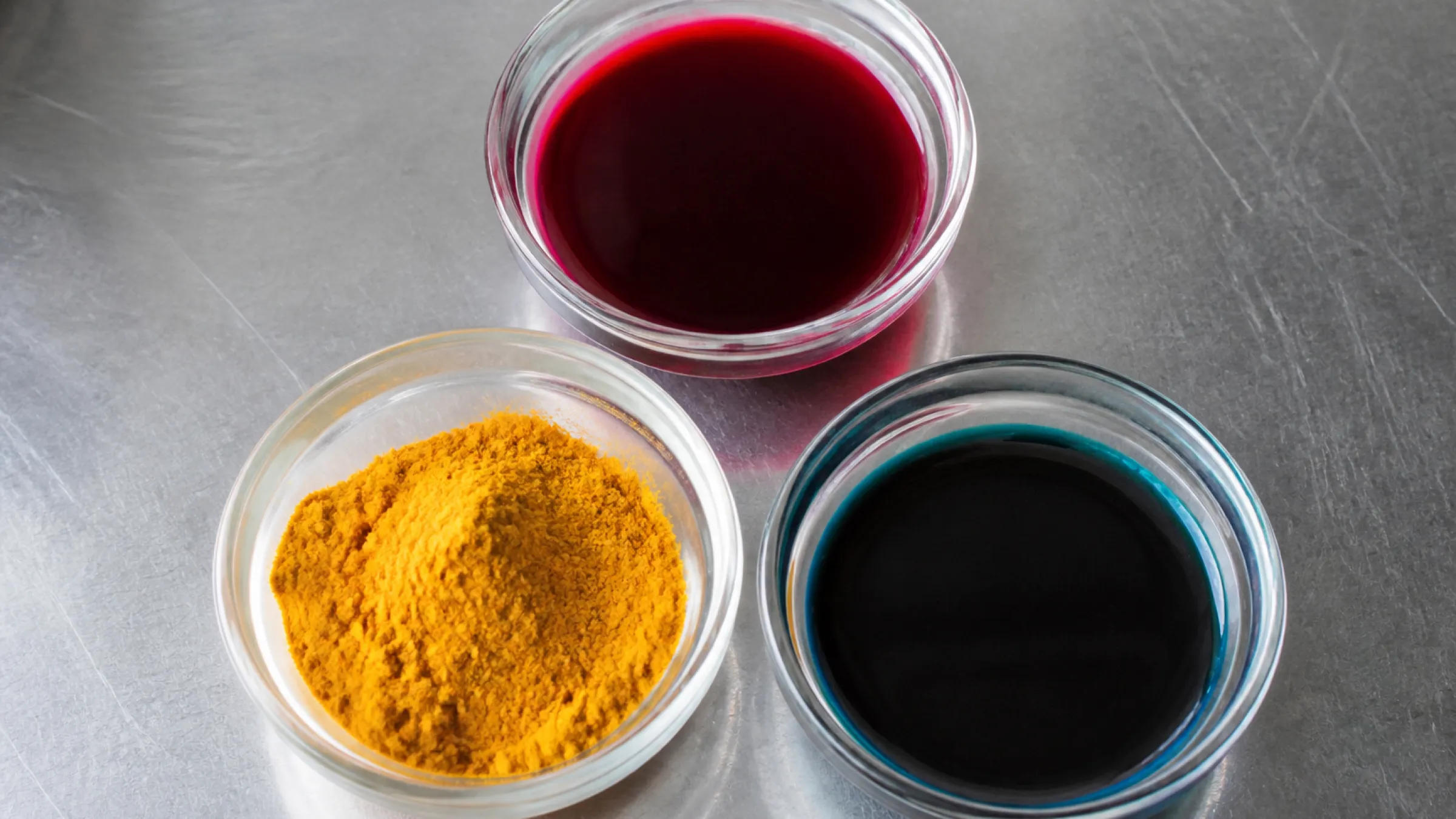
The Policy Backdrop
The launch follows a year of pressure from regulators, state legislatures and retailers. Only part of it is legally binding, so the milestones below are grouped by legal status:
- Legally binding — January 2025: The FDA revoked the authorization for the use of Red No. 3 in food. This is a binding regulatory action, with a compliance deadline of January 2027 for food products (FDA constituent update, January 2025).
- Not binding — April 2025: HHS and the FDA announced a national initiative asking industry to remove six petroleum-based dyes voluntarily — Green No. 3, Red No. 40, Yellow No. 5, Yellow No. 6, Blue No. 1, and Blue No. 2. No regulation was issued: the working target of the end of 2027 is a policy goal, and the individual company pledges are listed in the FDA tracker linked below.
- Legally binding, state level: West Virginia signed the first statewide ban on major artificial dyes in 2025, and California will restrict six dyes in public school food from December 2027. Both are state laws and apply only within those states.
- Private commitments, retail level: Walmart committed to removing synthetic dyes from its private-label products by January 2027, Target required dye-free cereals by May 2026, and Sam's Club completed the switch for its own brands in January. These are buyer specifications set by the retailers, not law.
Roughly half of the major U.S. food companies have now pledged to remove synthetic dyes from at least part of their portfolios, according to tracking by the Center for Science in the Public Interest.
What This Means for the Gummy Business
The six dyes covered by the FDA's voluntary phase-out request are the standard color set for conventional gummies. Red 40, Yellow 5, Yellow 6, Blue 1, and Blue 2 between them produce nearly every shade in a typical gummy assortment, so the Mars move signals what the rest of the candy shelf will follow. For importers and brand owners selling into the United States, three practical points stand out.
First, natural colors behave differently in a gummy system than in a chocolate coating. A gummy is a hot, acidic, moist environment during production: the syrup is cooked, food acids such as citric or malic acid lower the pH, and the finished candy keeps a relatively high moisture content, with the exact parameters set by the gelling system, the product format and the route requirements. Anthocyanin colors from fruit and vegetable extracts shift shade with pH, and spirulina blue is sensitive to both heat and acid. Reformulating a gummy color set is recipe work, not a one-for-one swap — the same lesson Mars learned with its spray nozzles applies inside the candy itself.
Second, cost moves with the color. Natural replacements run several times the price of their synthetic equivalents, and blue is the extreme case. Buyers requesting natural-color gummies should expect a modest price adjustment and slightly softer shades, particularly in blue, purple, and brown pieces.
Third, the transition is a specification decision to make early. Retailers are already writing dye-free requirements into private-label contracts, and the FDA tracker shows where the policy is heading even without a binding ban. Buyers who brief their manufacturer on color requirements at the quotation stage avoid a mid-program reformulation later.
At Sweeto Sweets we have run natural-color gummy recipes for European programs for years, where warning-label rules pushed the switch a decade earlier. Our custom gummy program supports both synthetic and natural color systems, and the full format range in our product catalog can be produced to either specification depending on the destination market.
Sources
- Mars — Mars Wrigley US Extends Consumer Choice (company announcement)
- Fox Business — M&M's set August launch for dye-free candies, with 2 colors absent
- Allrecipes — M&M's Just Launched an All-New Signature Pack — and One Big Change
- TODAY — M&M's Is Cutting 2 Colors From Certain Bags in MAHA Makeover
- U.S. FDA — Tracking Food Industry Pledges to Remove Petroleum-Based Food Dyes
- Consumer Reports — One Year After RFK Called For Phase Out of Harmful Dyes