How to Choose the Right Gummy Packaging to Prevent Product Damage
Most gummy programs are judged on the candy. The pack decides whether that candy reaches the shelf in the condition it left the factory. A gummy that leaves the production line in good condition can arrive at the shelf stuck together, faded, or undersized in the customer's hand. These problems can start in the recipe, in production, in moisture control, or in transit, and packaging is one of the key controls among them, one that buyers may treat as the last step instead of the first. This article is written for buyers who have been through that outcome. It covers the packaging issues that come up most in gummy programs, the formats that work, and what to put in writing before the first order. Our wholesale gummies program lists the standard terms, and the packaging options below are the ones we run across that program every week.
The same issues come up often enough to plan around. Moisture gets in. Pieces stick together. The pack looks underfilled on the shelf. The label holds the shipment at customs. Each of these is a packaging decision, and each one can be specified before production starts.
What Packaging Does for a Gummy Program
A gummy is a hygroscopic product sitting in a bag. It pulls moisture from the air, it sticks to its neighbors, and it shows its condition through the pack. Unlike a wrapped chocolate bar, the product touches the film directly, so the film is part of the product's performance.
The buyer's side of this may be invisible until the shipment arrives. A program can clear every other checkpoint, from formula to certification to freight, and still lose the product to a pack that let in moisture or a label that missed a market requirement. The sections below go through these issues one by one, with the specification decision that addresses each one.
Moisture and the Sanded Surface
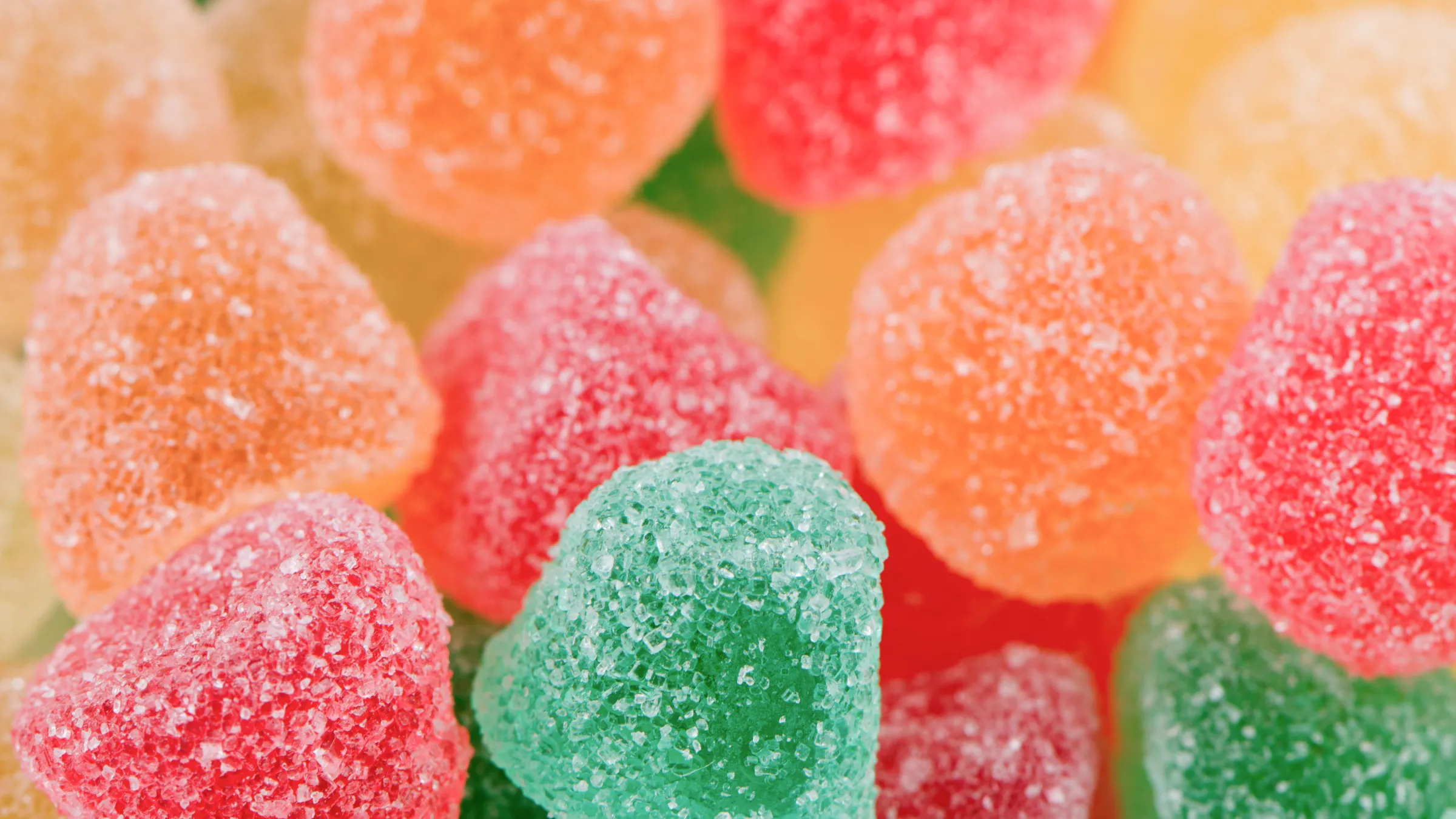
Moisture is the first issue to specify, and it hits sanded products hardest. A sour-sanded gummy carries acid and sugar on its surface, while a sugar-sanded gummy carries a plain crystalline sugar layer. Both coatings are hygroscopic: they pull water vapor out of the air. Inside a pack with a weak moisture barrier, the coating absorbs moisture, dissolves, and turns sticky. The pieces clump, the surface loses its crunch, and the bag looks wet from the outside.
This is why super-sour and sanded programs are not simple packaging jobs. The coating that gives the product its identity is also its most fragile part. Film structures differ in how much vapor they block, and the barrier level is chosen per product: sanded and acid-coated products run on higher-barrier structures such as metallized or foil-laminated films. The Cornell University maple confectionery guide makes the same point for molded sugar candies: packaging has two jobs, presentation and condition, and the second one decides how long the product stays sellable (Cornell University, Confection Notebook).
The specification decision is the film's barrier level, matched to the product. Sour-sanded and acid-coated products may need a stronger barrier than oiled ones, and the buyer can ask the supplier which film structure is recommended for the product and why. The answer should refer to the product's coating and the destination market's climate, not to a generic film used for everything.
For the buyer, this decision does not require lab work. The practical route is to match the film to the product and the destination, then confirm the choice with a sample pack before production. A sample pack kept under conditions close to the destination market shows whether the film holds the product's surface, and this check can be done before the order is placed.
Sticking and Product Contact
The next issue is contact. Gummies touch each other in the pack, and without the right surface treatment they can stick together into a single mass. The buyer sees this when the bag opens and the pieces come out in a block rather than as individual pieces.
Sticking is controlled first on the product side: the finished piece's moisture, its surface treatment, and how hygroscopic its coating is, with temperature during storage and transit adding to the risk. Oiled pieces carry a thin surface layer that reduces contact adhesion. Sanded pieces rely on the coating to keep them apart. When the surface side is insufficient, or when moisture gets in and softens the surface, the pieces bond. The pack then sets the physical conditions: the film's barrier level controls how much moisture reaches the product, and the fill level controls how much the pieces press against each other.
Fill level works in two directions, and it is a supporting control rather than the main one. A pack filled too loosely lets the product shift and compress in transit, while an over-tight fill increases contact and pressure between pieces, which works against the surface treatment. The fill level can be specified per SKU, and it can be checked on a sample pack before production. This is one of the places where a physical sample answers a question that a specification sheet cannot.
Fill Level and Pack Presentation
Fill level is another issue that shows up on the shelf. A gummy pack that settles in transit can arrive looking underfilled, with the product sitting at the bottom and empty film at the top. The buyer paid for a full pack and receives one that reads as a short fill.
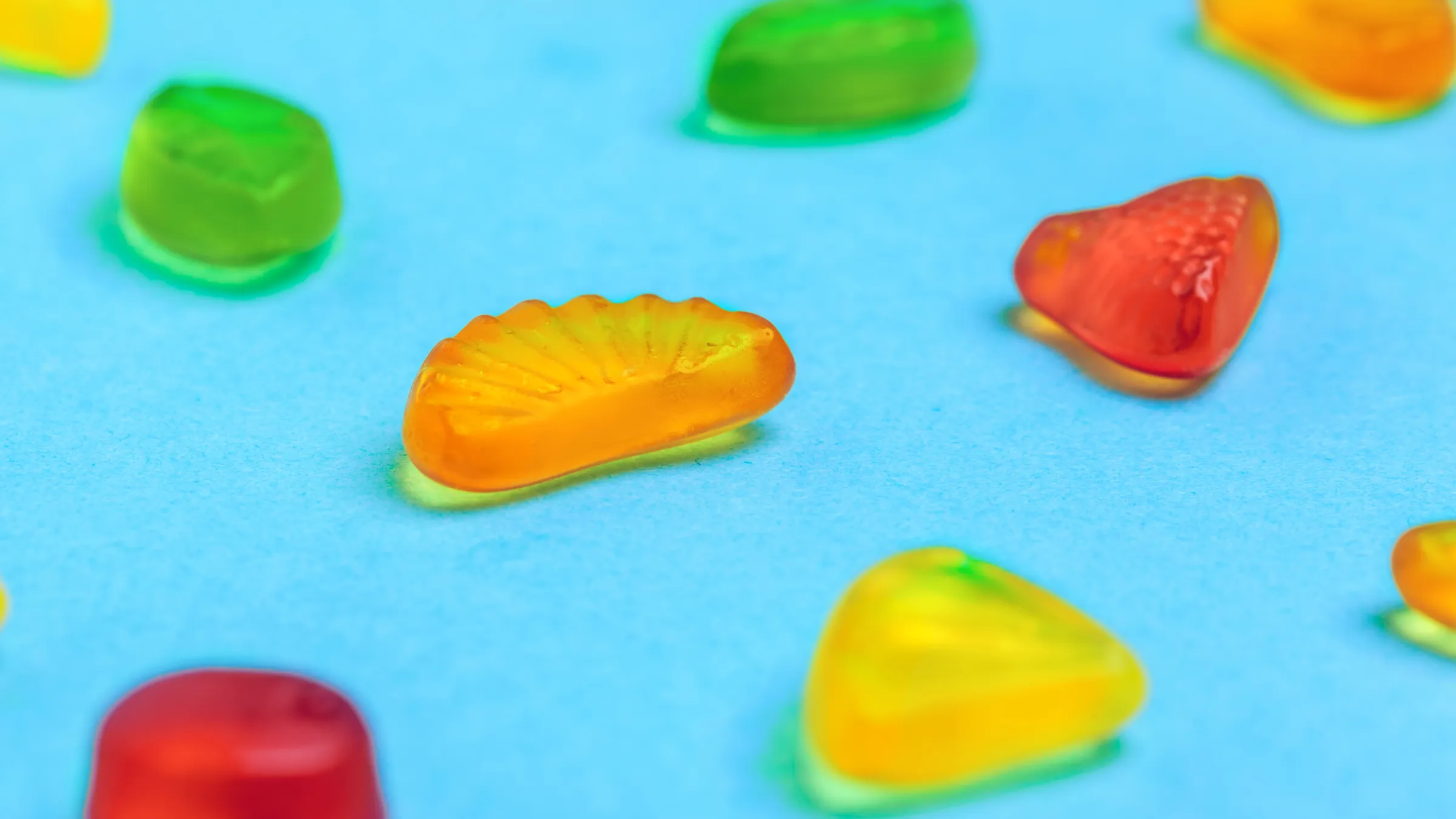
This is a volume problem, not a weight problem. Gummy pieces settle differently depending on their shape, and a pack sized by weight alone may look empty once the product settles. The fix is to size the pack against the settled volume of the product, not the weight. A supplier who measures bulk volume on production samples can set the fill level so the pack looks correct on the shelf at the declared weight.
Pack presentation also covers the choice between a window and a closed pack. A clear pouch or a window box shows the product directly, which works when the pieces are uniform and the colors read well. A closed pack relies on printed artwork, which works when the product is better presented by the design than by visibility. The choice follows the product's appearance, and it can be made on a sample pack rather than on a mock-up.
Labels and Market Compliance
The label is the last of these issues. A gummy pack that clears production can be held at customs or rejected at retail because the label misses a market requirement. Ingredient declarations, allergen statements, nutrition panels, and origin markings all differ between markets, and a pack printed for one market may not clear another.
The buyer's protection is to treat the label as part of the specification, not as a printing job. The specification sheet produced during development should supply the data for the label, including the ingredient list, the allergen statement, and the nutrition values, so the label review is a confirmation step rather than new work. Multi-language labels and barcode registration can be part of the same specification, so the pack arrives ready for its destination market.
A supplier who builds the label from the specification sheet is working from the same document that governs the product. A supplier who asks for the label content after production is working from two different sources, and that is where mismatches appear.
The four sections above cover the issues that come up most, and the next section covers the formats that address them.
The Formats Gummy Programs Use
Gummy programs run on a small set of pack formats, and each one answers a different channel need. The table below summarizes the five formats that cover most programs, and what each one is used for.
| Format | What it is | Where it fits |
| Stand-up pouch | A self-standing flexible pack, available resealable | Retail shelves, e-commerce, brand programs |
| Pillow bag | A flat, sealed flexible pack | High-volume retail, single-serve, mixed bags |
| Jar or tub | A rigid plastic container with a lid | Premium retail, gift programs, counter displays |
| Gift or display box | A printed rigid box, sometimes with a window | Seasonal programs, gifting, display-led retail |
| Bulk bag or carton | A large-format pack for repacking | Wholesale, pick-and-mix, repacking operations |
The stand-up pouch is the most common retail format, and a resealable zipper keeps the product usable after the first open. The pillow bag covers high-volume and single-serve programs. Jars and tubs work where the pack itself is part of the shelf presentation. Gift and display boxes serve seasonal and gifting programs. Bulk bags and cartons serve buyers who repack or sell by weight.
These formats are not interchangeable.
Two details sit inside most format decisions. The closure decides how the pack performs after the first open: a resealable zipper keeps the product protected between uses, while a simple tear-open pack assumes the contents are used at once. The window decides how the product is presented: a clear window shows the pieces directly, while a closed pack relies on printed artwork. Both choices can be checked on a sample pack, and both belong in the specification rather than in a design review after the fact. A program that needs a window on the product cannot use a closed box, and a program that needs a long shelf life in a humid market cannot use a basic film. The format decision follows the channel and the product's moisture sensitivity, and it can be made on a sample pack before the specification is fixed. Multipack formats with assorted mini packs can serve programs that need several small packs in one outer pack, and seasonal or promotional packaging programs can be developed per project. Custom sizes and specifications are available on request, so a program that does not fit a standard format can still be built.
How We Handle Packaging at Sweeto
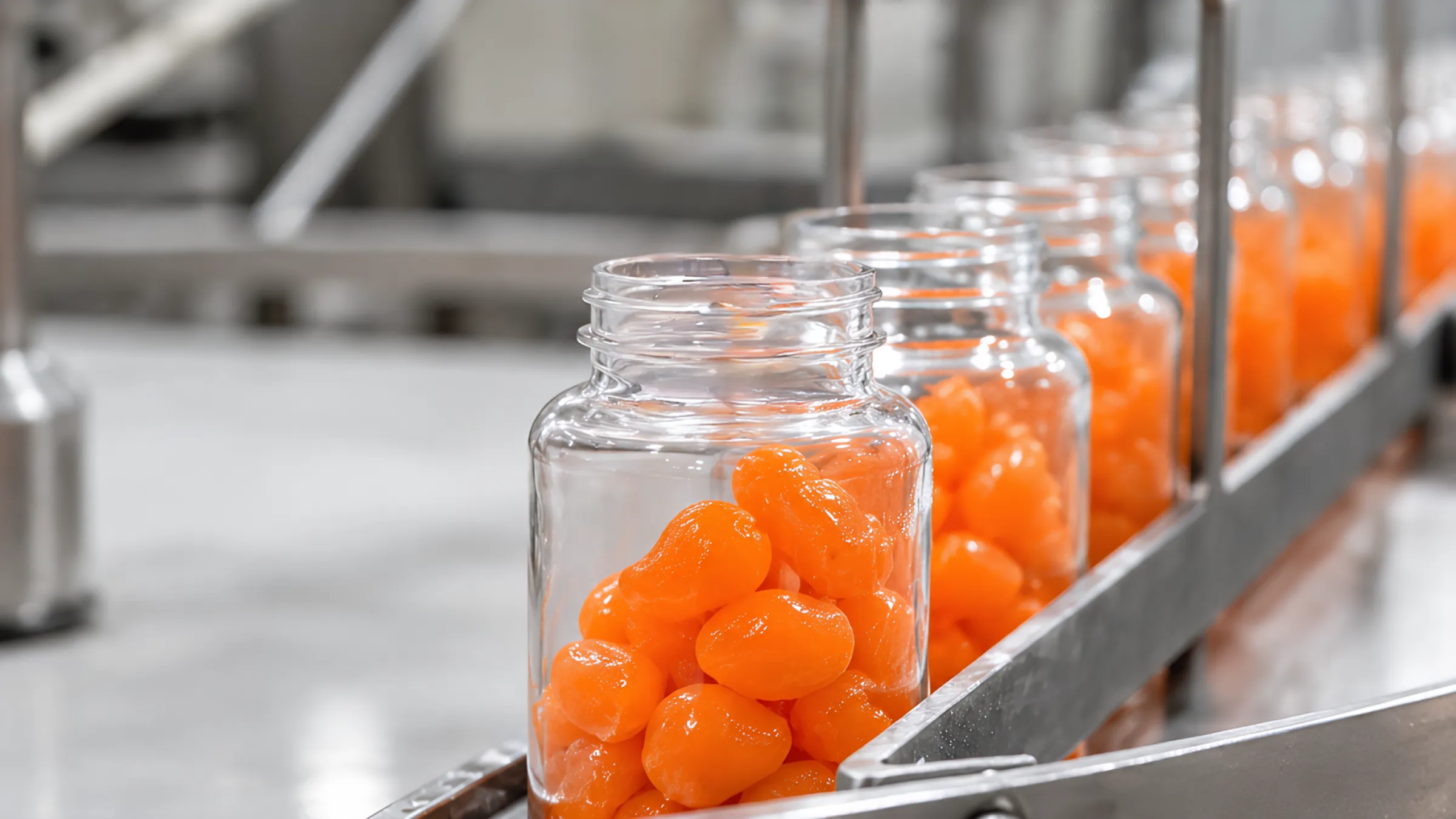
Packaging is handled inside the same program as the product, not as a separate vendor decision. The pack format, the film structure, the fill level, and the label content are all set against the product specification, so the pack that ships matches the product that was approved at sampling.
Our packaging work covers stand-up pouches, pillow bags, jars, tubs, trays, gift boxes, display boxes, countertop displays, and bulk bags up to 5 kg, with multipack and seasonal formats available. Custom packaging sizes and specifications can be developed per customer requirement, and label work including multi-language text, barcode registration, foil stamping, UV, and die-cut finishes is handled in the same program. For sanded and sour products, the film barrier is matched to the coating, and fill levels are set against settled volume so the pack presents correctly at the declared weight. For buyers who want independent verification of a film or a finished pack, third-party testing can be arranged on request, with reports issued before shipment.
If you are planning a gummy program and want to confirm packaging details for your market, send us your product, your target channel, and your destination market. We can prepare pack samples through our custom gummy program, and standard terms are listed on our wholesale gummies page. An overview of our production and quality systems is on the capabilities page.
Moisture ingress is the most common issue. A gummy is hygroscopic, and a pack with a weak moisture barrier lets the product absorb water vapor, which turns sanded surfaces sticky and makes pieces clump. The specification decision that prevents this is the film's barrier level, matched to the product's coating and the destination market's humidity.